I have good news and bad news. The good news is that the newly installed OS Maps app on my phone works wonderfully, with a nice little arrow indicating my location in the landscape as plotted out by detailed geographical survey with elevation lines and other features. With this thing running, and with even the slightest signal for the phone to locate, I could never get lost again.
The bad news is that the app works wonderfully, and I could never get lost again. I am fully aware that my most entertaining posts are about my lostness and navigating my way back to the trail. They’re fun to write, because I get to adopt my cranky travel writer voice. And to be quite honest, those adventures getting lost are, in their weird way and mostly in retrospect, fun to experience. They are the element of surprise that gives the day its piquancy.
With the app, I can pause upon passing through a gate into a large field on a rolling hillside, where I can’t see the other fences or hedges and the path is not clearly trodden into the grass, and all I have to do is whip out my phone and see this:
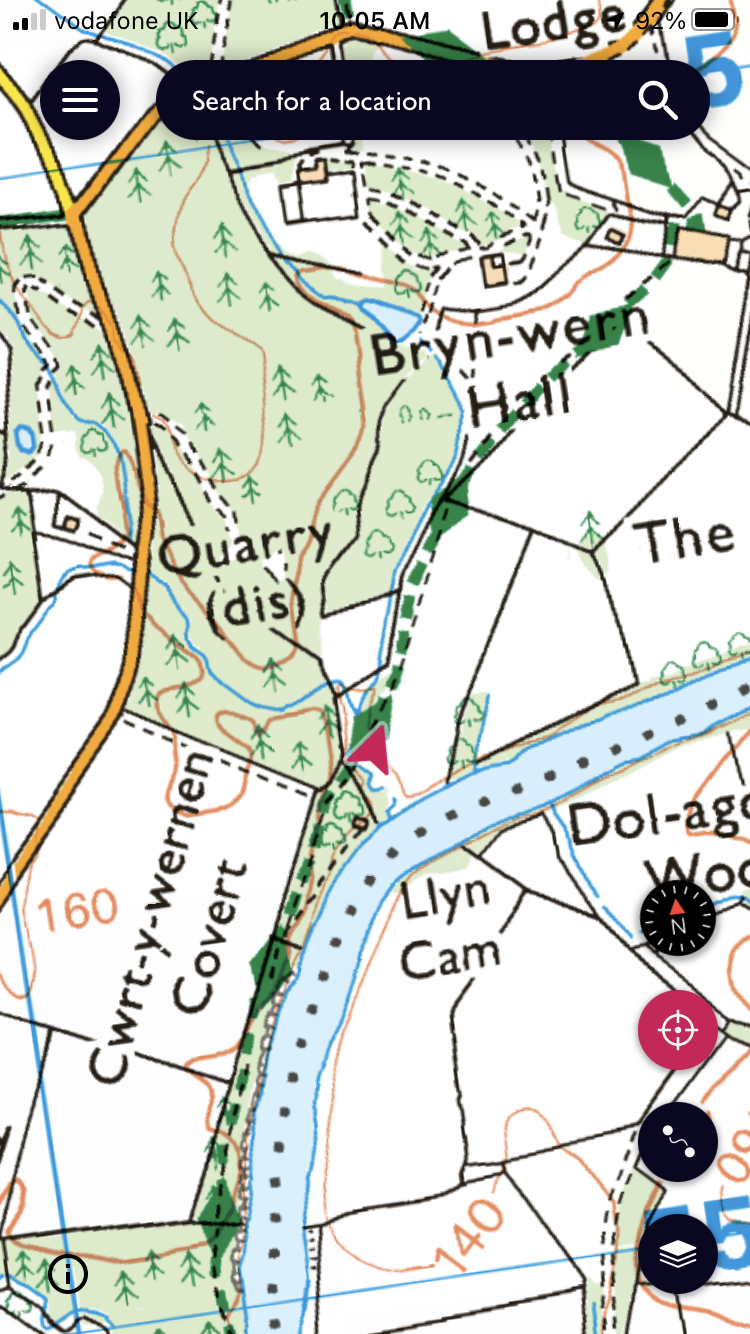
There I am, marked by that arrow. The diamonds and dotted line are the path. I can see I don’t need to veer diagonally across this field. My crossing point at the next gate will be straight ahead, with the hedge on my left. Easy peasy lemon squeezy. It’s intoxicating and addictive, and I found over the course of the day that several times I had to stop myself from taking my phone out of its stowed position in the zippered compartment at the top of my pack (Carrying a phone in your pocket while hiking? No. Just no.) just to get the reassuring buzz of seeing my arrow match up with the trail.
But without all my wacky misadventures and utterances of “Zounds!” at the realization of a missed turn, what can I tell you about.
Well, I walked 16.5 miles today, the longest mileage of this entire trip (both in the Wye Valley and in Snowdonia). It had a lot of elevation gain and loss, most of it in long gradually ascents and descents on paved or gravel paths. The landscape has undergone a character change. The Wye Valley near the sea is a series of tightly folded little valleys. Then there was the flatter wide-open country (still with ups and downs, because if you can’t make a walker breathless at least three times a day, why even lay out a trail?) of Hereford. And in the past few days, I have passed into the higher rolling hills of mid-Wales, and places where the green-covered hills are replaced by more dramatic spots of exposed rock, where geological time is visible in the stony layer cake in a cliff.
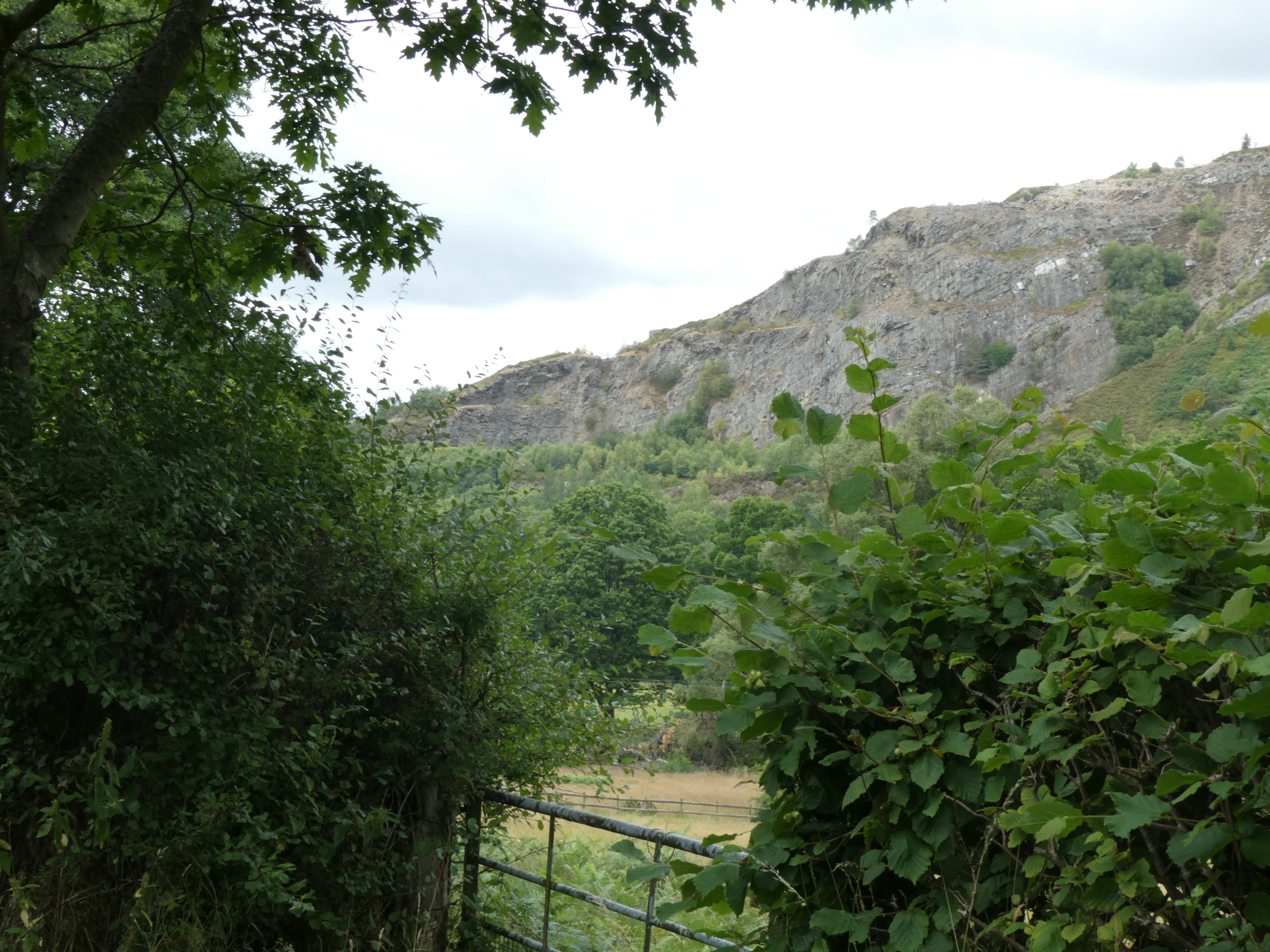
And while you imagine my knocking out 16.5 miles, and discovering a few new surprise locations on my feet where blisters can form (the sides and backs of both heels, unbothered until today, are making their presence known), I can make a few stray observations.
Stray Observation 1: The Stinging Nettle Human Path Mutual Attraction Theory
One of the great puzzles of our time is why stinging nettles and sharp prickly plants seem to proliferate right on marked trails. There are a few explanations.
1) Trailmaking is a profession undertaken primarily by people with a cruel streak. This is demonstrated by their proclivity for the gratuitous turn off the paved road into a hilly field, only to rejoin the same road five hundred yards later after walking through sheep shit and nettles and up and down. For such people, half the fun of laying the course of the trail is determining which side of the field is more likely to have stinging nettles. Let’s call this the “Humans are bad” explanation. Implausible, but amusing.
2) Nature is just absolutely loaded with thorny plants and stinging plants. It’s a natural defense to keep animals from eating the plant so the plant can grow enough to release seeds and propagate the species. If you feel like there are a lot on the trail, just try bushwhacking. They’re everywhere. This is the “Nature is big and indifferent” explanation. Very scientific and satisfying to all you poindexters who liked science class in school.
3) What if, hear me out on this, there is a nutrient in the rubber used for soles of boots, a nutrient that is vital to the thriving of stinging nettle and his thorny cousins briar and bramble and thistle. Humans walk along an established trail, leaving a residue of Vitamin Rubber. The seasons pass, and the nettles and thorny whatnots thrive along the path, drawn to all that tasty rubber residue. Let’s call it the “Hank is getting delirious” explanation.
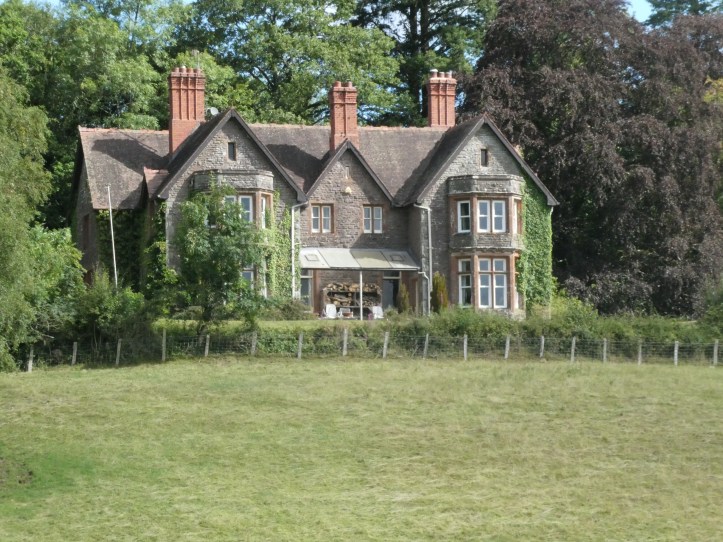
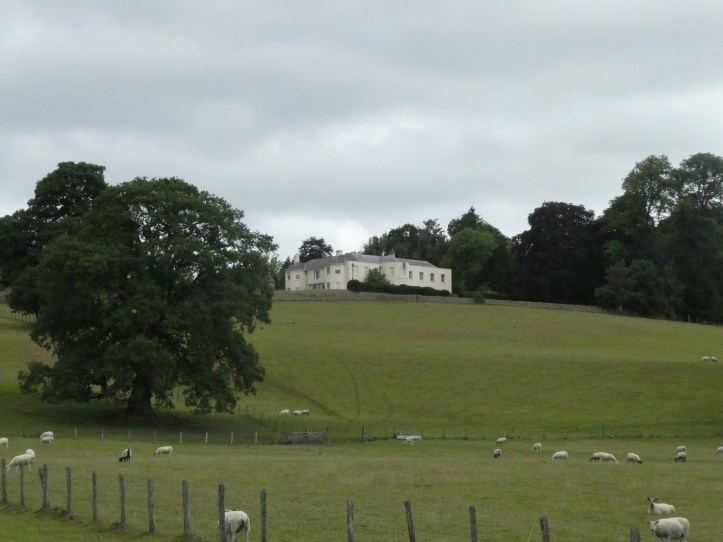
And now, a pause for a slideshow of houses on hills (with one stunner, the one oat the end in two photos, nestled in a valley but seen from a hill)


Stray Observation 2: There are no Welsh people between 22 and 55
One of the odd things about a walking trip is that you spend much of your time in the fields or on remote lanes. If you see someone, it is likely to be an older person walking their dog, or else it’s another walker. I do not know why most the dog walkers I meet seem to be over 50 (Sarah of the Secateurs being the notable exception), but they are. And you would think that rambling around the countryside would be a younger person’s game, when the body is more resilient. But most of the walkers I meet (and I have met only a few long-distance walkers on this trail– most people I’ve seen walking are out for a brief afternoon’s hike) are at least 40 and often older. The obvious answer is economics: This kind of trip, at least done the way I am doing it, is costly. Maybe there are backpackers hiking around the United Kingdom from campsite to campsite with great unwieldy packs and tents, but not on the trails I’ve walked.
The interesting thing is that even in towns, at the pubs where I eat, there are the servers, some in their early 20s and occasionally someone in their 50s who is probably the owner or manager, and the customers, most of whom are my age or older. Now obviously, there are people in their 30s somewhere in these communities. But most of them certainly aren’t going down to the local pub for dinner, even when that’s the only place in town to eat. So when I walk, I get this crazy demographic slice of the country. At dinner at the end of this 16.5 mile hike (did I mention I hiked 16.5 miles today?), I was seated near and so discretely and shamelessly eavesdropped on two women of, let’s say, 65. They’ve been on a bicycling holiday, doing daylong rides around bits of Wales. They talked a lot, really quite a lot, about their friend who had invested wisely by buying a house in Ireland before the Celtic Tiger, who now lives mostly there in Kerry, somewhere near where Graham Norton (a talk show host of note in the UK) and some other celebrity whose name I didn’t recognize but who was clearly a celebrity by the way they said it. Their friend has a beautiful house, but comes back to England all the time, because, well, it’s so dull there. And I thought to myself ‘give me the house in Kerry, and I’ll never complain about it being dull.’
Stray Observation 3: The flexibility of time and space
I walk a lot. In preparation for this trip, I was averaging 7.5 miles on weekday mornings before starting work, and usually more on the weekends. I know my walking speed, I know what a mile feels like. That all goes out the window on a walk in an unfamiliar landscape. The guidebook says I will walk 800 meters on this road before coming to a gate. My rough math says that’s about half a mile. I should know what that feels like. But without fail, it goes on longer than I expect. My brain is taking in all this new information- new sights and sounds and smells. And it’s not just that a mile feels longer on a ramble in an unfamiliar place. It feels different than a mile on the walks around my Chicago neighborhood. Not just the obvious ‘there are fewer buildings and more sheep’ way. The whole experience of time and space is different when you slow yourself down to a walking pace for day after day after day. About 7 miles into my 16.5-mile day (ahem), I checked the time on my phone, and was pleased to see that my pace was quite good. The first part of the walk has along the river, with less crazy up and down to slow me, and I was buzzing along at something close to 3 miles an hour (my home walking speed is around 3.4 on flat Chicago streets and the lakefront path). But in thinking about the fact of seven miles and two hours and forty minutes of walking, I could feel how expansive and tranquil the morning had been. I was in the meditative state of walking.
Okay, I know you want some narrative and photos. Fine. I walked along the river for a long way, and it was quite beautiful, with unexpected visual treats.
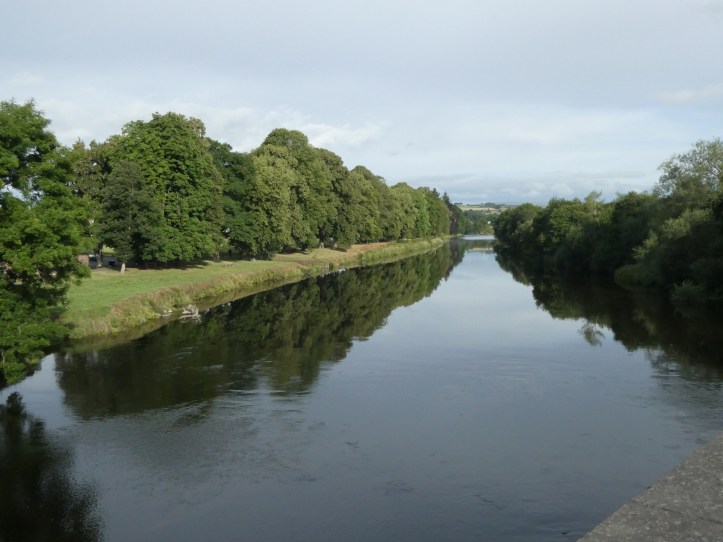
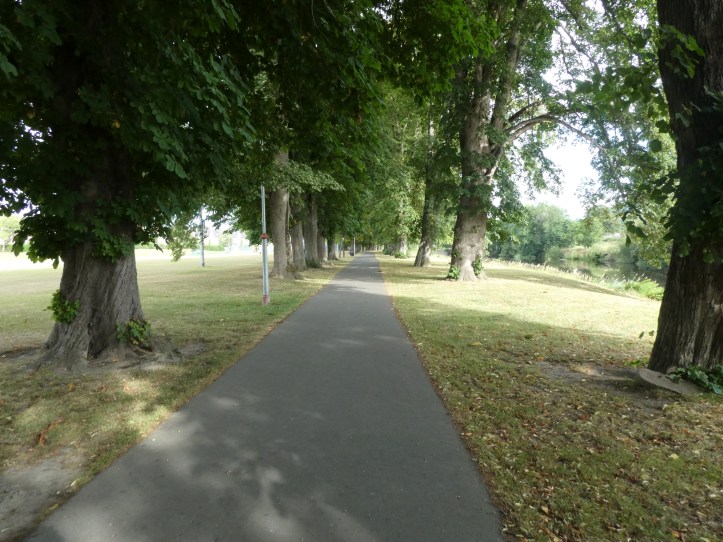
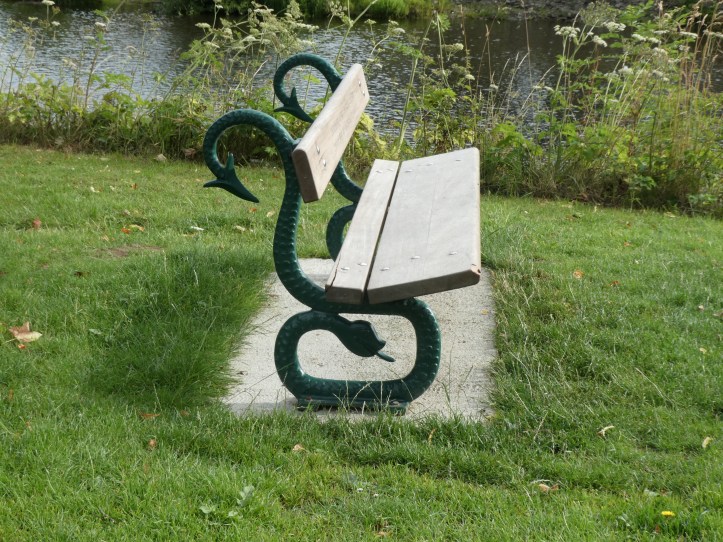

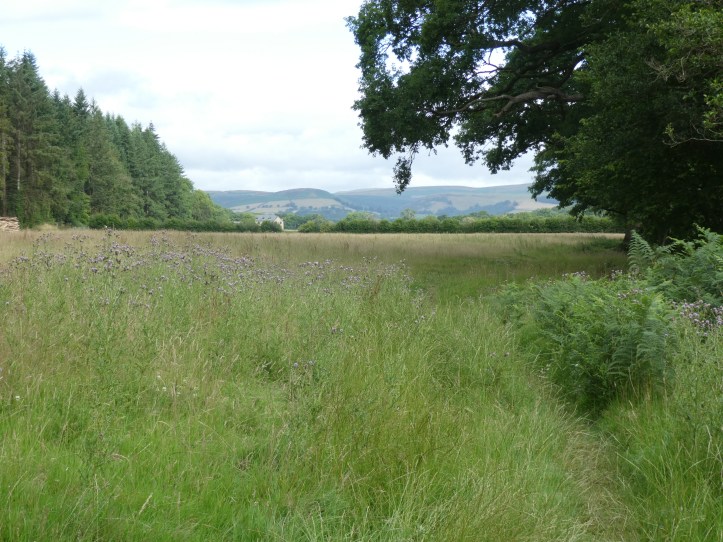

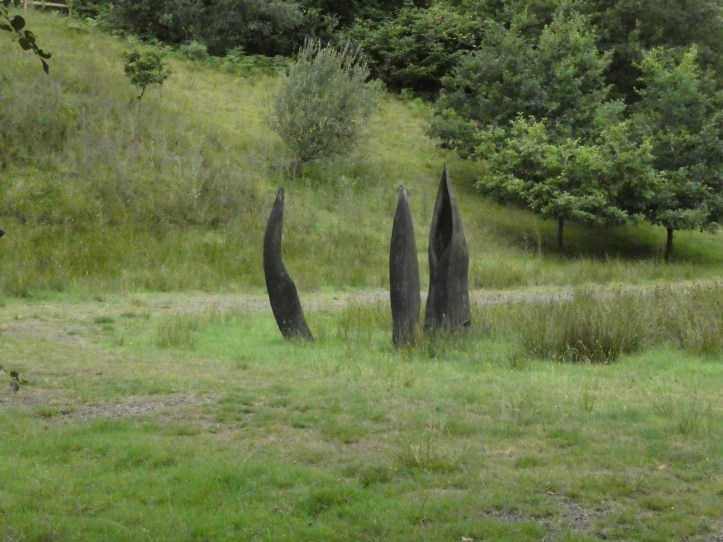
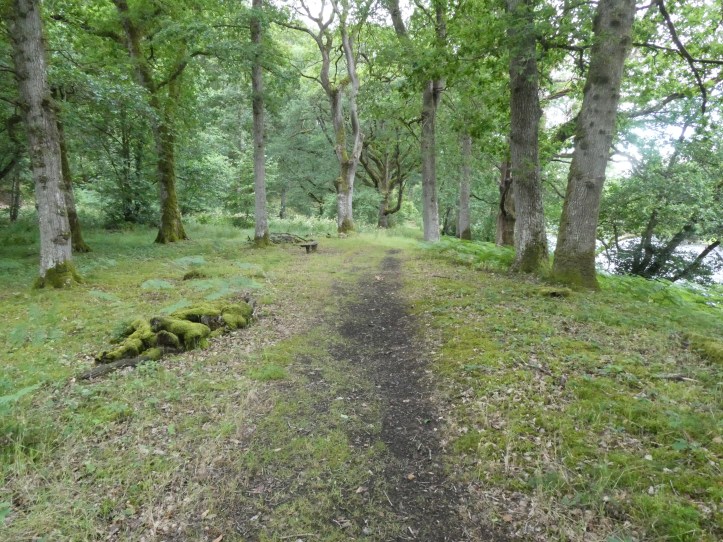
The path began to rise into the hills, and the views were great, with stretches in a conifer plantation, a stretch along a rocky gravel path where I met four cyclists going the other way. I thought to myself “You people are nuts! Pedaling a bike up these bumpy little paths!” Then I laughed at myself. Who in this situation is nuts?

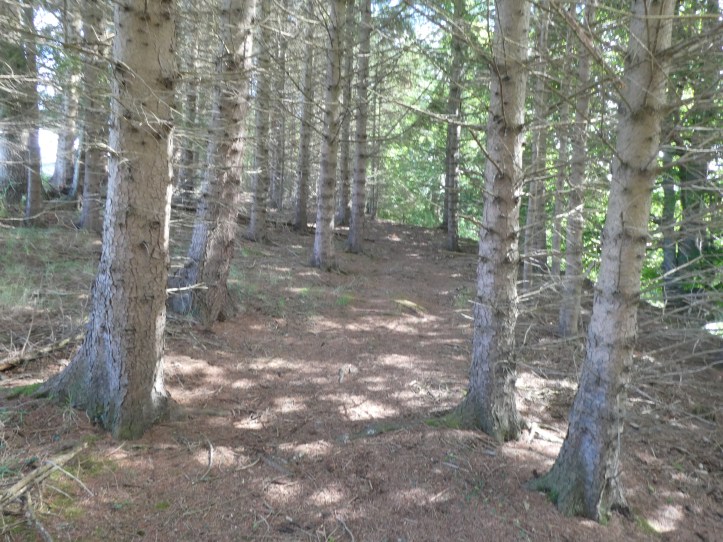
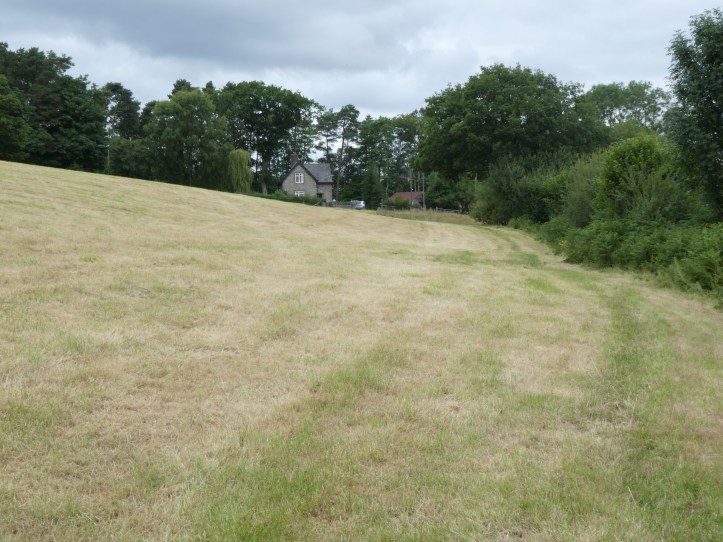
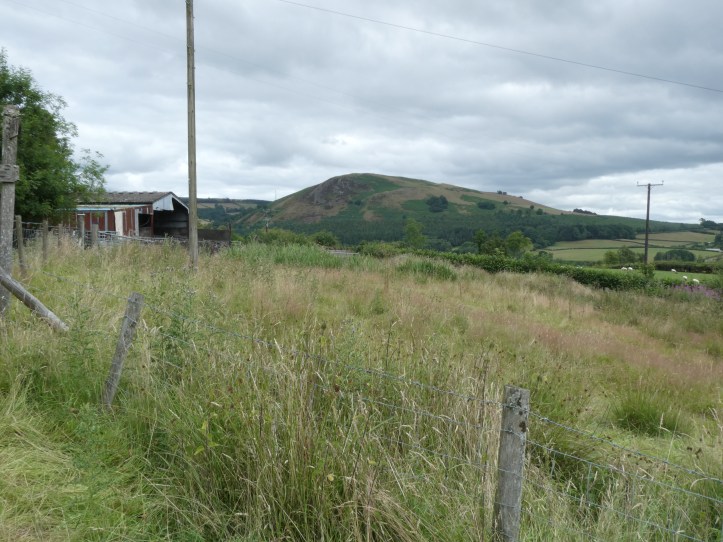
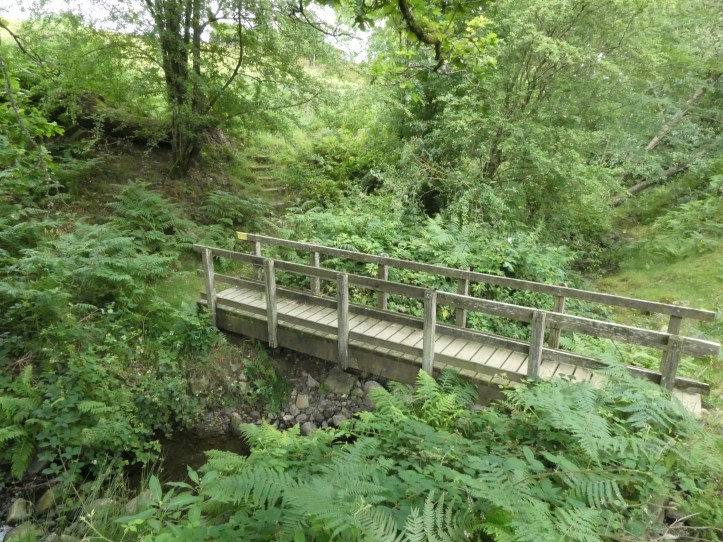
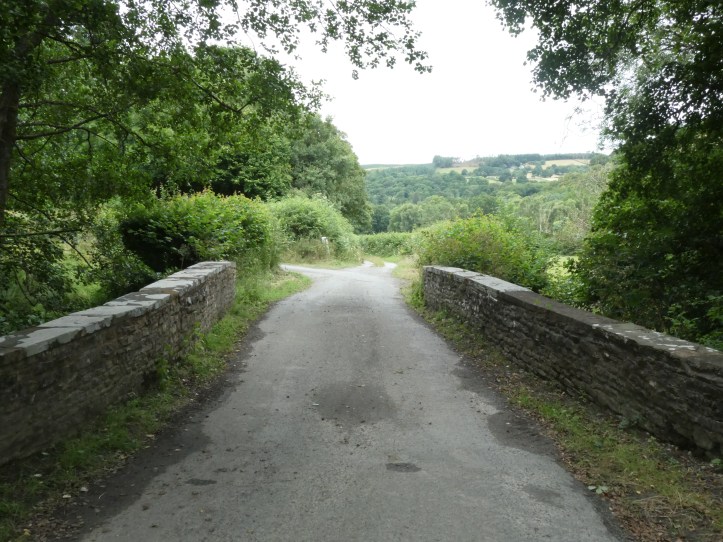
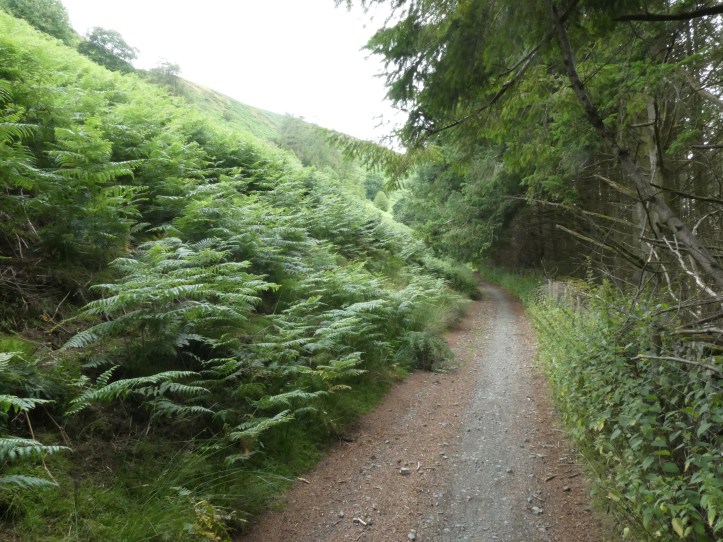
I came to a decision point where the OS app really paid off, and where I opted to leave the trail and stick to the road. This was within three miles of Rhyadar, the town where my day’s walk ended, and it was the one really steep up and down of the whole day. I looked at the app, I broke out the physical OS map to confirm, and I concluded that I did not in fact want to go up 200 meters in elevation to go around the side of that big hill. Instead, I would stay on the road at relatively level going and re-meet the path shortly. Almost mo difference in distance, just elevation.
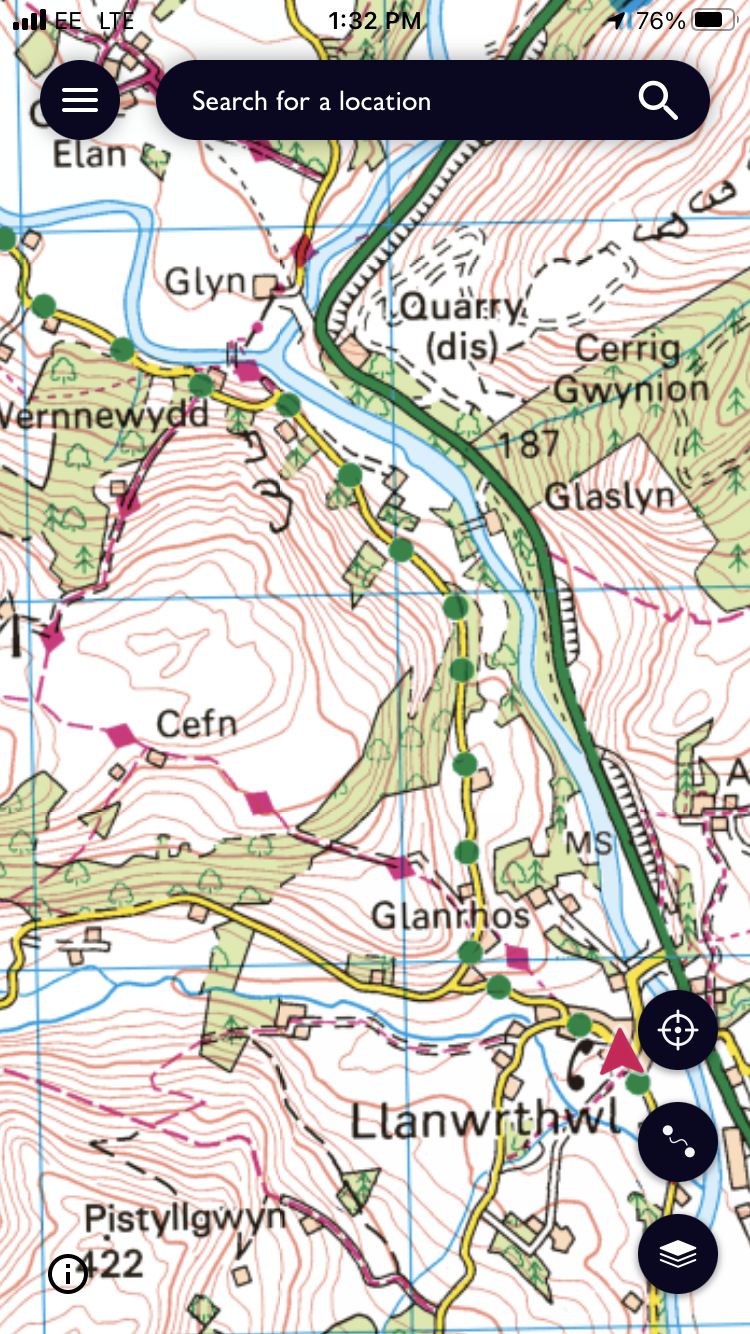
See all those lines the diamond path crosses around the word Glanrhos? And again at the word Wernewwyd? Ten meters of elevation gain and loss. (If I’d zoomed in the OS app map a bit more, the numbers would appear along those lines showing how treacherous a climb and descent that was.
Shortly after that act of path rebellion, I came to an exciting suspension bridge. Now you may recall I walked across one of those days and days ago. No big deal. But this one is, um, looser?


So I took a video in mid-bridge, before realizing that the balance was iffy enough to require two hands.
Then I walked up a lane, down a long long farm driveway, up and down a bit more and into town. But I’ll leave you with image of me on a suspension bridge. For those who’ve enjoyed the narratives of my near failures, just imagine me nearly plunging over the side of a suspension bridge into rocky waters.
Two more days of walking on the Wye Valley Walk, only 12 miles each but with lots of elevation gain and loss.
Oh, and today I walked 16.5 miles. In case you wondered.
 ramblinghank
I had a feeling you might not 100% embrace that App!
Just did a marathon read of your first ten days in Wales, Hank. Well done on both the walking and the writing–and the photography. But it’s all left me a mite peckish. Time to sate my hunger with a Ham-on-Wye. (and you thought the nettles were painful)
Lovely. I think a team of scientists with special training should be dispatched to further research Vitamin Rubber. And then on to rubber dust near roads. Also, the application should be enhanced to route one either further into nettles or away from stinging, thorny things by choice. Also, random application failure at key points to permit getting really lost would be great to enhance narratives.
You are truly a hero for crossing that suspension bridge!