The first few days of any hike are always a game of adaptation. It’s when I’m still adjusting to the time difference, and so find sleeping a challenge. New places on my feet rub differently on rough terrain than on the flatter midwestern trails, so there are surprising blisters and sore spots– how do I have a blister forming on the arch of my foot? My body overall is complaining about the new demands on muscles unused to stretching quite like this. I have to relearn the best adjustments for my pack straps.
But one thing I don’t expect on rambles in the UK is to spend the first few days dealing with extreme heat. That’s what I left behind in Chicago. As you may have heard in the news, there’s a massive heat wave across Europe, and it’s making itself felt in Wales for a few days. Average high temperatures in southern Wales for July are in the mid-70s, but Sunday, my first trail day, it was in the high 80s, and Monday it climbed to the mid-90s. (I’m writing now at the crack of dawn Tuesday, because I was too dazed and torporous yesterday to write two posts and catch up on my blogging.)
The usually understated response to weather (“There might be a spot of drizzle” is British for “You’re going to get soaked for three hours.”) has been replaced with something bordering on panic. In Chepstow, I heard someone say that they’ve been spreading concrete dust on some roads because they were worried the tarmac, not formulated for such heat, would melt enough to create problems. Twice on Monday, in response to the heat warnings and school closings and whatnot, I heard older people–you know, like my age or older–grumble about how ‘we used to just get on with it’ and ‘this younger generation seems to need to be told to drink water when it’s hot.’
The good news for Monday was that my hike for the day was a short one at 8.5 miles, and unlike my first day, it’s a walk that hovers by the riverside rather than climbing into the the hills for beautiful prospects and then plunging down again. So no groaning ascents, no descents in which I am watching for tree roots to make sure I don’t stumble down a hillside. Just a lot of flat walking. Heck, I could be in a forest preserve in Illinois for all the flatness of the trail. Except, of course, that the trail passes through a long, winding narrow valley, so even walking along the river, you are surrounded by stunningly pretty rolling hills covered in trees, dotted with open field.
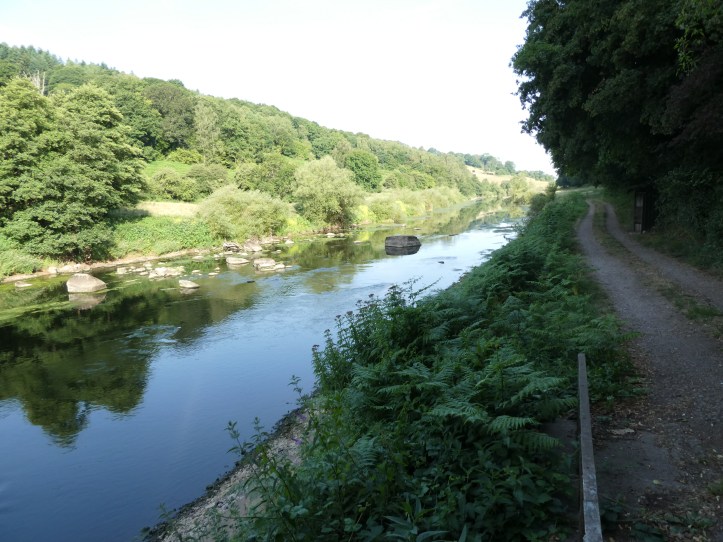
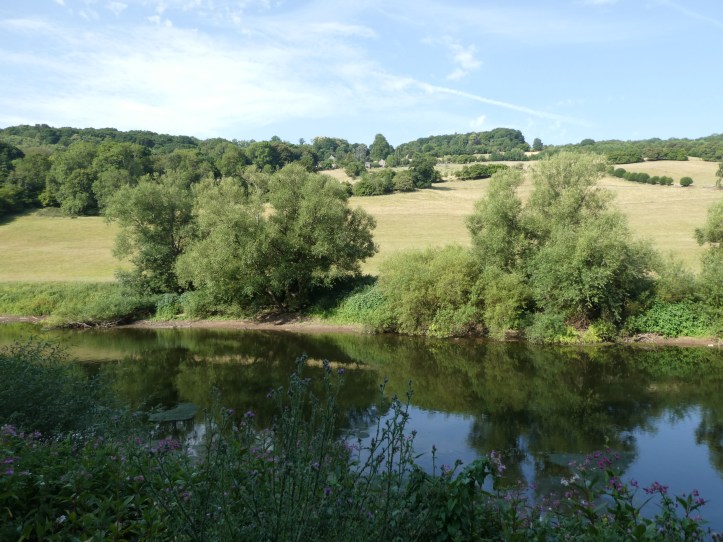
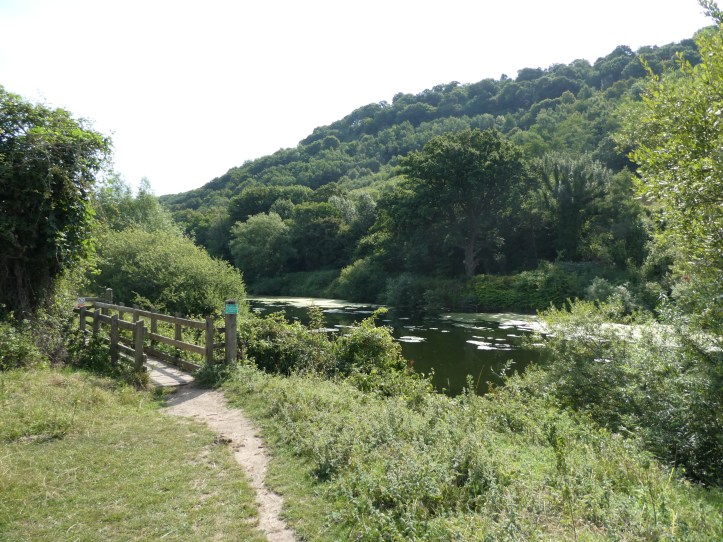
After a very nice breakfast of yogurt and cereal and a freshly baked fruit scone (too hot for eggs and bacon, and I can never manage the insane “full English breakfast” with beans and roasted tomato and sausages and bacon and eggs), and chatting with a couple staying at the bed and breakfast who are now headed home to Devon after some days hiking portions of the Offa’s Dyke Trail (well, it was clear that the slim, vigorous woman had hiked, but her very large husband, who talked less and put away a full English while we chatted, had mostly not hiked with her but rather stayed at a series of B&Bs while his wife went out for the day), I set out. (Let’s all take a moment to notice how long that sentence was!)
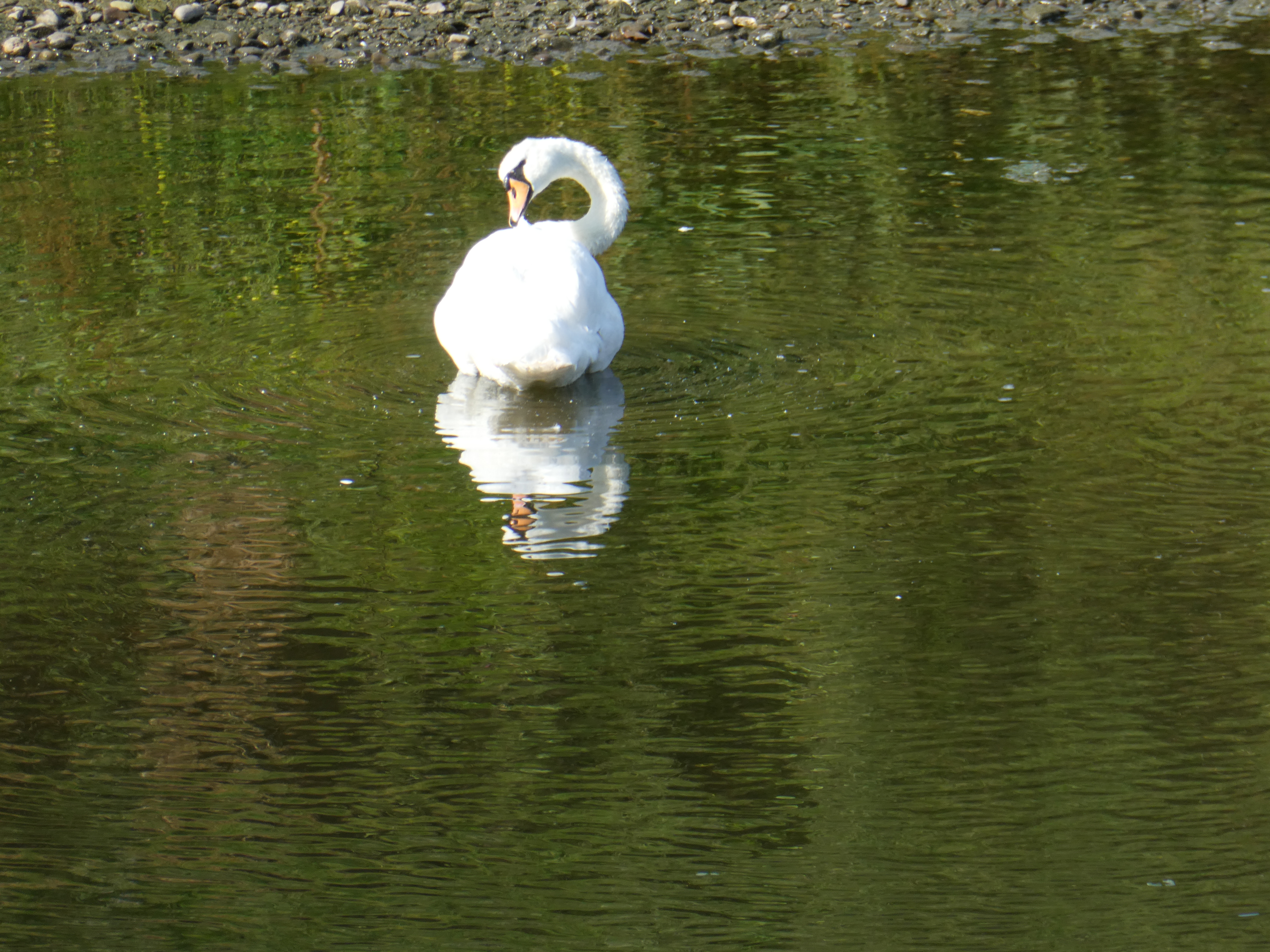
The river offered up a series of simple pleasures, including wild swans; I saw probably 20 wild swans in the river over the course of the day. I don’t know why, but I think of swans as creatures that live mostly on grand estates and in poetry by Yeats. Seeing them hanging out alongside ducks and geese gave me more pleasure than it really deserves, I suppose.
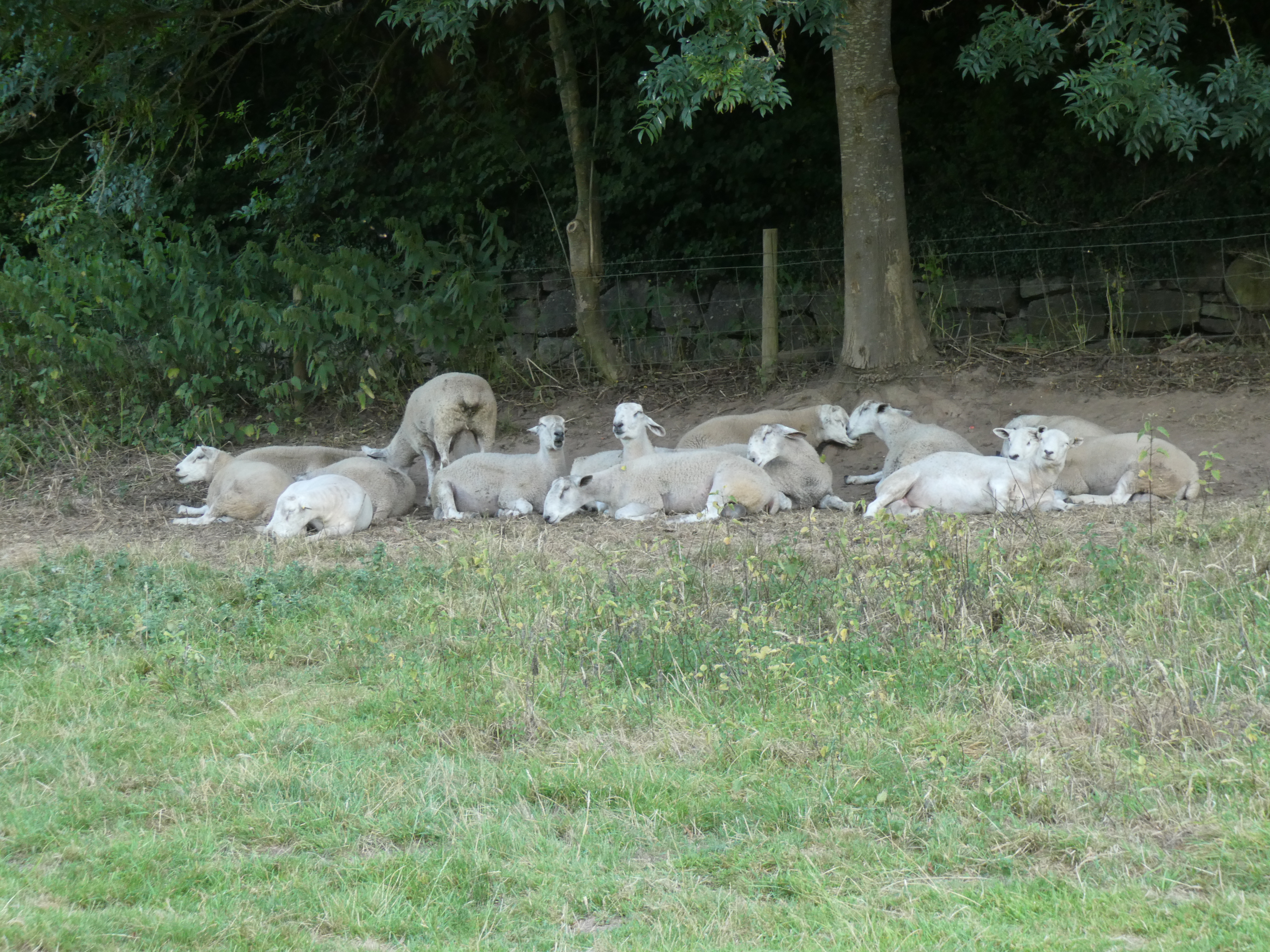
And yes, as the first photo of this post suggests, I encountered my first sheep of the walk. Longtime readers will know that on most walks I’ve taken, there are just a lot of sheep. I’ve written extensively about their charming stupidity, about the weird use of painted color patches in their wool to identify flocks, about their grossly hilarious flight reaction when approached (they pee just before they run away, as though to express their disgust at you disturbing their grass-chewing), and about how much they define the landscape of my walks. This morning, as though to warn me of what was to come, I encountered this little flock in the first mile, lying in the shade and looking like they couldn’t be bothered to go to work eating grass.
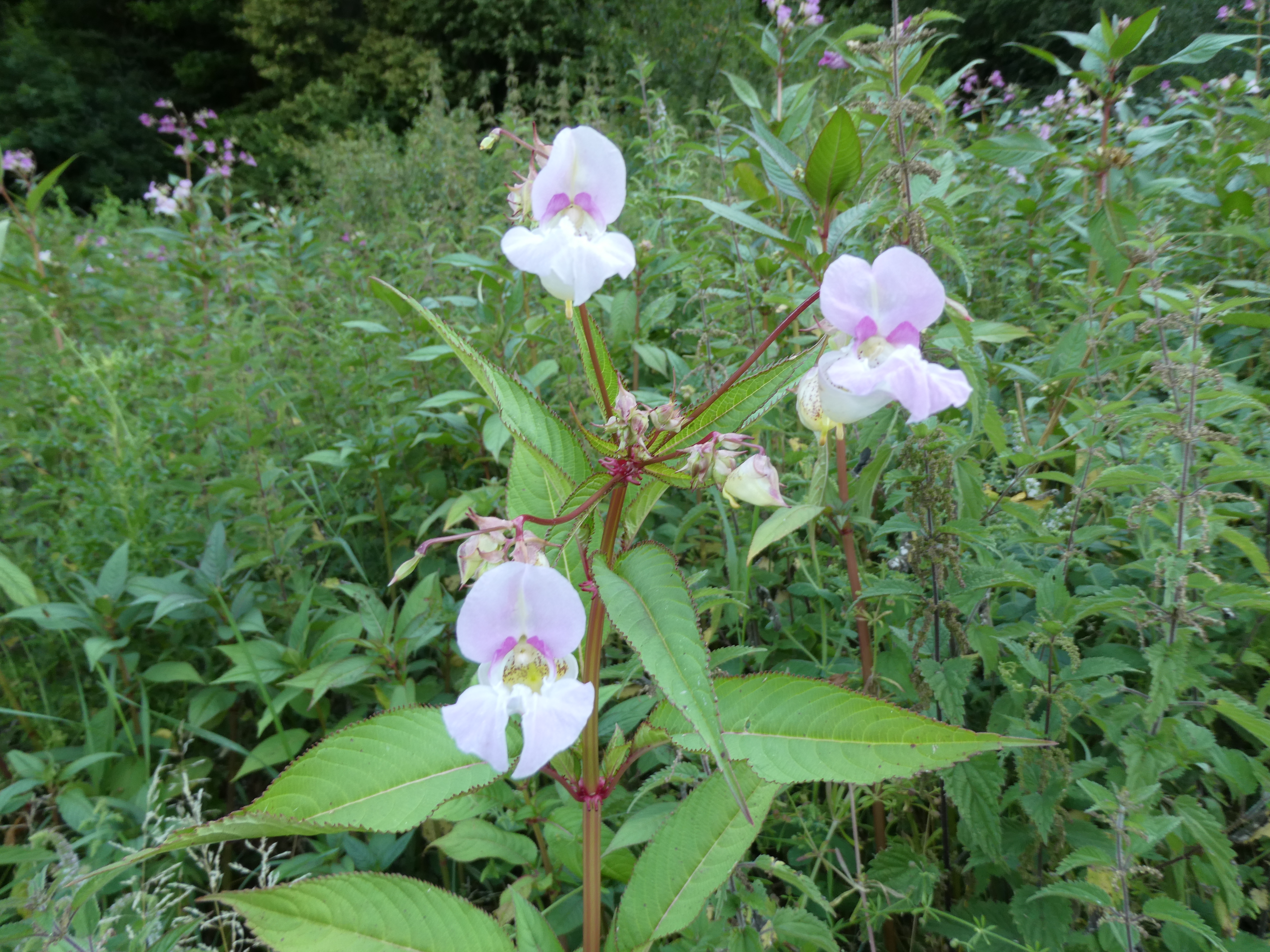
And the flowers are always beautiful. Yes, it’s time to play everyone’s favorite game: Hank can’t name that flower! I photograph them. You roll your eyes at the fact that the only flowers I can name with confidence are foxglove, daisies and roses. So here we go.
The path winds up the river for about three miles before reaching Monmouth, a small city (large town? Who can say…) that my hostess thought I should pause to visit for two lovely churches and some nice shops. Ha! I didn’t even pause long enough to photograph it. The path crosses the river, so I was again on the west bank (with this winding valley, for a fair bit of the day it was really the north bank). I passed by a rowing club’s impressive building and launch ramp, and the path quickly got back to the business of being in nature, a mix of crossing small fields and hitting sections of forest walking. The small fields near towns indicate small holdings, where individual farmers used to graze their animals, but now it’s often the case that a single farmer will own a string of fields. But the fields remain marked off by hedges or stone walls, so there’s often a gate to go through every hundred or few hundred yards.
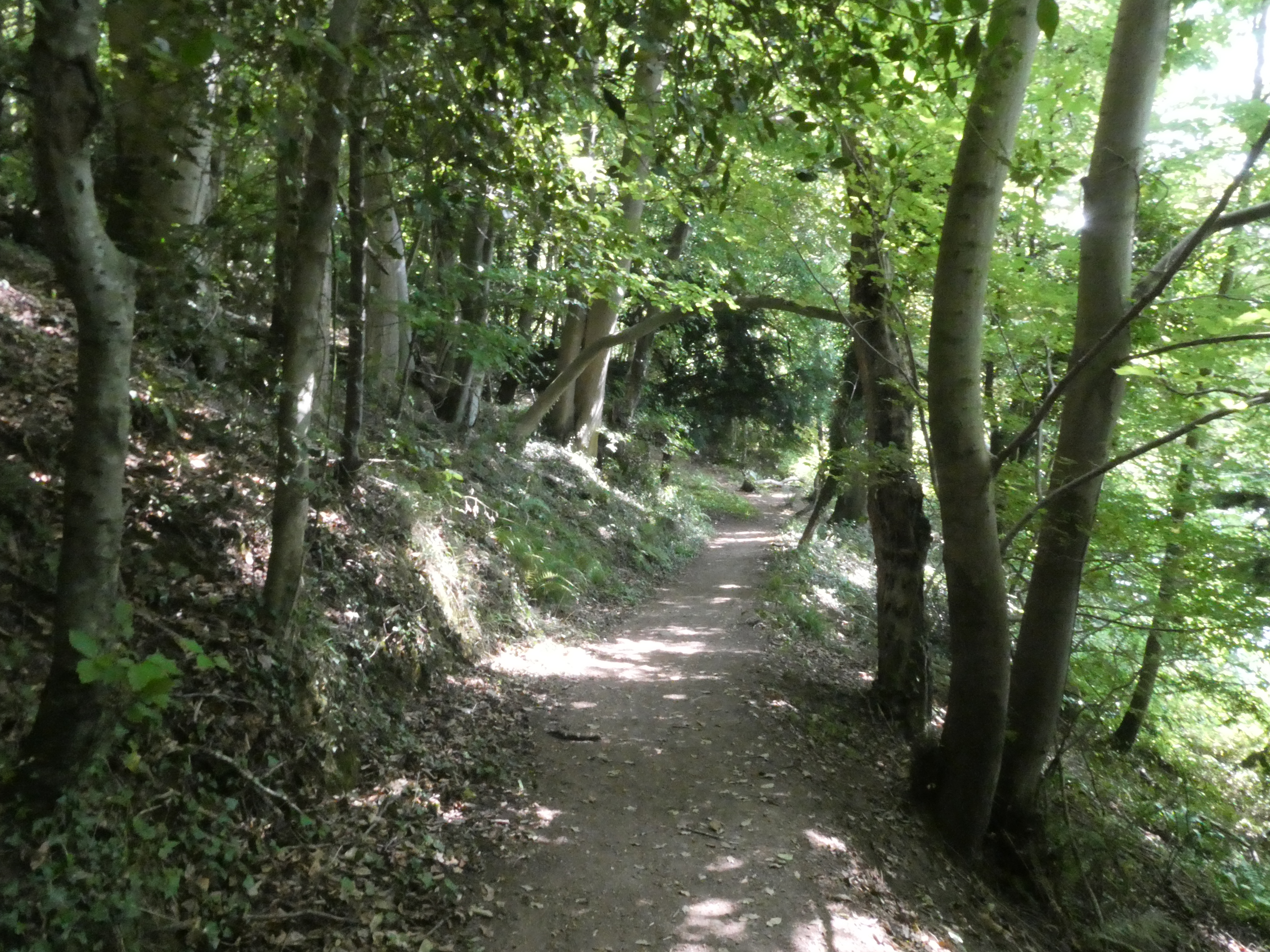
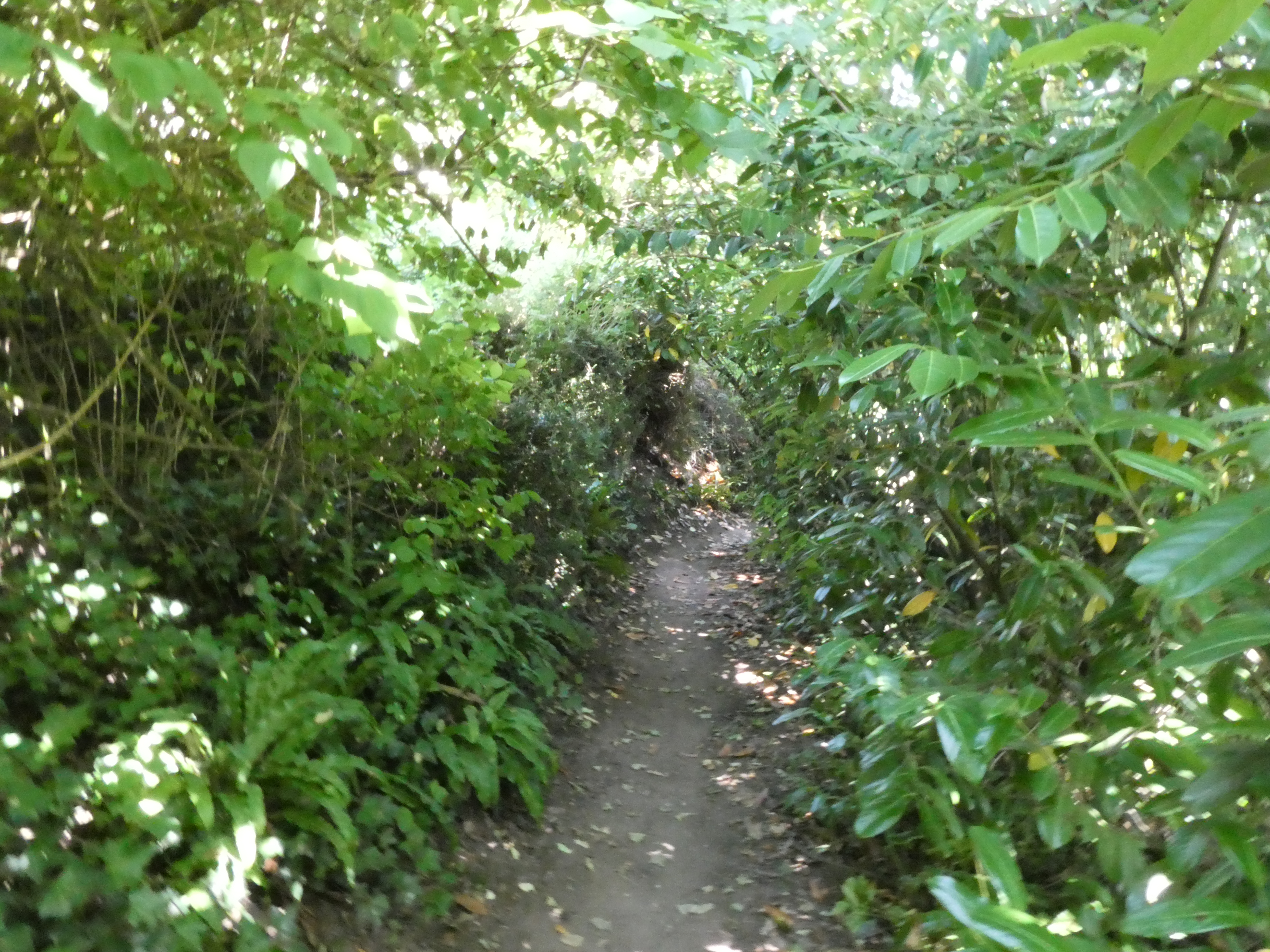
The field walking was hot work in the sun, but fortunately there are long sections of walking through the woods. It’s not as cool as the hills of day one (which were ‘cool’ as in high 70s), but at least there’s shade.
As I noted above, Monday’s walk is a short 8.5 miles, so I knew that, barring any misadventure, I would make it to Symonds Yat, my stop for the night, by lunchtime. Typically, when I hike in the city, my pace is around 3.3 miles an hour, but on a hike through nature, I’m much closer to 2 miles an hour. That’s fine. It’s not a race (except for day one, when I was racing to get to food before all my options were closed off…). As the heat climbed, I kept up a gentle but steady pace, reminding myself to drink water more often than I would think necessary. I hike with a two-liter water bladder in my backpack, with a hose snaking out and attached by magnet to the strap across my chest, so it’s easy to unclip the hose, get a few sips of water, and reclip it. I used to hike only with water bottles. The advantage of the water bladder is that you keep up steady hydration if you remember to do it. The disadvantages: you don’t take big luxurious drinks of water all at once, because you have to suck in mouthful after mouthful of water to get a really big drink, and you don’t have an excuse to stop as often for the water bottle ritual of taking off you pack, getting out the water, maybe sitting down, and getting a drink. The water bottles can be a built-in excuse to pause and really take in your surroundings. My current strtegy is to have both the water bladder and a thermos of water (kept cooler by the wonders of the vacuum flask), so I can sip as I go, but also have teh option of stopping for big luxuriating drinks.
You can gauge how hot and sweaty the hike was by how much I have just written about hydration.
The day’s novel treat arrives about 7 miles into the hike, when the path crosses through a youth adventure campsite, where a suspension bridge crosses the river. So I was literally walking through a field while thirty yards away about 20 kids were learning archery. Though they were aiming at targets in such a way that the arrows should all have been flying parallel to and not toward the path, I must admit I had a fleeting moment of imaging myself getting shot with an arrow and ending my hike rather abruptly. I was not reassured when the instructor said in that loud, for-everyone-to-hear voice that teachers and coaches have mastered, “The arrow should rest on the top of the handle when you are aiming!” The words ‘errant arrow’ flashed through my mind.
The bridge is a crazy thing, with a very steep ramp up to the suspension part, which is made of interlocking metal that reminds me of chain-link fence. It sways and creaks and makes metallic noises when you cross. I bet the kids love it.
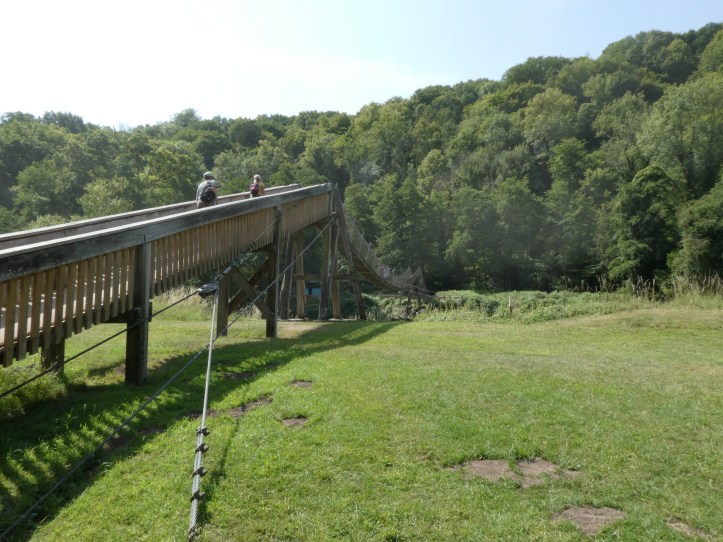
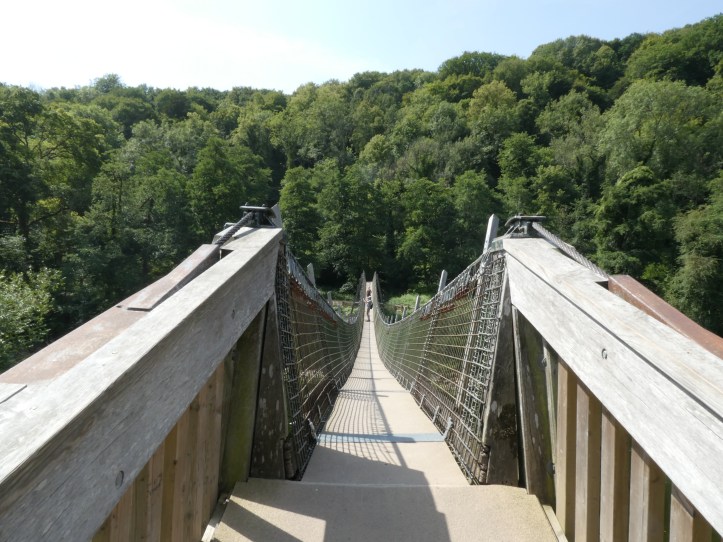
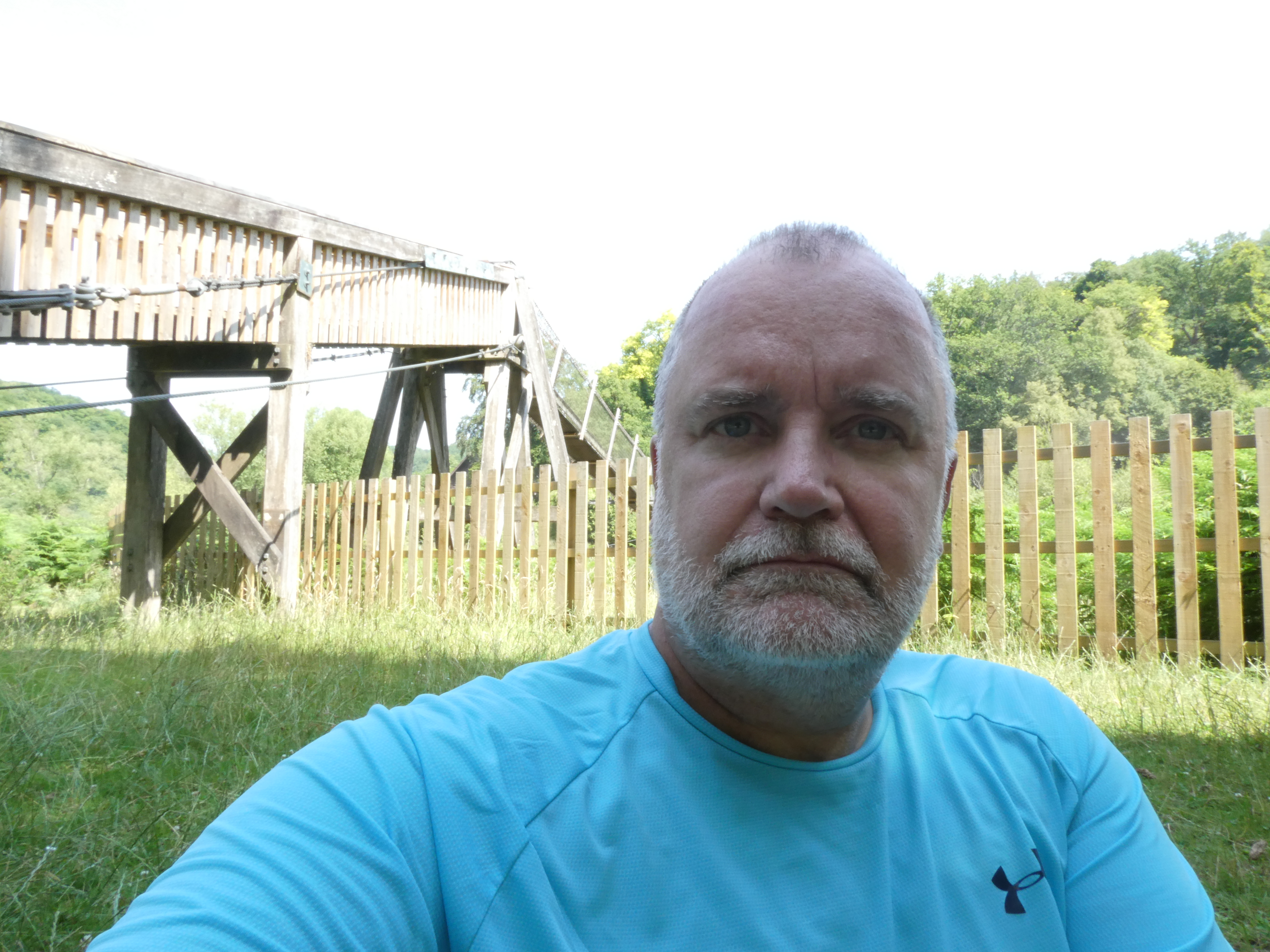
Across the bridge, I decided it was time for a proper stop. It was 11:30 and I only had a mile and a half to go. So I took off my pack, got out the water, and stretched out in the shade using my pack as a headrest. Estimated temperature 90 degrees.
The last mile and a half are once again on the path of an old rail line, so a long flat path of mostly compacted dirt and gravel, which makes the metal tips of my walking poles chirp out a distinctive metal-on-rock sound that can be either reassuring or annoying, depending on how the walk is going. Honestly, is the heat took its toll, I wavered back and forth between those two sentiments.
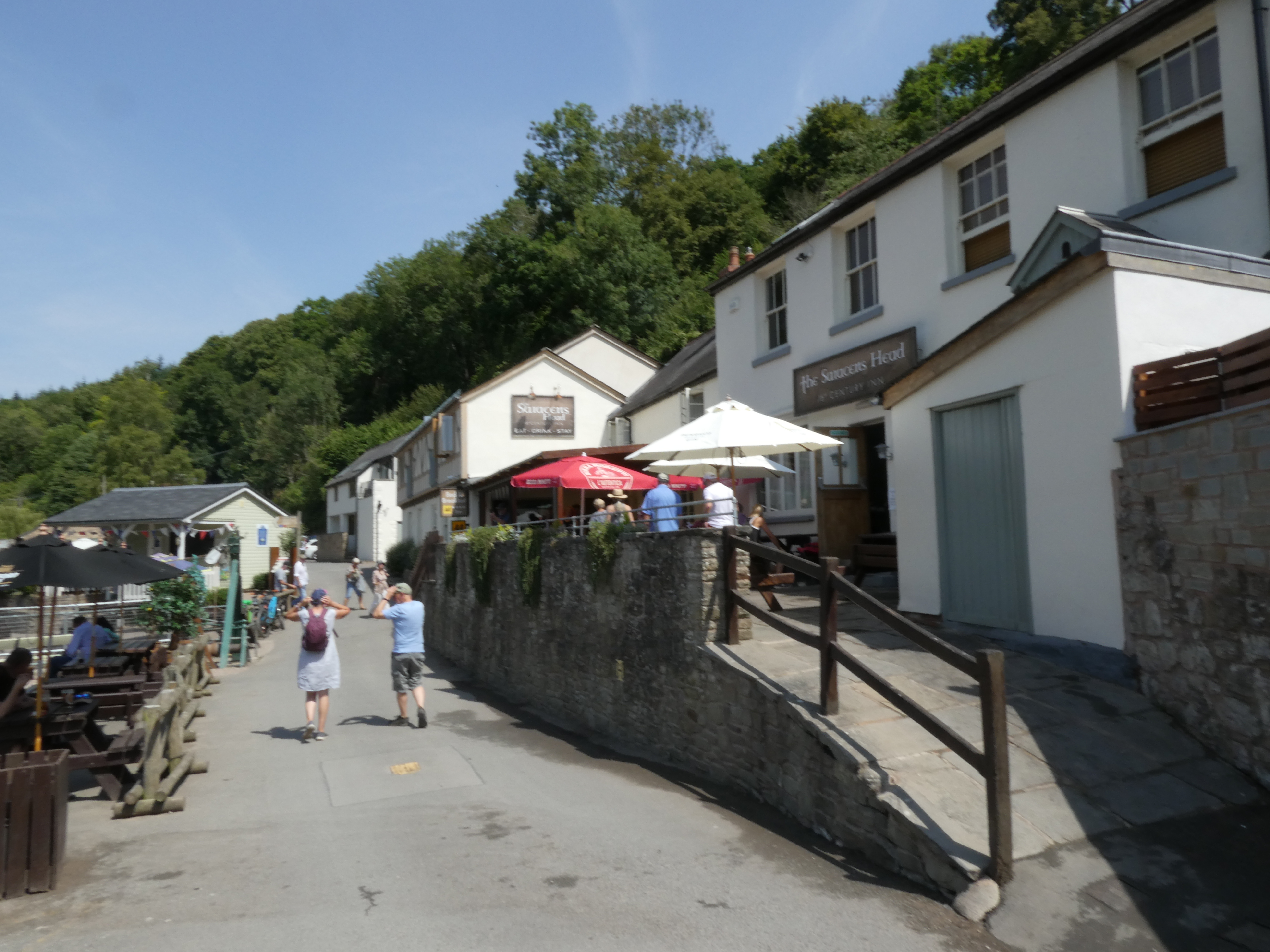
My stopping point is the Saracen’s Head, a lovely inn with rooms that look like you are in Scandanavia (pale yellow walls, pale oak beds of simple modern design, brightly colored duvets).
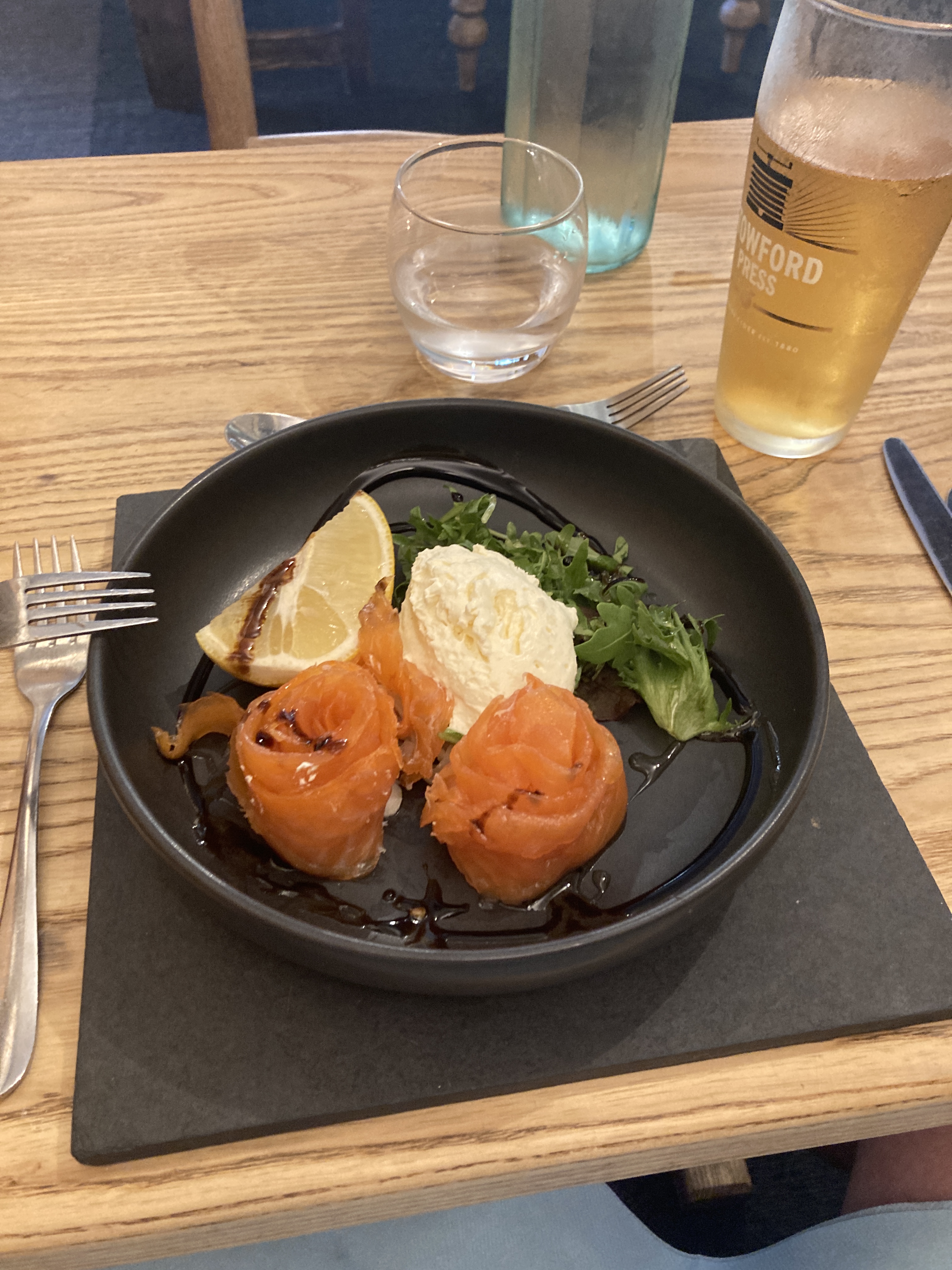
And the food! I was honestly too hot to be hungry for lunch, and instead lay down for most of the afternoon and listened to the fan ineffectually move air around the room (no air conditioning here, of course). But for dinner, I had a starter of smoked trout with horseradish cream and pickled fennel. As I was eating it, I wished I hadn’t ordered a burger for dinner and had instead just done two of the starters, which all sounded good. Oh well. With a pint of Stowford Press cider (or maybe two, cough cough) and an afternoon’s rest, who’s complaining?
 ramblinghank
Alternatively, maybe you could try visiting the UK during the Christmas season? You could run about London like Ebenezer Scrooge, the day after having been visited by the three spirits.
The sheep look they’re making kissy faces. Are they flirting or taunting you? Again, I am green with envy of your adventures.
Yes, I am irresistible to sheep and dogs and flies.