Cliburn to Penrith, 9 miles, 377 feet of ascent
This was an easy day of walking. Just look at that minimal elevation change. And that’s a nice way to end Lady Anne’s Way. It gets you to Brougham Hall and Brougham Castle (it’s pronounced broom, by the way, not, as you would assume, the same way as the word brougham, a type of carriage). I’d looked at the trail description, and I knew that after starting with about .75 miles of field walking, I’d be on paved roads for more than 2.5 miles, and one of them is a genuine, busy road.
The taxi driver, obviously having driven walkers before, asked me if I was going back to the village hall, or if I wanted to be dropped at the church down the hill, which I had walked past yesterday on my way to the pickup point. I happily opted for the church, cutting a non-trail 500 yards of walking through Cliburn to get back to the trail.
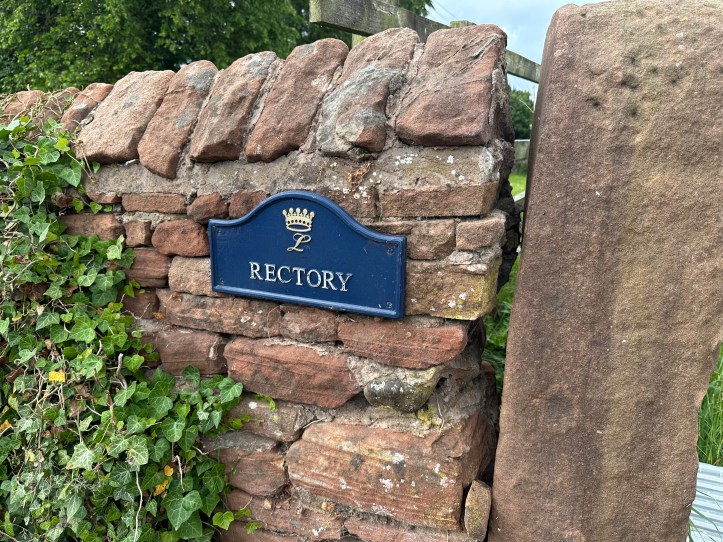
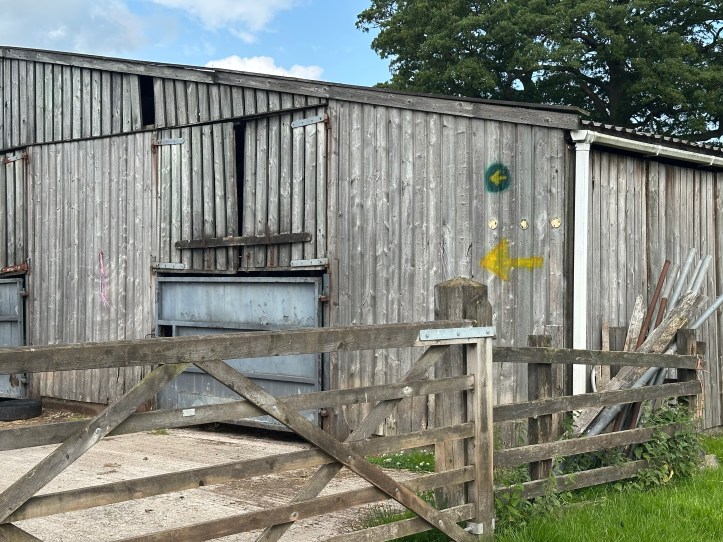
The trail starts be weaving through the rectory farm, where the owners are clearly used to people getting confused by the zigzagging route weaving among their buildings.

After dipping down toward a stream and getting across a few fields and back up to a road, the pavement era began.
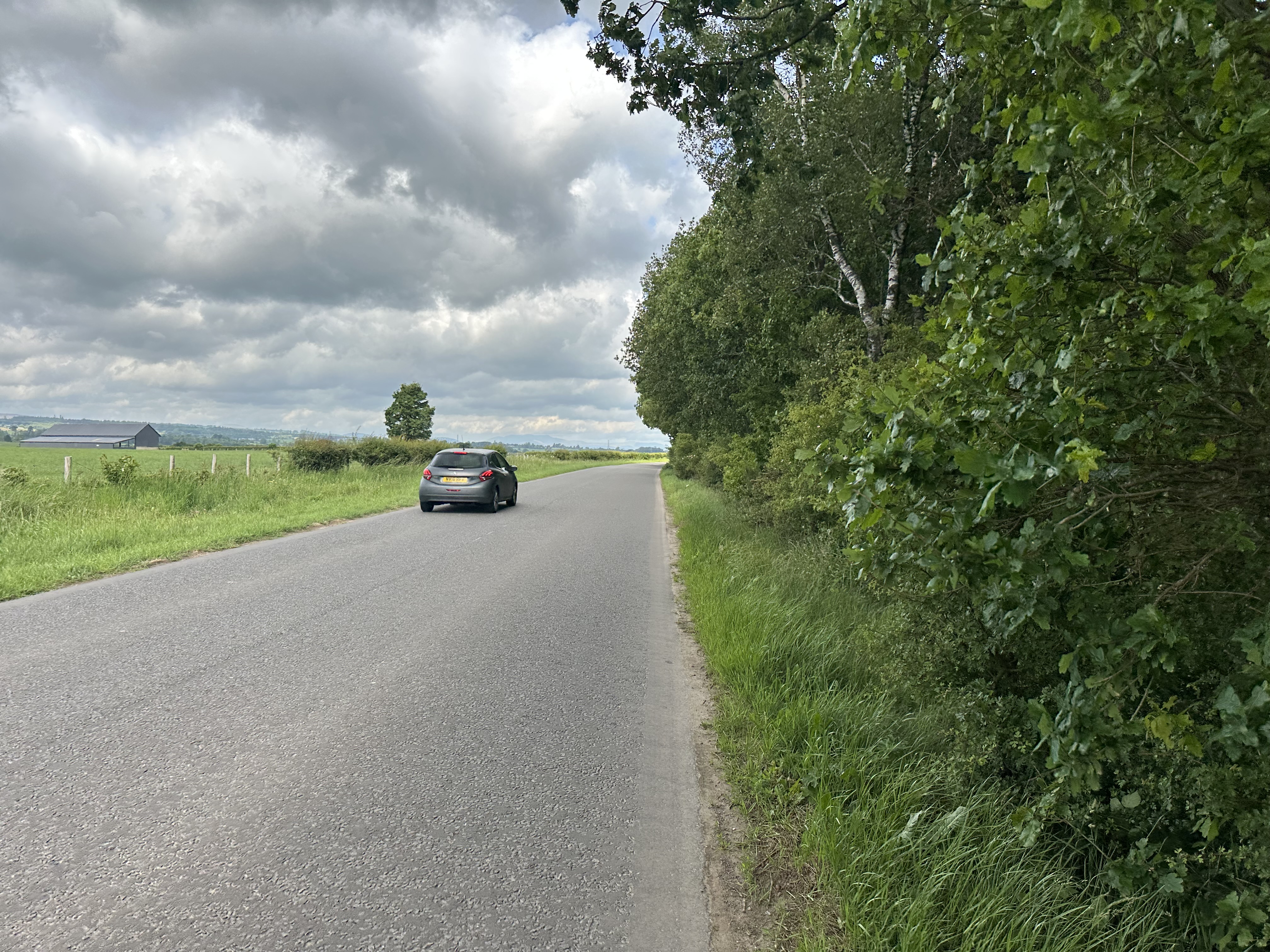
In the upper pocket of my pack, for the entire three weeks, I have been carrying a pair of hard rubber tips that fit on the end of my walking poles. These are for road walking, so you don’t wear away your metal tips. For reasons unfathomable, until now the rubber tips have sat in that compartment while I walked along roads, either simply carrying my poles or putting up with the hard click click of metal tips against pavement. Today, I broke them out, and it made road walking much better than it might otherwise have been. The poles give my walking a nice extra bit of rhythm, and I do think that on flat surfaces they make me walk a bit faster. Still, over two miles on a road where I saw surely more than fifty cars, with no sidewalk and barely any grassy edge to step off onto if there were cars coming from both directions and oncoming cars couldn’t simply veer out to their right to pass me.
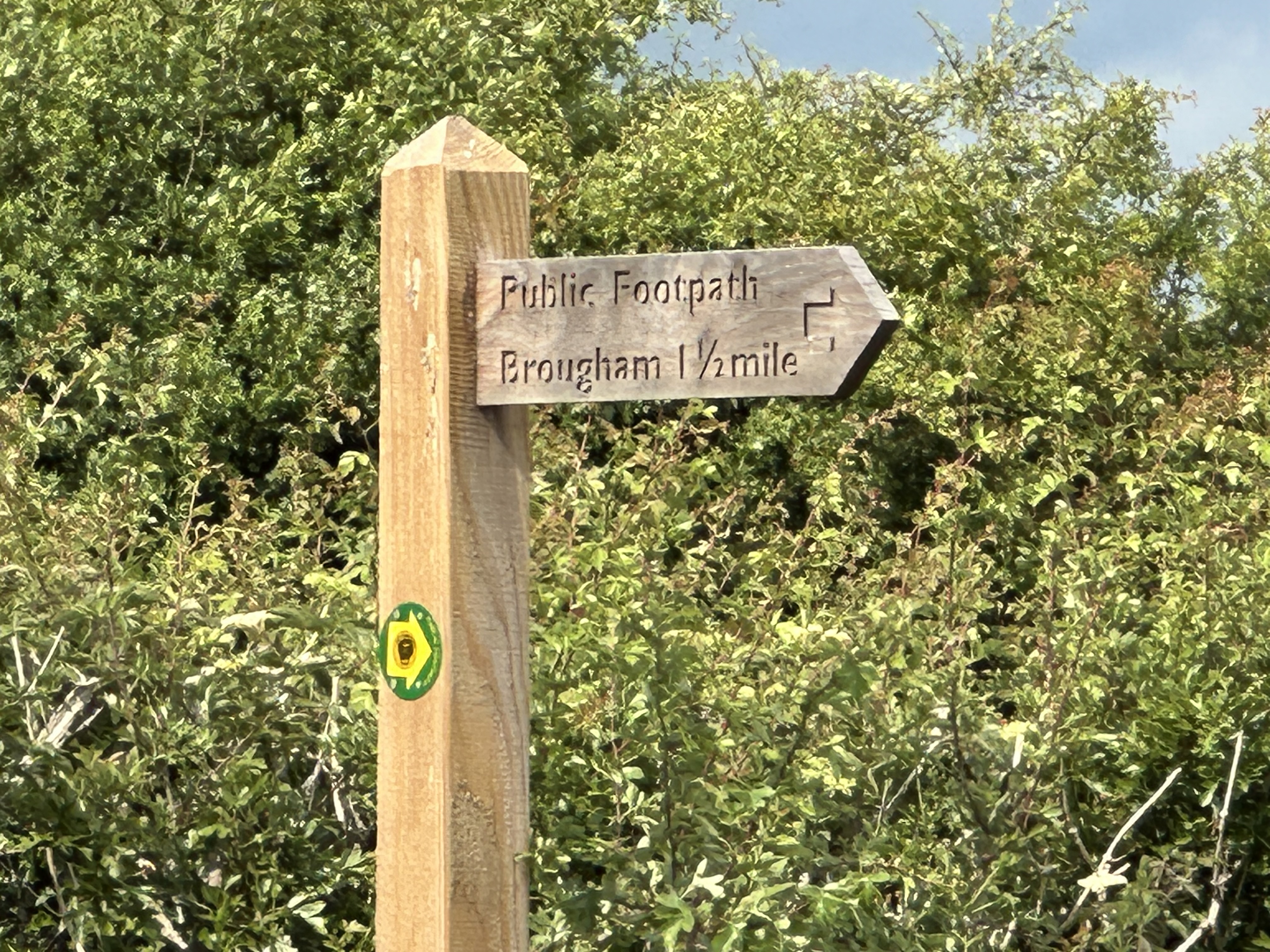
I was relieved to see this sign, both because the miles to the village of Brougham are so few, and because it marked a break from road walking.
There was a bit of nice walking along the edges of farm fields, and then onto a dirt drive on a farm, where I saw hundreds of crows fly up into the air all together.
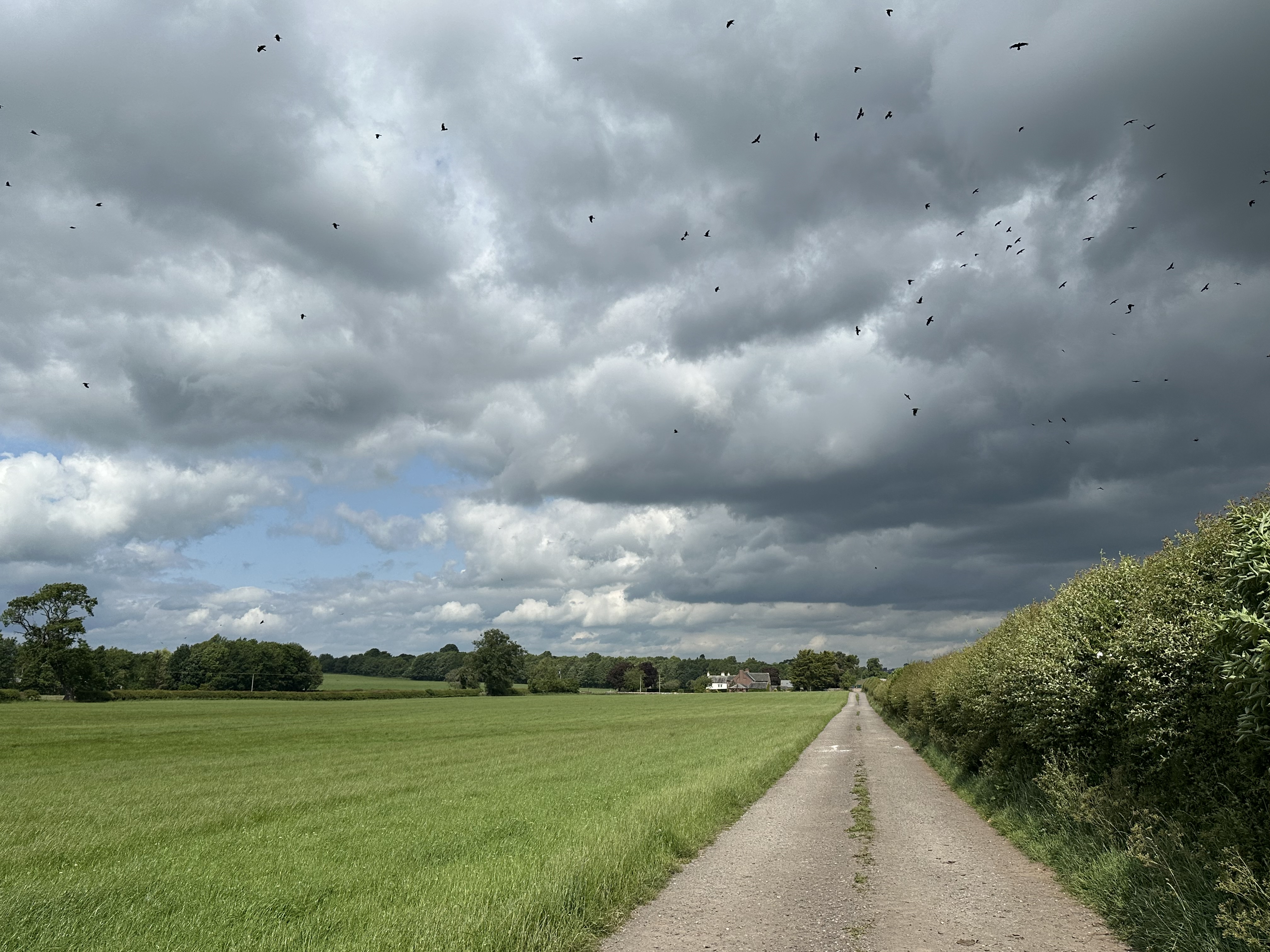
One of the tricks of Lady Anne’s Way is that you might sensibly think of Brougham Castle as the end of the trail. It’s a destination, it’s got a shop to buy souvenirs (I got another refrigerator magnet, my traditional walk memento), and something that feels like a capper to the trip. This means that signs counting down miles to Brougham and Brougham Hall (a semi-ruin being restored to use, about a mile from Brougham Castle) give you a sense of being so nearly done, which is great, until you are at the castle and realize there’s still several miles of walking to get into Penrith proper.
But I get ahead of myself. The path dropped briefly onto another paved road, then across this field, in which the path was not packed down with use, but unambiguous nonetheless.
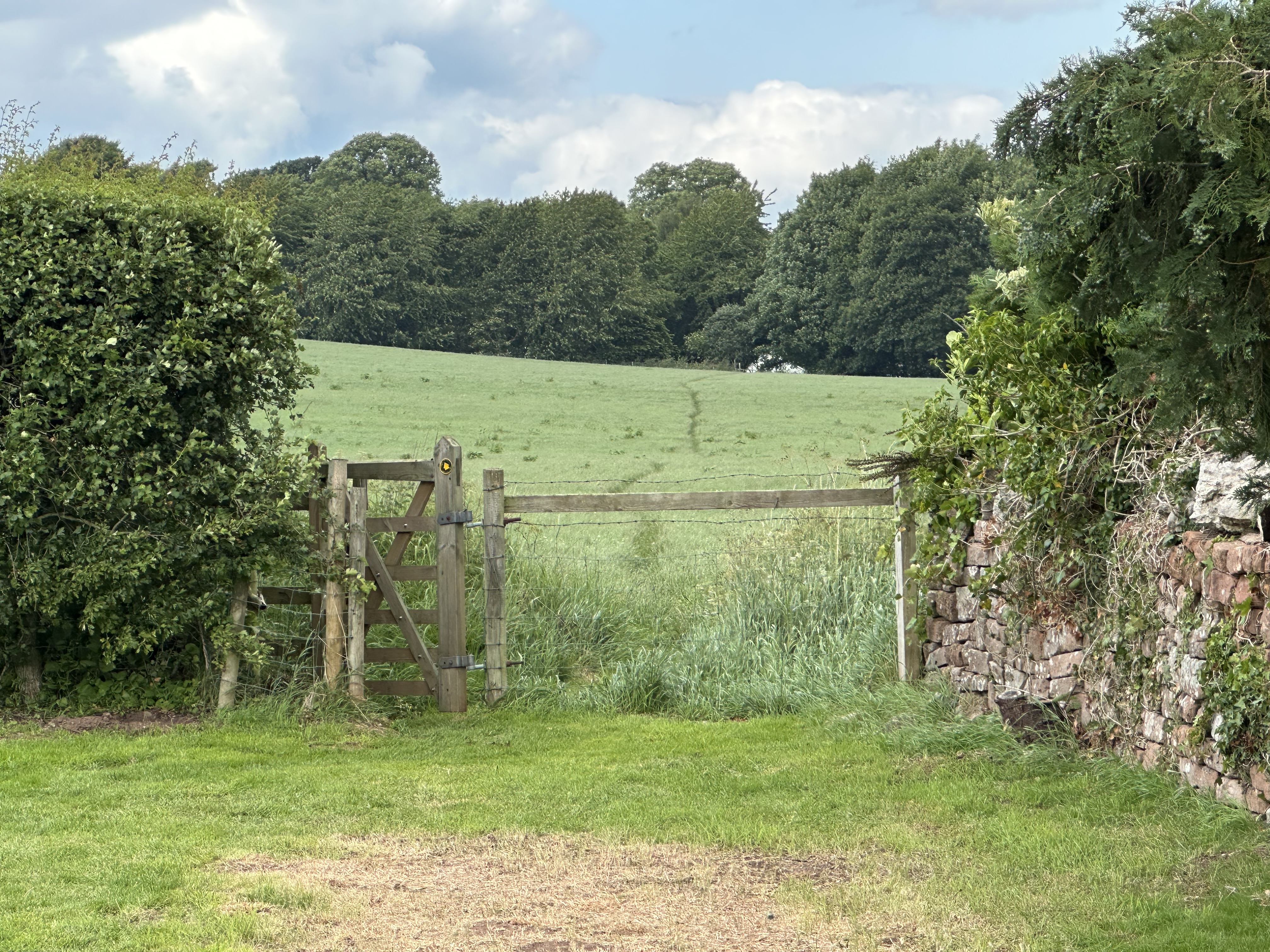
Then the path briefly wove through the woods you can see in that image, and I ran across what I think is a kids’ really elaborate building project.
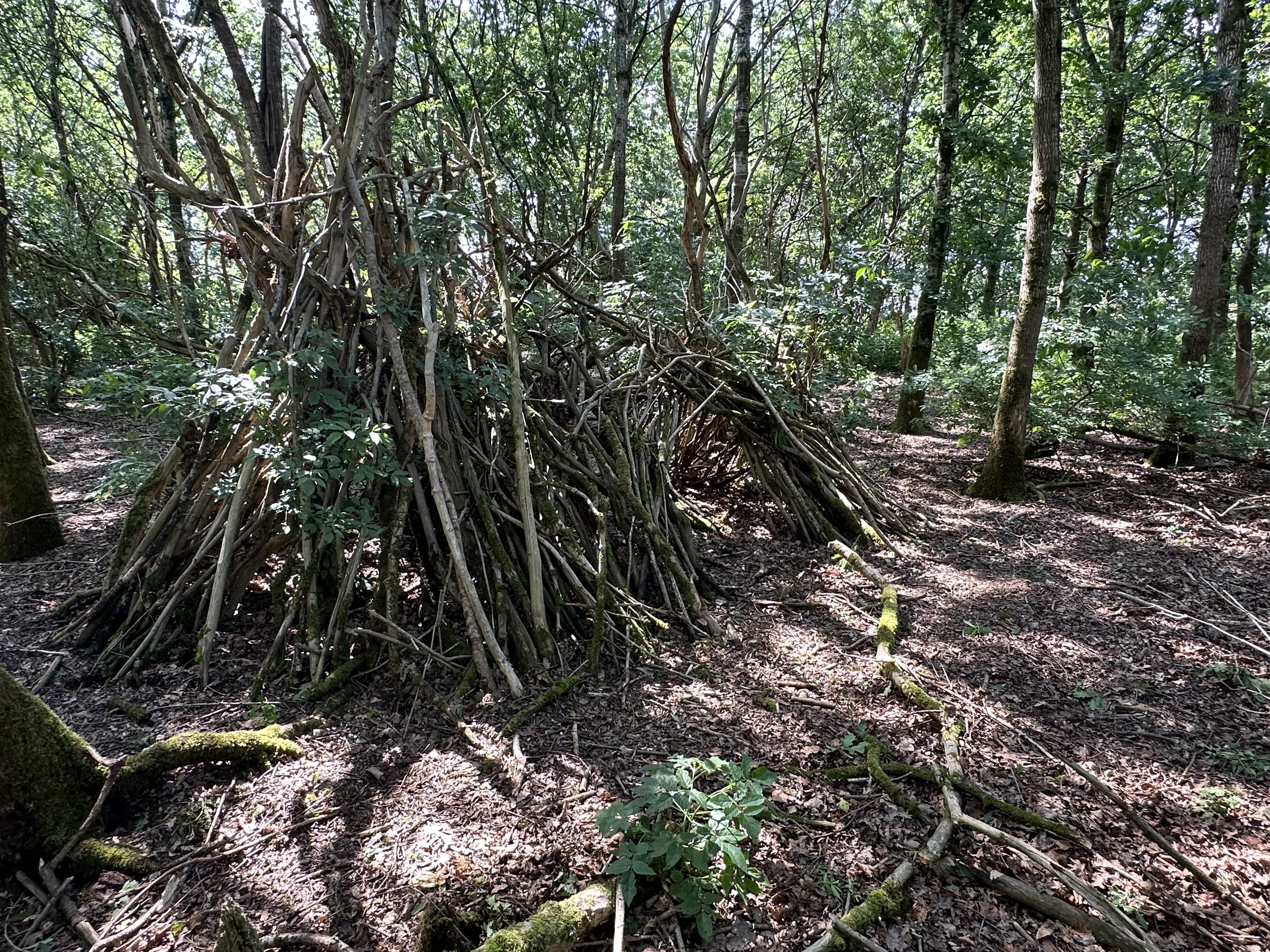
It’s on its way to being a hut, with an entrance and enough room to lie down or hang out sitting down if you are a kid.
And finally, I arrived at Brougham Hall, the first of two tourist stops I will make. There has been some sort of keep on the position of Brougham Hall since before 1066, and the oldest part of the existing structures, the gate, dates to around 1500. During her lifetime, Lady Anne acquired one-third ownership of it (it’s complicated), and did some of her usual restoration work. Unlike many of Lady Anne’s castle restorations, parts of Brougham Hall have been in use right up through the present day. In the Victorian era, still in the Brougham family, it was a destination for London society. Finally. one of the Broughams, facing debts in the early 20th Century, sold it for demolition. Fortunately, it wasn’t entirely destroyed. During World War II, there was a military base doing tank development here. After the war it fell into disuse and was only saved in 1967, when Christopher and Alison Terry bought it and set out to stop it from crumbling away. Now, it is a destination with spaces leased out to artists (a print maker, a woodcarver and photographer, a jewelry maker) and a small-batch distillery.
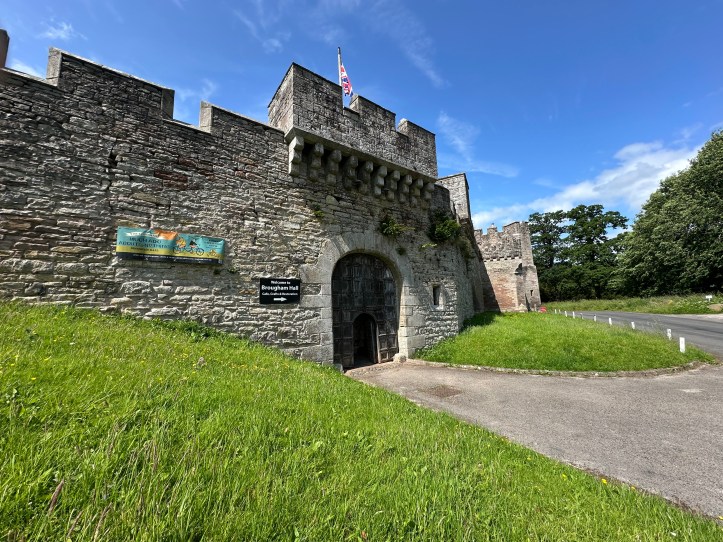

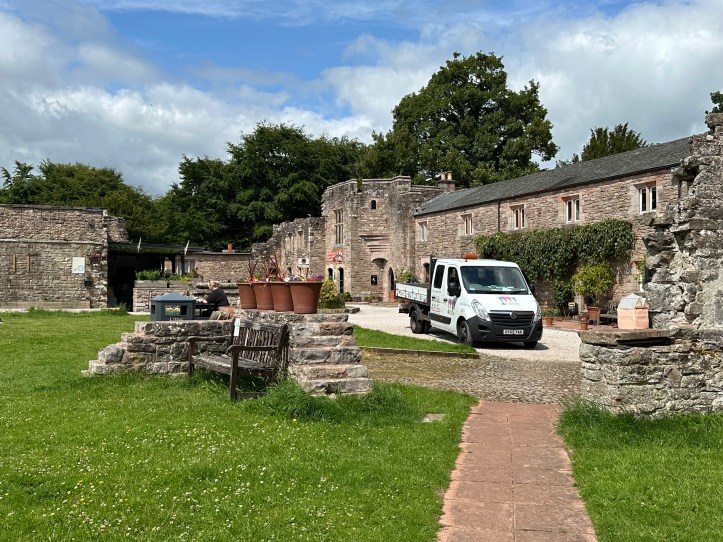
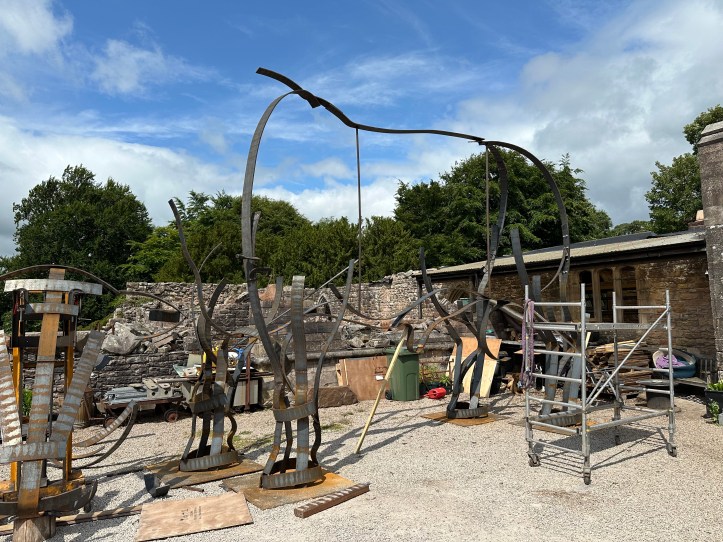
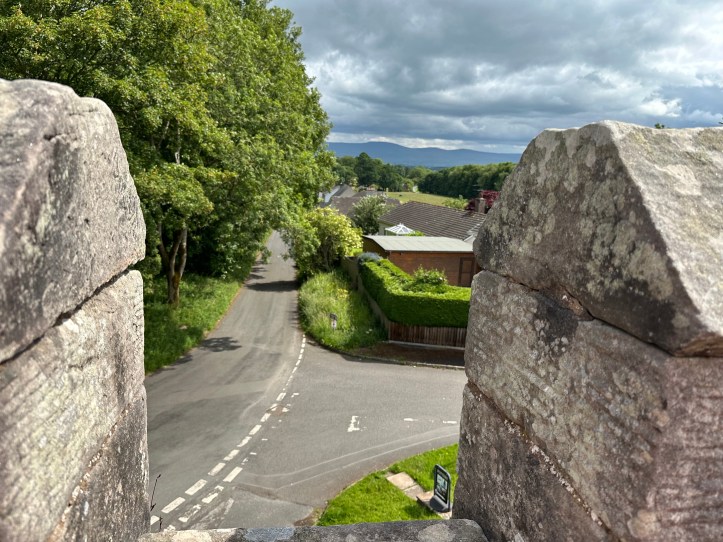
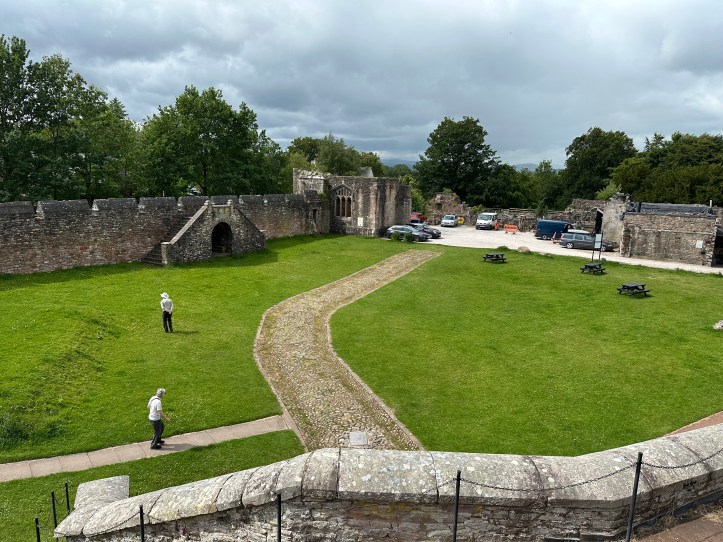
This is good stuff for Lady Anne’s Way walkers: You get a little teaser before the main event, Brougham Castle. I set off down the road for a mile to get there.

In case you are in the market for a saddleback pig, I got a guy… 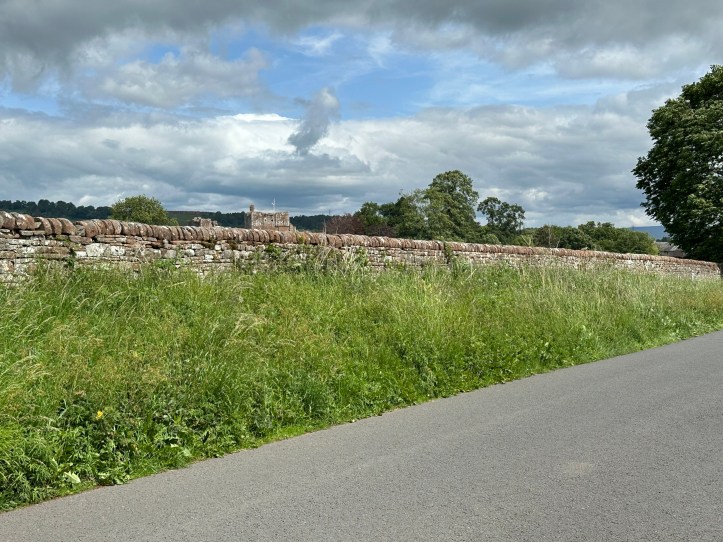
Brougham Castle teases with partial views over a stone wall. 
Getting closer. 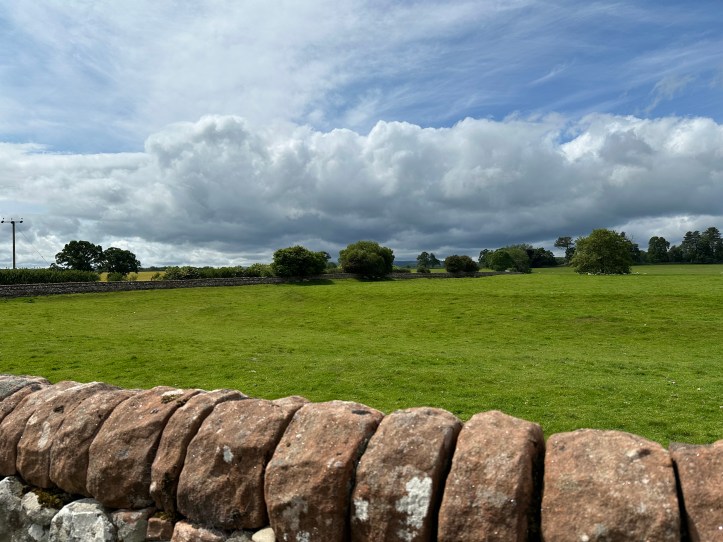
Turning a corner, I could look into the field near the castle and see what is clearly the outline of elevated grounds from the old Roman fort that was on this site.
Brougham Castle did not disappoint. The person working in the tiny shop there was happy to greet me, and we got to chatting as I paid my admission fee. She was delighted that I had walked Lady Anne’s Way, and said I must make sure to climb the spiral staircase to get to the top of the tower for the views.
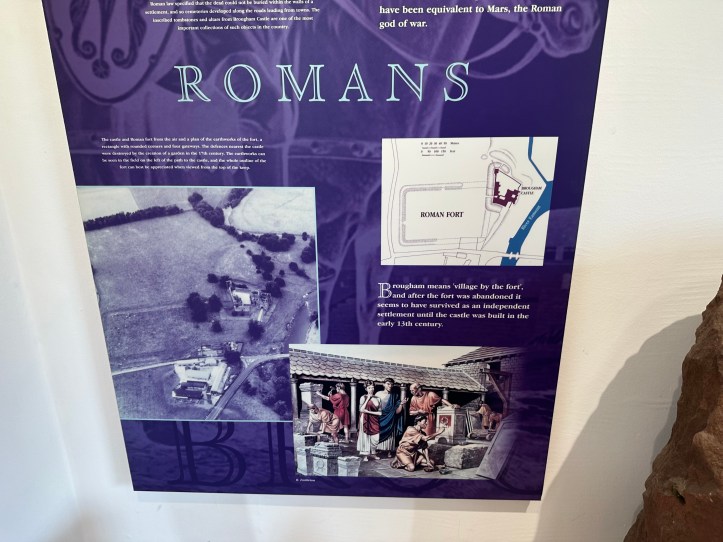
Just a bit of history, but I share mostly for the useful drawing of the siting of the Roman fort and the castle grounds.. 
This is one of Lady Anne’s notorious plaques, commemorating her work restoring the castle. 
The view walking toward the castle grounds from the entrance hut. 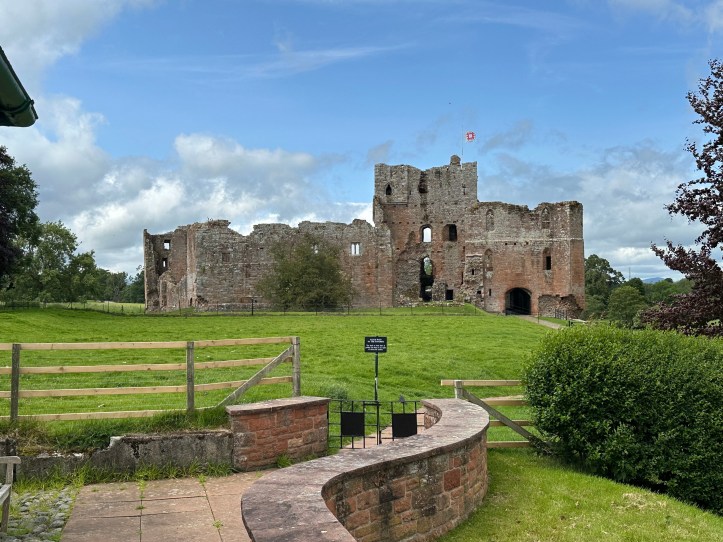
That’s the stuf. 
Ruins. 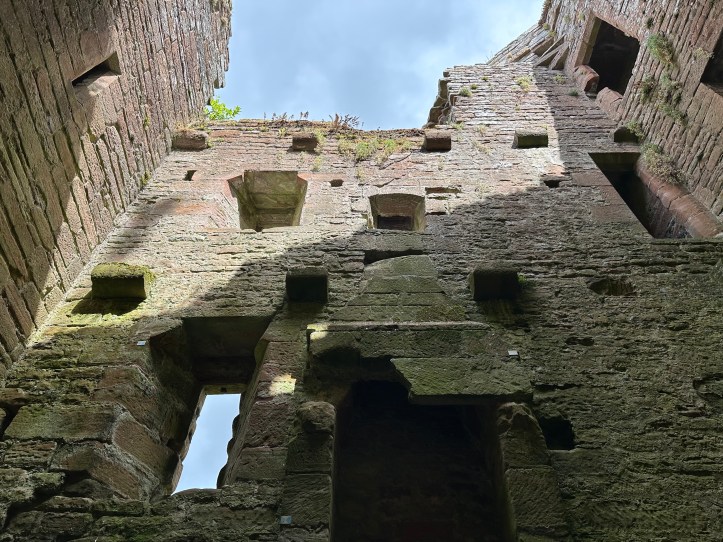
The view upward from inside. 
More ruins. 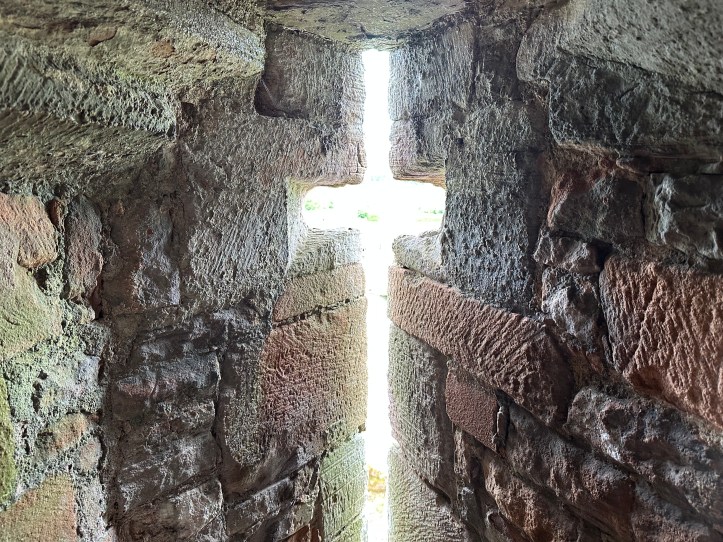
The tiny slit windows high up in the otwer. 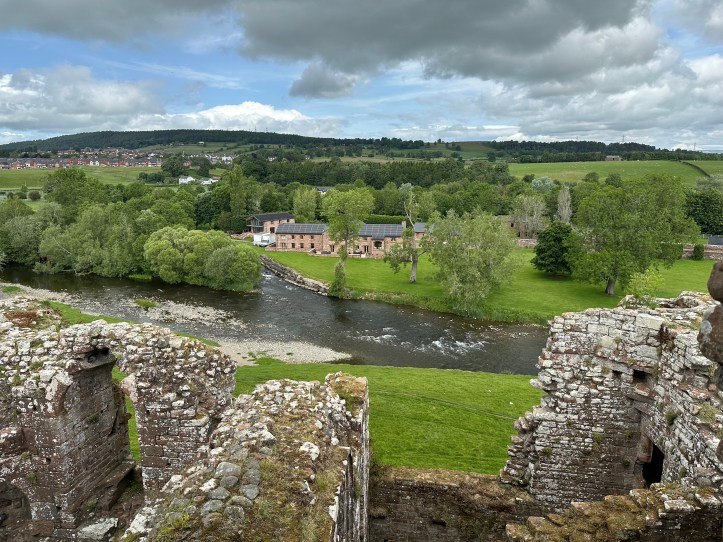
The view from the top. 
Did I mention ruins? 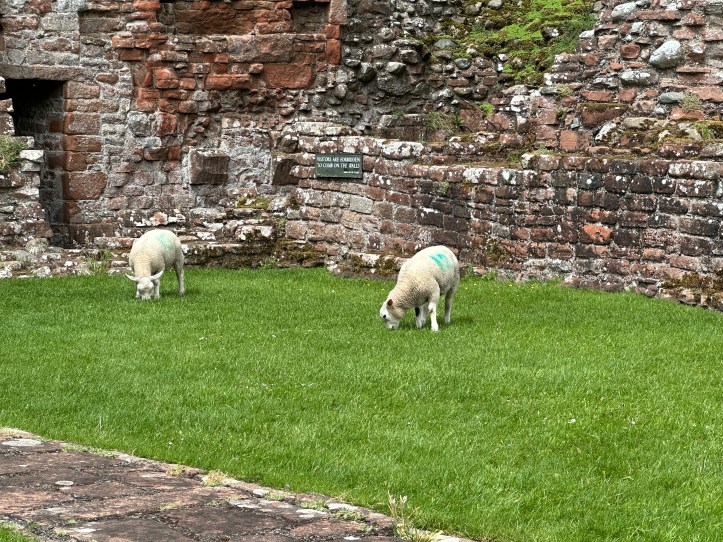
And of course there were sheep, just hanging out. 
Look how happy. 
You can see the remains of the moat, where there is a big dip. This goes all around the castle grounds. 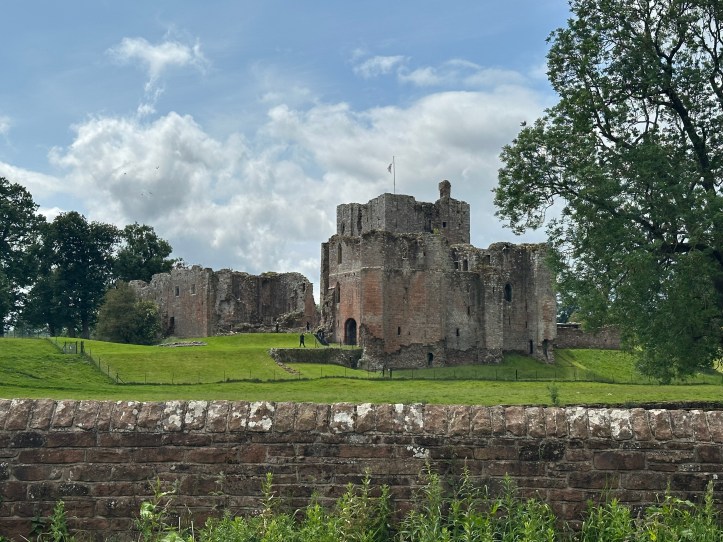
One more for luck.
Of Lady Anne’s restoration work here, the sad irony is that, as with most of her other castles, it fell out of use and was stripped for parts (lead roofs, some stone, various tapestries slightly worn from hundreds of years of use available at a discount…) by the next generation. Her only daughter married well, but her husband had no interest in trying to restore or maintain a medieval past and the castles that Anne so loved.
In fact, her whole project, and attempt to restore things to the way they had been over a hundred years before she lived, was working against the tides of history and fashion. While she wore inexpensive sober black, the court of England in the last period of her life was an explosion of color in fashion. And even as she restored castles, during her lifetime, Inigo Jones was designing great estate houses in the Palladian style, models of carefully massed symmetry that make her castles look like, well, ruins. During her lifetime and for the next century, there would be a boom in estate building, creating many of the famous country estate houses of England. Her vision of restoration, a return to the past, was overwhelmed by the Restoration, when Charles II came to the throne.
Anne’s most enduring works, which have been in continuous use since the 1600s when she built them, are the almshouses of Appleby, which she built for women who needed a place to live because they were single and aging or widowed. These cottages remain in use, and though they have not been strictly almshouses since 2010 (the occupants pay a maintenance fee), they continue to serve those in need. Supporting her local community and those in need was one half of Lady Anne Clifford’s vision. The other was a return to her family’s feudal rights and rituals (her processions around her estates). It seems right that the almshouses endured.
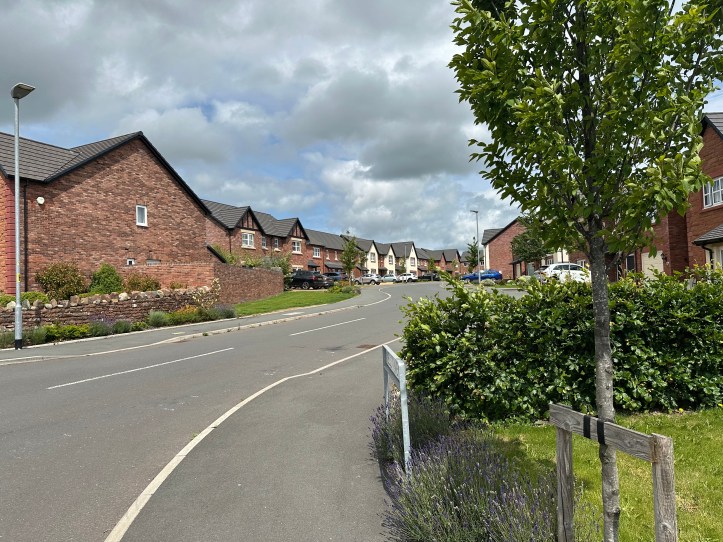
And that would be a great place to end, but since I am talking of building, there is an appropriately ironic postscript. Technically, the formal route of Lady Anne’s Way goes from the castle to the river and winds around to reach a busy road (which does have sidewalks) that takes you into Penrith in 2.5 miles. But for those who have had enough and want to get to Penrith quicker, there is a straighter route up a road through the suburbs of Penrith. I It’s only 1.5 miles. I opted for the shorter way.
And here I encountered a different kind of estate. Brougham Fields, a development of cookie-cutter upscale housing, is SOLD OUT, but you can still buy during the construction phase of The Fairways.


But I hate to close on that rather sour note, so I’ll close with this:
I’ve been doing these long walks for sixteen years. I’ve done eight big trips, and written about six (You all missed out on the Coast to Coast because it was before I realized that blogging about my walking could be a thing, and you missed out on Switzerland, because… I dunno, oxygen deprivation at altitudes made me too stupid to blog?). These blogs are a pleasure for me, a way to flex my writing muscle and to record for myself what my walks have been like and what my mind has been like when I walk. Still crazy after all these years, I guess.
And so, for now, I am done rambling, and done rambling. See you next time!
 ramblinghank
Congratulations! Well done, m’Lord.
Fantastic. We can vicariously walk with you. Well done, Hank. Thanks for including us on your trips. May you have many more.