Skipton to Appletreewick, 9.5 miles, 951 feet of ascent
And so I begin Lady Anne’s Way, a 100-mile path that proceeds through the estates, homes, churches and other bits associated with Lady Anne Clifford. More about her anon, but first, some logistics.
The schedule
Day 1: 9.5 miles to Appletreewick
Day 2: 6 miles to Grassington
Day 3: 12.5 miles to Buckden
Day 4: 12 miles to Askrigg/Worton
Day 5: 6 miles to Hawes
Day 6: Rest day at Hawes
Day 7: 11 miles to Outhgill
Day 8: 12.5 miles to Church Brough
Day 9: 10.5 miles to Appleby
Day 10: 11 miles to Cliburn
Day 11: 9 miles to Penrith
And of course, my obsession, the ups and downs, with elevation note in meters:
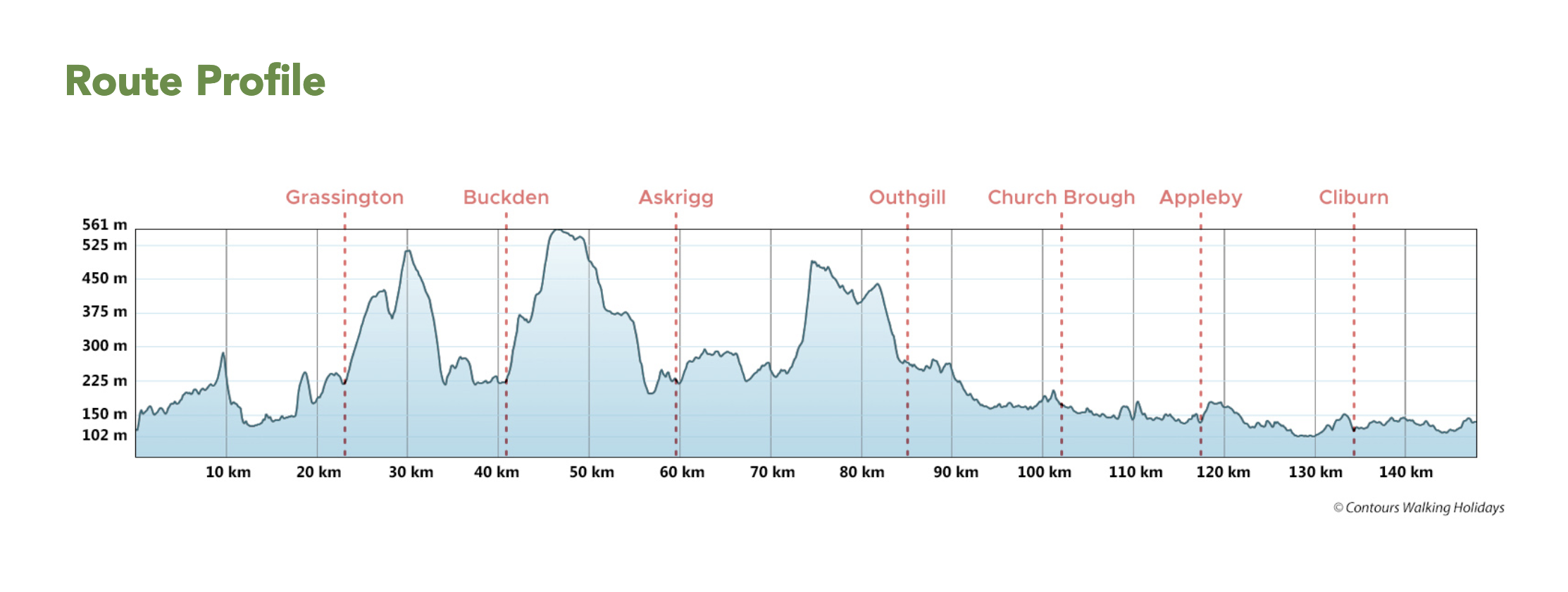
You’ll note that after Outhgill, this walk is an absolute picnic in therms of elevation change. I’ll have earned it.
So, today’s walk:
As I noted yesterday, it was weird but nice to be in Skipton, a town I had visited before on a different walk. Today’s walk started and ended with bits of walking I have done before. The first mile and a half or so I did as part of the Dales High Way back in 2019, and the last two and a half or so was along the River Wharfe, which I walked just a few days ago on my day from Ilkley to Burnsall.
I learned my lesson back in 2019, and this time at the first hurdle I didn’t take a wrong turn, and headed straight up the hill, as the trail arrows quite obviously instructed.
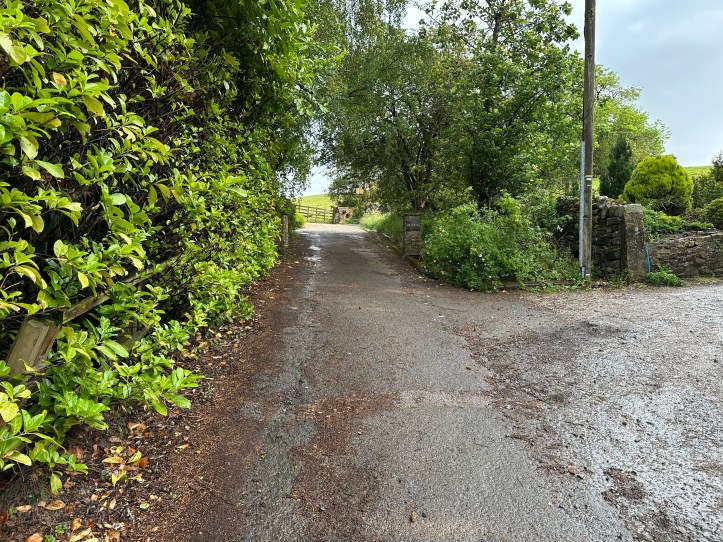
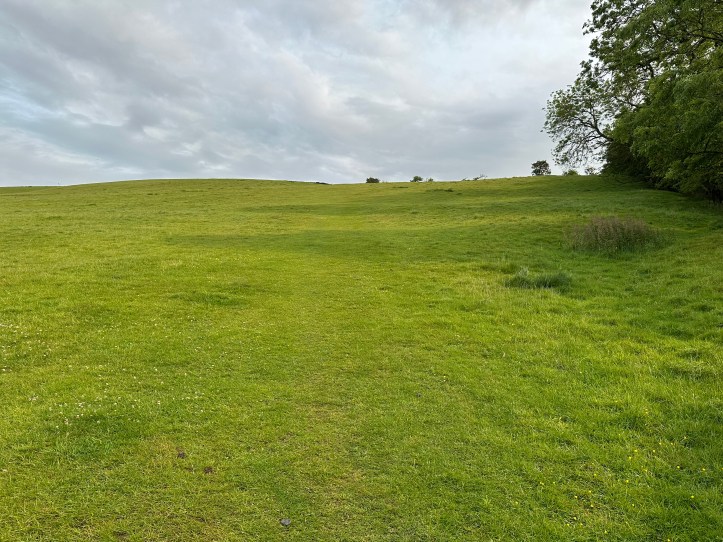
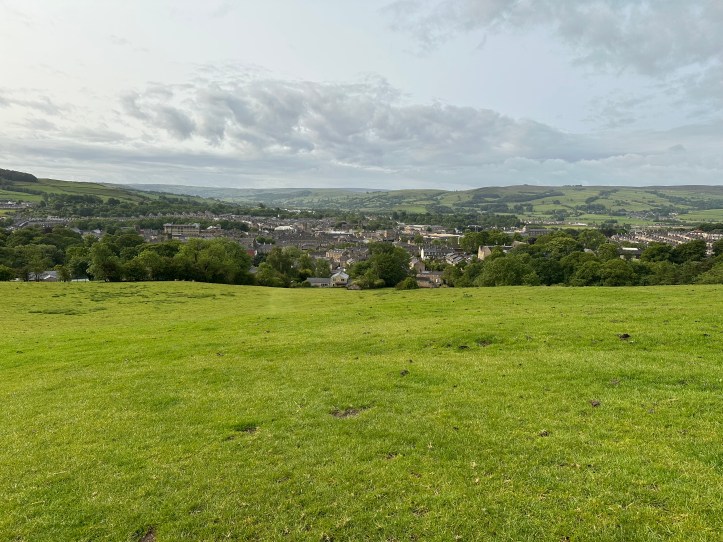
After a bit of climbing and one slightly challenging road crossing (morning traffic on a road where they go fast), the trail brought me to a golf course. This is all soooo familiar.
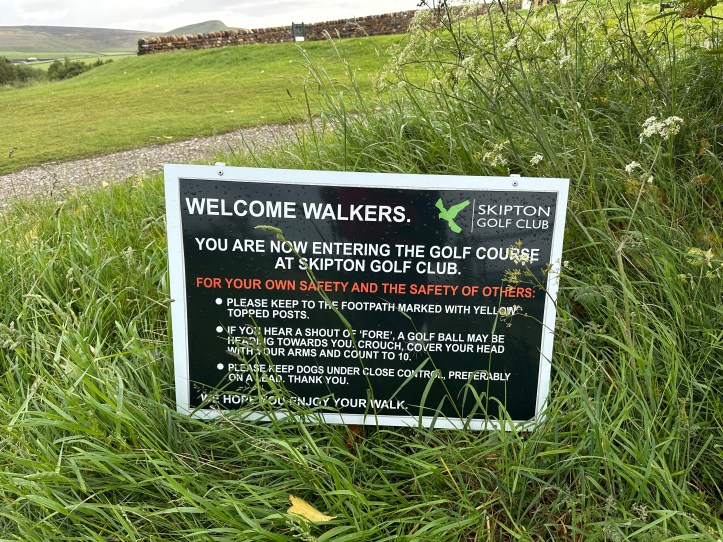
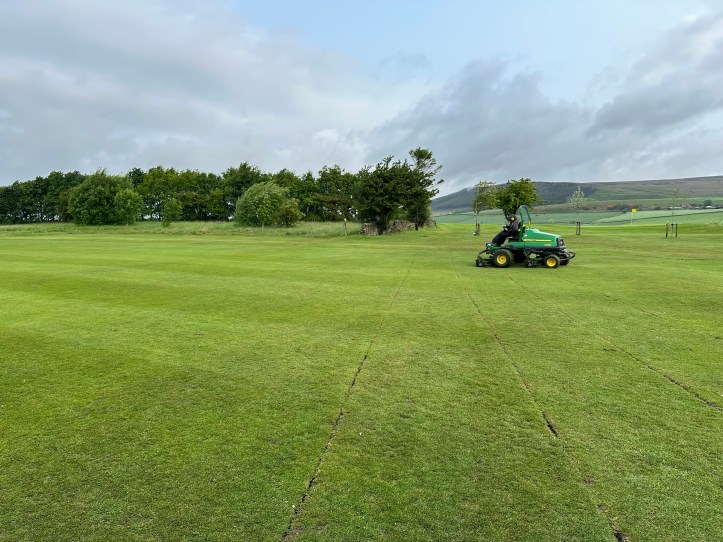
But after the golf course, the Dales High Way and Lady Anne’s Way part company, and I set off into new terrain, with its own exciting adventure.
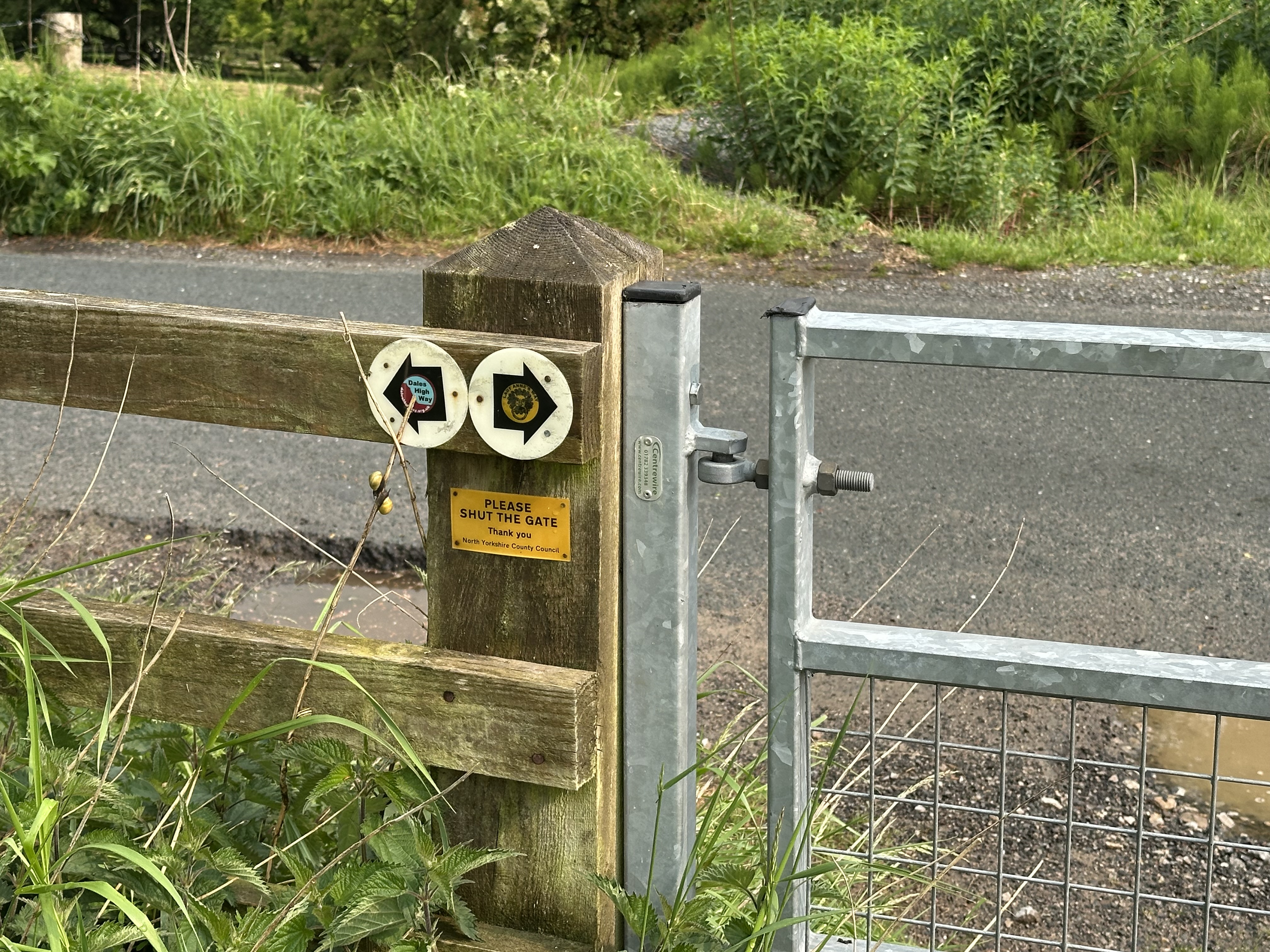
The walk breaks up neatly in sections: a short uphill northern bit to get out of Skipton, a turn to head east for a long way, gently climbing past a village and then across fields, a sharp left turn to go north over the hump of a hill and down to Barden Tower, then a section ambling along the windy Wharfe to get to Appletreewick.
Going into the little village of Embsay, I missed a turn and, unable to make the map and trail description match my sense of where I was, I was lucky enough to meet a man out for a walk. He looked at the crude map in my walking guide, turned it sideways then upright again, and said he wasn’t sure about this. Having looked at the damn thing and re-read the directions, I said “I have to get to the church. That made it easy for him, and he described in great detail how to walk to the church. And it worked! Along the way, I enjoyed the flowers in people’s gardens.
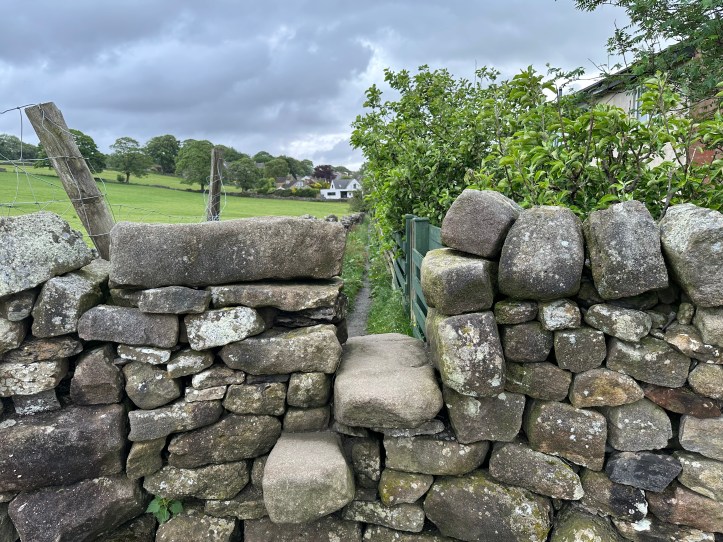


Across from the church, there was the path, with a Lady Anne’s Way marker just to reassure me. On the road out of Embsay, I passed some cows on the other side of a stone wall who were really curious, looking at me and taking a few cowish steps and looking again. This one really gave me a look.

I thought nothing of it at the time. If only I had realized she was studying me so closely so that she could radio ahead a description to a herd miles ahead on the trail…
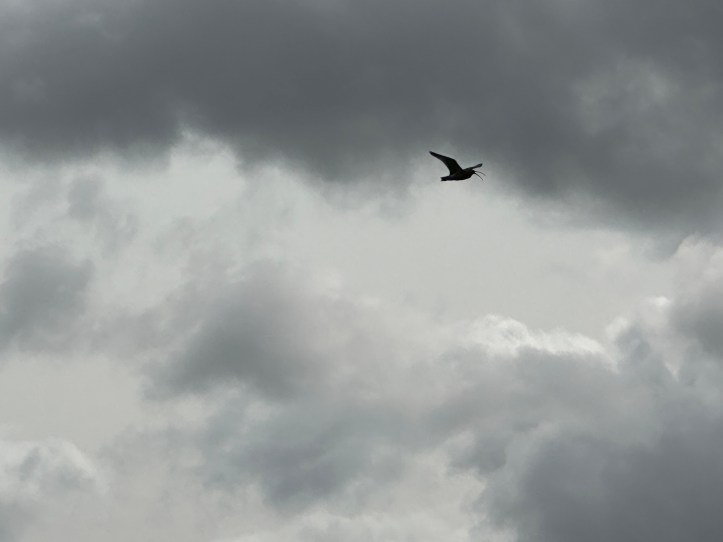
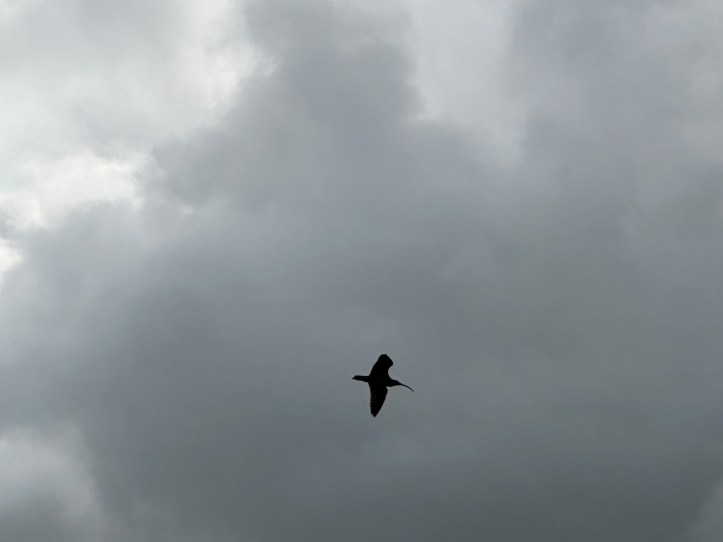
The trail left the paved road (yay! A little road walking is fine, but give me a grassy path every time), and aimed east for a long haul. Along the way I saw these amazing birds flying around the fields very fast, plunging down to catch something (worms that were really obvious?) and showing off their long curved beaks. They were really hard to photograph, because they were always on the move, but here’s what I got.

And rather surprisingly, I stumbled on ice cream vans. Dozens and dowens of ice cream vans. None open, of course.

And then the path turned north to climb over a big hill, making its way through a series of fields.
And then things got interesting.
Climbing over a stile, I heard a cow moo really loud. I looked up the field, which was very rolly-hilly (if you know what I mean; not just on a hillside, but with dips and climbs). There were about twenty cows about fifty yards away. The path angled across this field, so I set off. Then one cow set off toward me. Then a few others followed. And more. And then they were all headed toward me, like a Gary Larson spoof of The Birds. But I’ve encountered curious cows before, and they usually keep their distance. Not this gang. And I say gang, not herd, because I was beginning to suspect that some of them were carrying concealed switchblades and would be wearing leather jackets if that weren’t such a creepy thing for a cow to do.
They got right up in my face and blocked the path. Twenty or so cows in front of me, looking at me expectantly. I know you are waiting for a picture of cows blocking my path, but my phone/camera was in my pocket, and I was too in the moment trying to get out of this ridiculous predicament to take a picture. I imagined the news story:
A man was trampled to death by cows today in Yorkshire. “The bloody eejit was wearing a blue coat and had a yellow rain cover on his backpack. Those are cow gang colors. What did he expect?” said farmer Arthur Localman. “He’d have been fine if he kept moving, but from the looks of it, he stopped to take a bloody picture, and that set them off. Must have been an American.” Local police say no cows are in custody, but the investigation is ongoing.
I sternly and loudly said ‘get clear’ and ‘cush’ and anything else bovine-herding I could think of, then angled off the path around them, but also sort of backing them off. They gave ground grudgingly, which was hard for them since they were kind of packed together, protecting their ranks. And once I was past them, they started following me really intently. One was actually nudging my backpack every so often, as if to say “Where’s the snacks, buddy?”
I passed down into a sharp dip and started rising again, and that slowed them enough that I braved a photo of this insane situation.

Let me just ease your fears and say that the real danger with cows is if there is a bull in rut. And farmers put up signs when that is the case. These were all nice lady cows who must have assumed I had come to feed them. Yeah, that’s what it was. Not a gang of cows looking to extort me. That would be ridiculous.
After that bit of excitement, the path over the hill became almost boring. It reached the top and, as paths do, plunged down through heather and bracken toward a road.
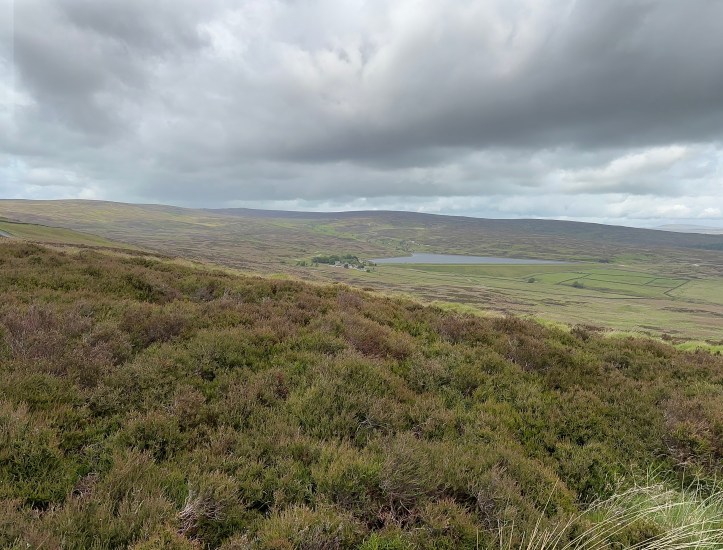

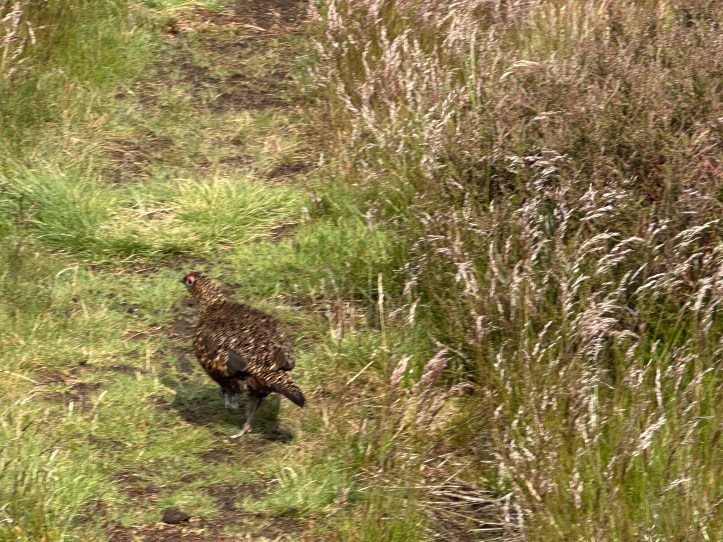

On the path down, I saw a bunch of young birds, and then their mom. Grouse? I’m going to say quail, and anyone who can identify the bird from the photos in the slideshow above can post a comment.
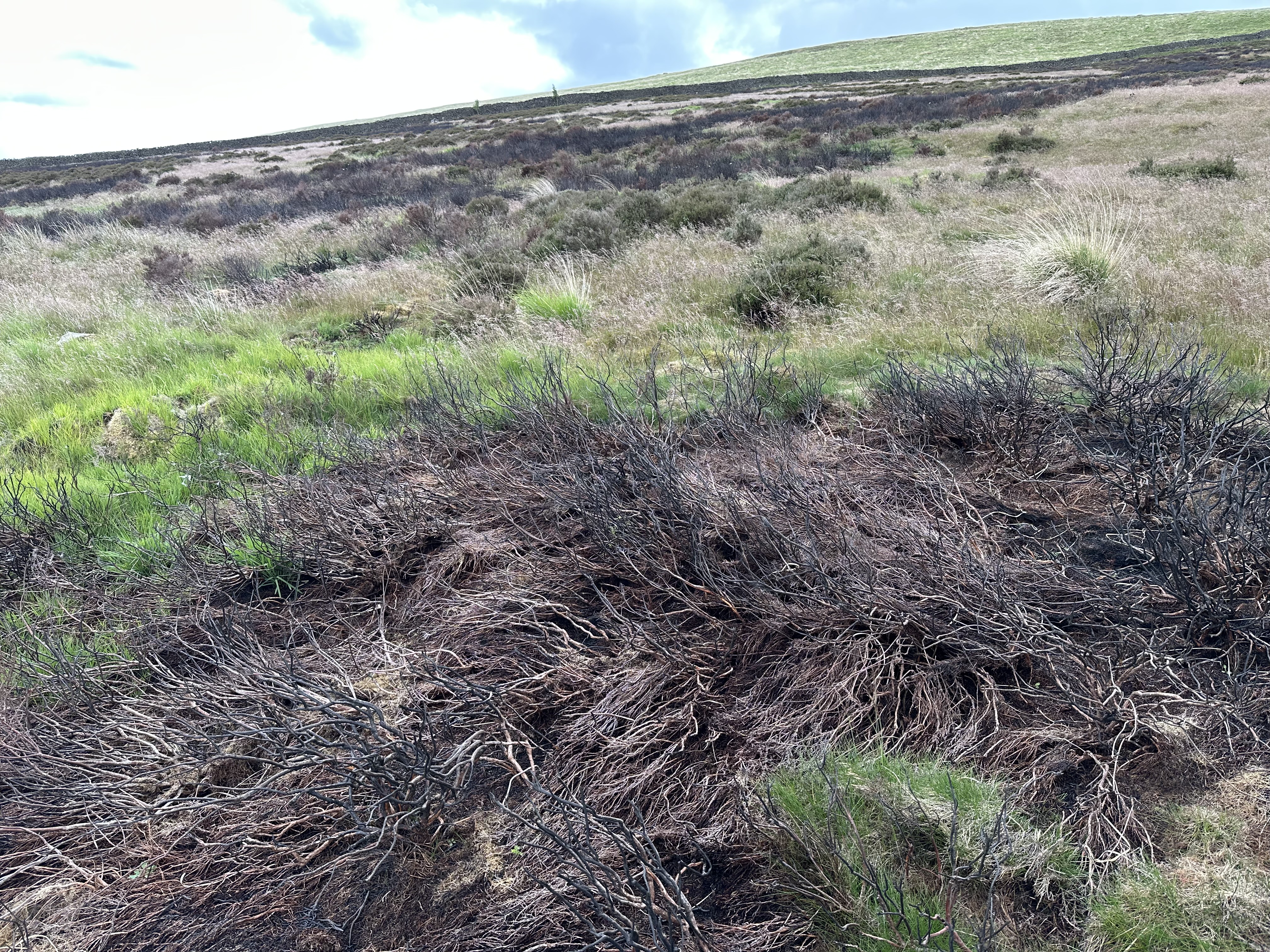
There were also signs of some burning, whether natural or done by humans I cannot say.
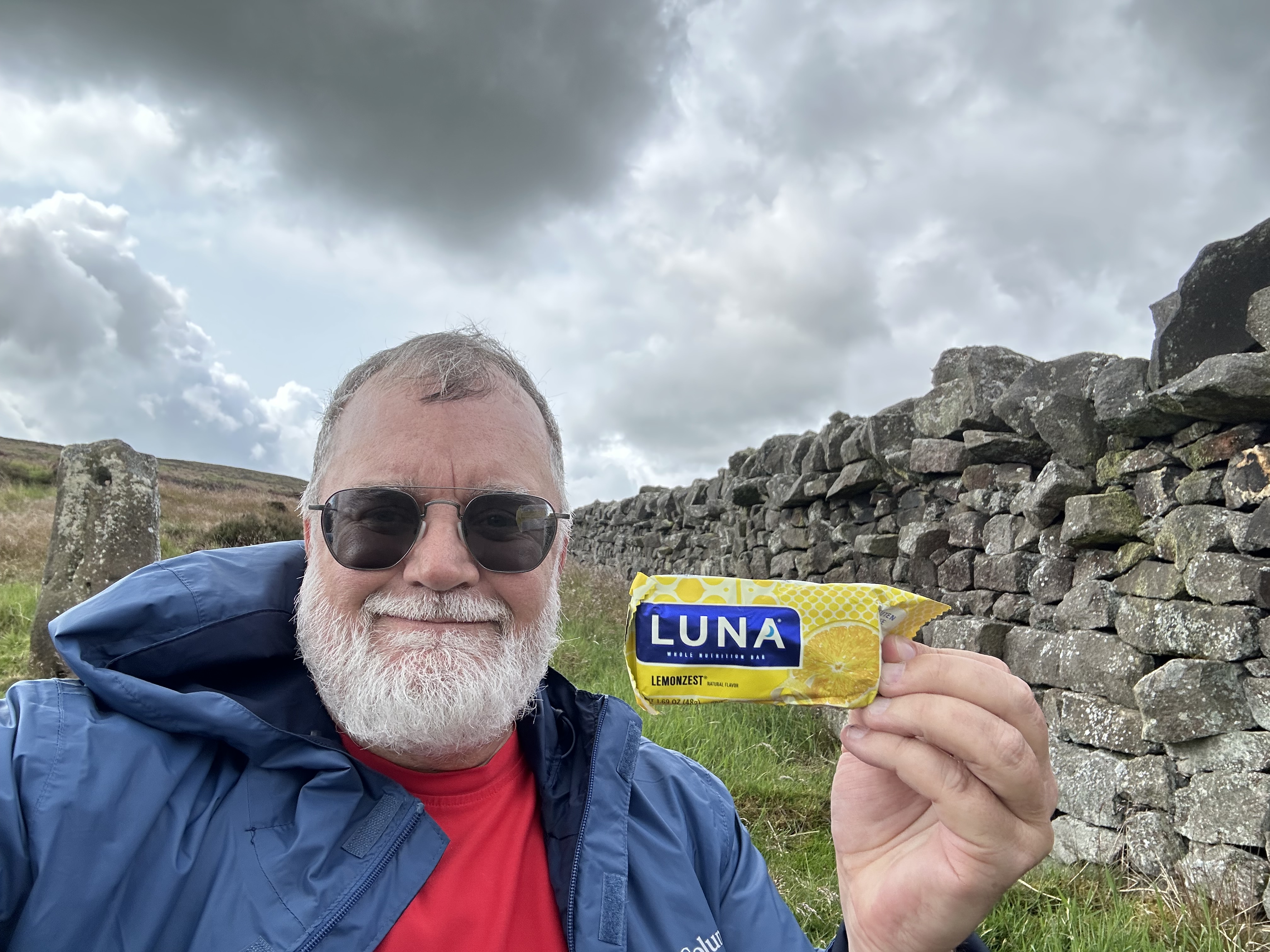
When the path finally met the road, still traumatized by my cow experience, I stopped for another attempt to snag big corporate sponsorship dollars by eating a delicious nutritious Luna Bar. Luna! They’ll send your taste buds over the moon!
After a bit of road walking, I arrived at Barden Tower.
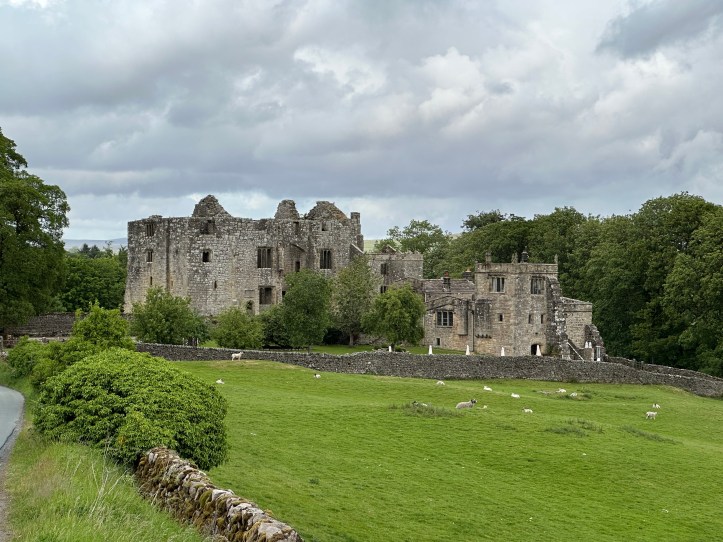

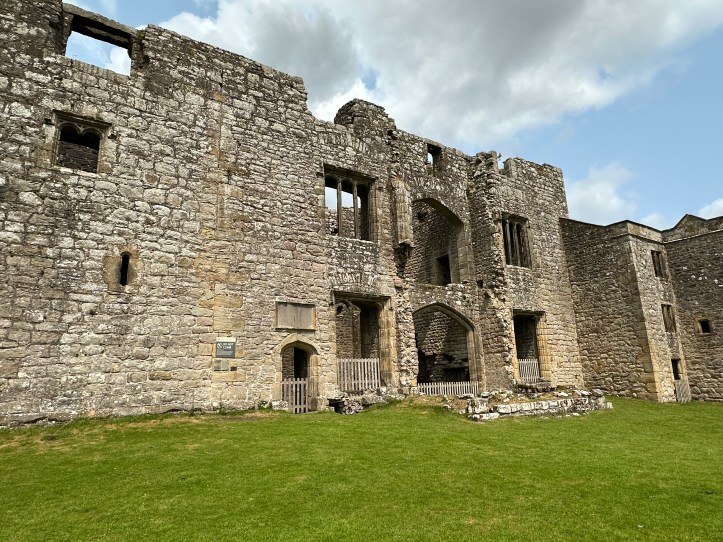

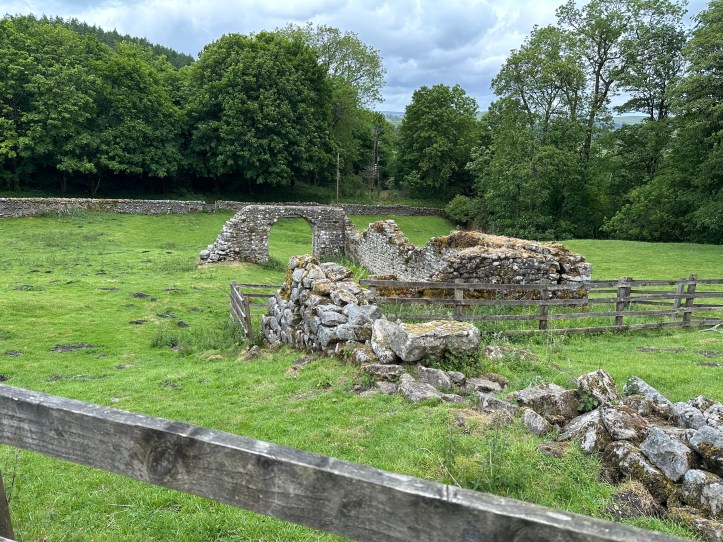
Henry Clifford, often known as the Lord Shepherd, was an ancestor of Anne Clifford, and she admired him and spent much of her life trying to restore the Clifford Estates to what they had been in his time, through a series of lawsuits over inheritance (more on that in a future post), through building churches and almshouses, and through restoring buildings that had fallen into disrepair. In the case of Barden Tower, this was a result of the Civil War. The tower was “de-roofed” by the anti-royalists, a common practice of despoiling buildings. Anne spiffed it back up and visited it regularly in her middle and later years.
Barden Tower sits on a hillside above the River Wharfe, and after pausing here (briefly, because just when I sat on a bench to admire it, there was a little spitting five-minute rain), I headed down to rejoin the path I walked just a few days ago.
It was a weird sensation to walk somewhere a few days later, after there has been some rain, and note places where the path was dry but is now muddy.
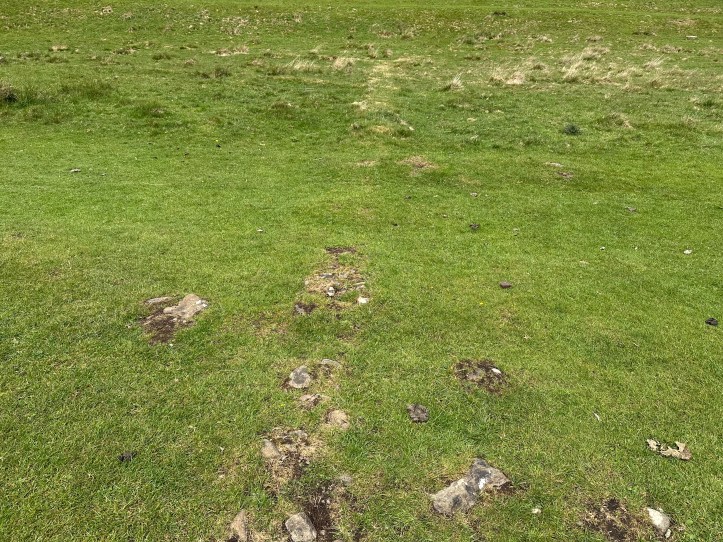
Along the path, you can see traces of old walls that suggest some of these riverside fields used to be even mover divided, probably for smaller farms that failed or got absorbed maybe a century ago. Or two?

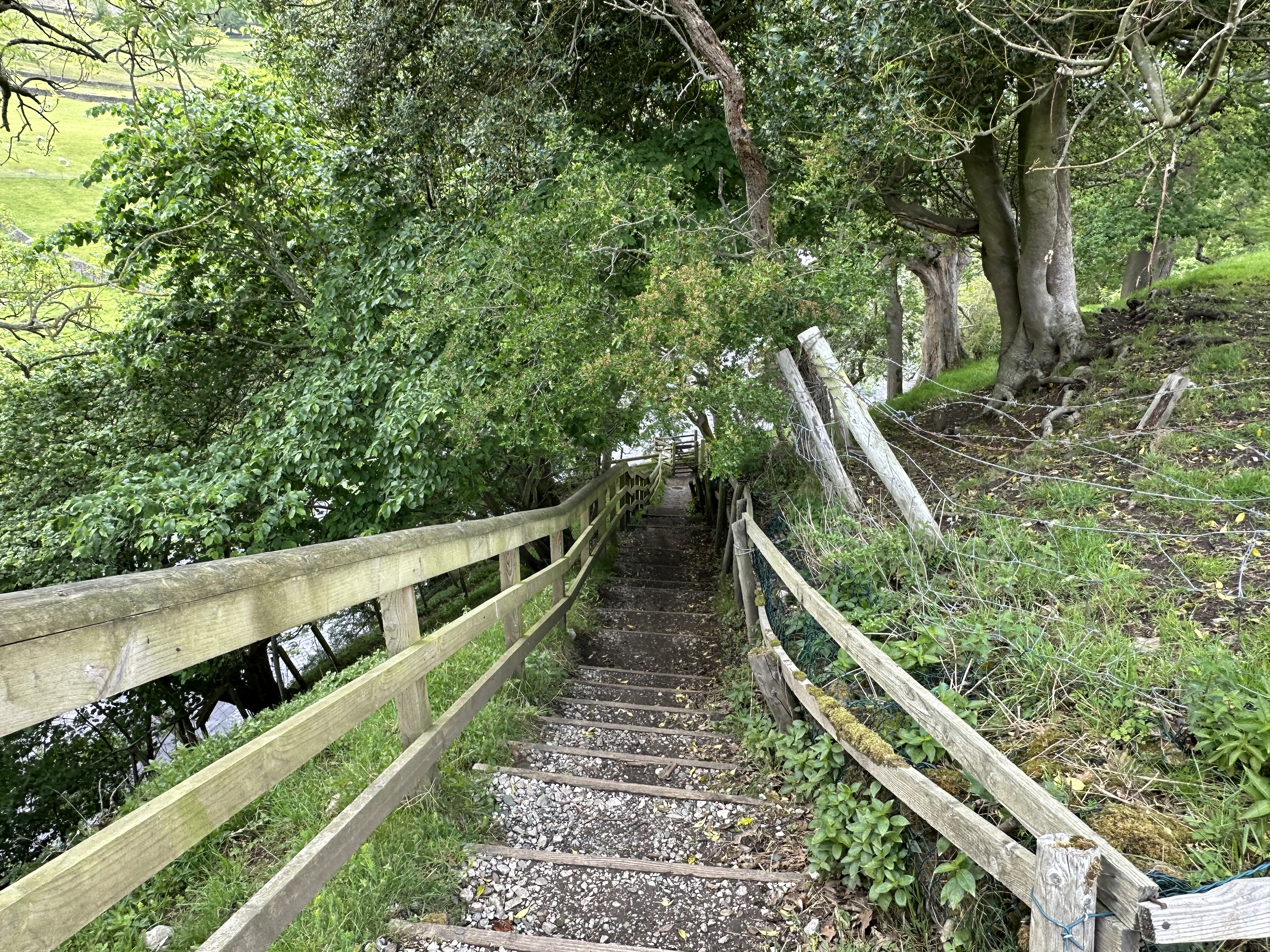
In general I had that feeling of “I remember this all clearly” except that I would turn a corner and think “Oh, I forgot about this little surge up a hill and the punishing stairs to get back down to the riverside.
And finally, at the campsite with glamping tents, I turned right off the riverside trail and headed up the hill to Appletreewick.
A good day, though from here on, I will never see a cow without wondering if she is radioing ahead to the gang.
 ramblinghank
Hilarious recount of your bovine encounter, Hank, but I bet it wasn’t that funny in the moment. In case it happens again, you might try the technique for herding cows that we used when I worked on a dairy farm one summer in college. We would pick up a baseball-sized rock and lob it so it landed a little bit behind the cow. They would then generally move forward, away from where the rock landed. Not sure if Lady Anne allowed any stray rocks to remain on her path, but Tracy and I are finding a few on the trails in Ireland. Happy tramping!
The expression! So good.
Also, pro-tips for species identification:
Go into Apple photos and click on the information (i in circle, ⓘ) symbol. Apple AI to your rescue for animals and plants.
Get iNaturalist (https://merlin.allaboutbirds.org/) and use it to ask the world of naturalist.
Get Merlin (https://merlin.allaboutbirds.org/) for birds. It is from Cornell.
Good tips, but I sort of enjoy the mystery, and like the idea that some bird or flower expert among my readers will engage and identify stuff I don’t know. It’s the old blogger ‘engage the readers in dialogue’ thing.
Looks like a grouse. Also, did you see the gang in face paint and baseball uniforms after the cow encounter?
No, but this one cow had milk bottles stuck to its hooves, and was clinking them together, sort of lilt-chanting “Rambler, come out and pla-a-a-ay…”