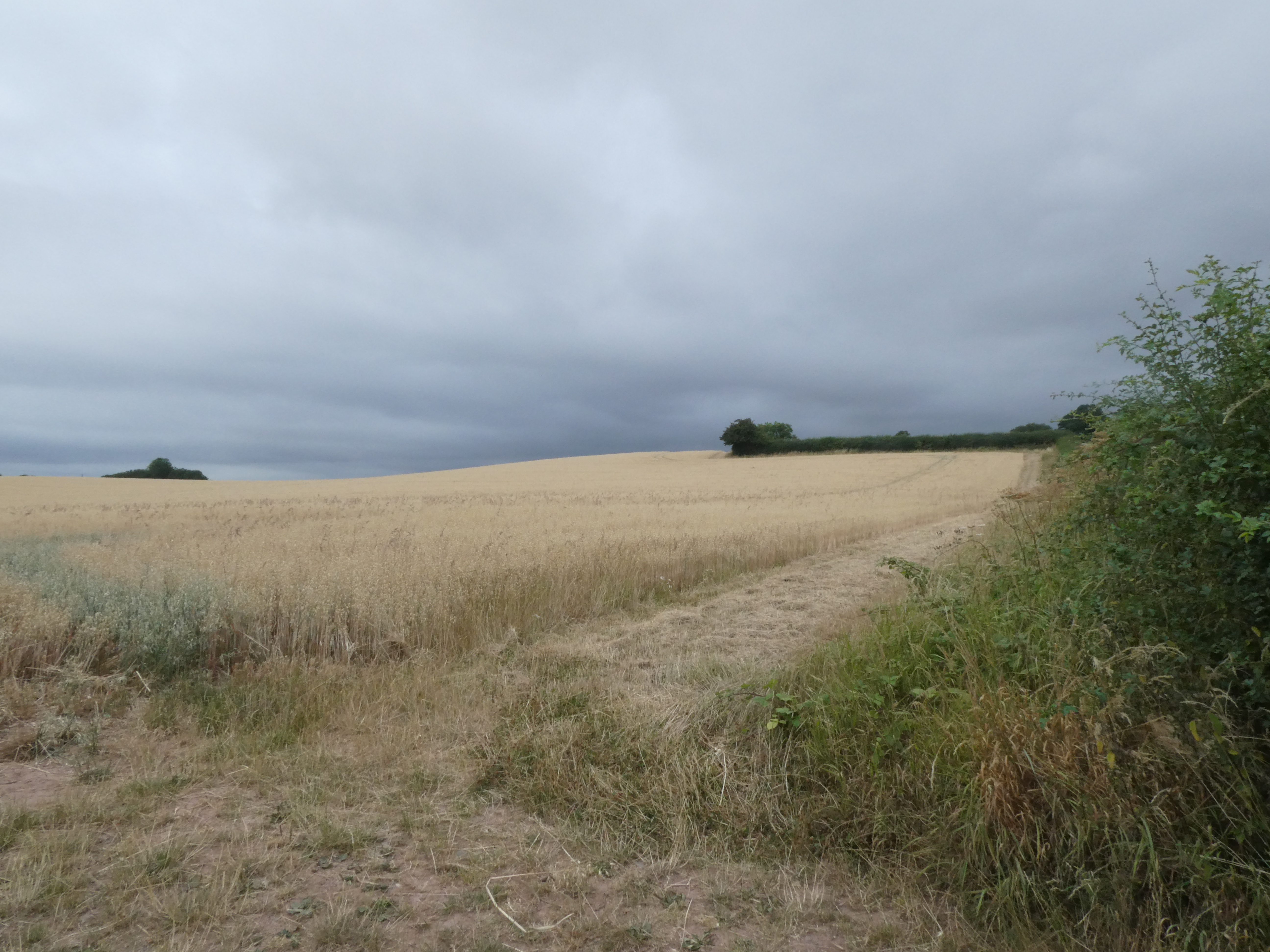
Late in the morning, high on a hillside, a few minutes after I took this photo, I met a man out for a walk. As longtime readers will know, I’ve written on previous rambles about the subtle trail dance of signals about whether such an encounter will be a quick nod of the head, an exchanged hello, a bit more (“Wonderful morning for it.” “Indeed”) or a conversation. This guy, a big-bellied man in his fifties with a big stick as a walking staff, came through the gate I was heading toward across the field. As we approached each other, I slowed a bit, he slowed a bit, and he played the first card by starting not with hello but with a question. “Come far this morning?” And we were off. We stood in the middle of a field chatting for maybe six or seven minutes. He’s a local, and he pointed out his route across the landscape, explaining that his walk today is a circuit of about six miles. He used to walk this with his wife, but she’s too busy these days. He walked a lot during Covid, when lockdown in the UK allowed for walking within certain limits. He wondered where I am headed, and I explained this walk and a bit about having hiked Offa’s Dyke, which is somewhere pretty close by.
He asked, as British people often do, why I don’t do this sort of thing in the United States, and I explained our private property laws do not allow for the fundamental public right of way across land. It seems to me that idea is deeply ingrained in American thinking, so basic that we don’t realize the larger implications of saying one person can own land and keep others off it. I don’t mean the more general point about capitalism and ownership. I mean that there is an idea about land that we have that the British do not. They believe that there is a right to access if the path takes you somewhere, if it’s established. It’s not an all-bets-off chaos of people tramping through each other’s gardens, but the idea of a whole cultural heritage of shared paths that cannot be obstructed runs deep. I didn’t say all that to the man on the hillside, of course, but I did say we have a different way of treating private property and access. He took that in and we moved on to a bit of chat about how the path was up ahead for me, the weather, and his friends who got fit during Covid and walked part of Offa’s Dyke. Then he went his way and I went mine. It was absolutely lovely.
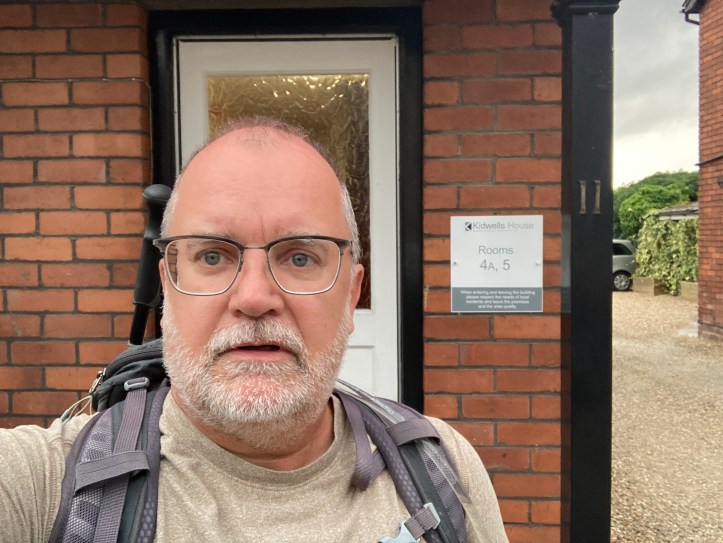
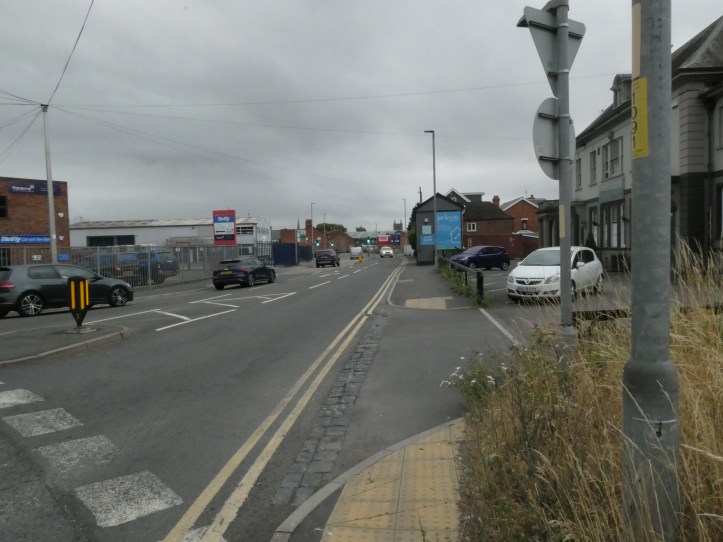
As noted in yesterday’s post, the previous night’s accommodation was in a B&B that’s really a business (12 rooms, clearly turning over those rooms for people with some business in the city of Hereford), and in a neighborhood of traffic and yet somehow no shops or restaurants within 500 yards. So the morning started with me walking down into town toward the Wye River to rejoin the path.

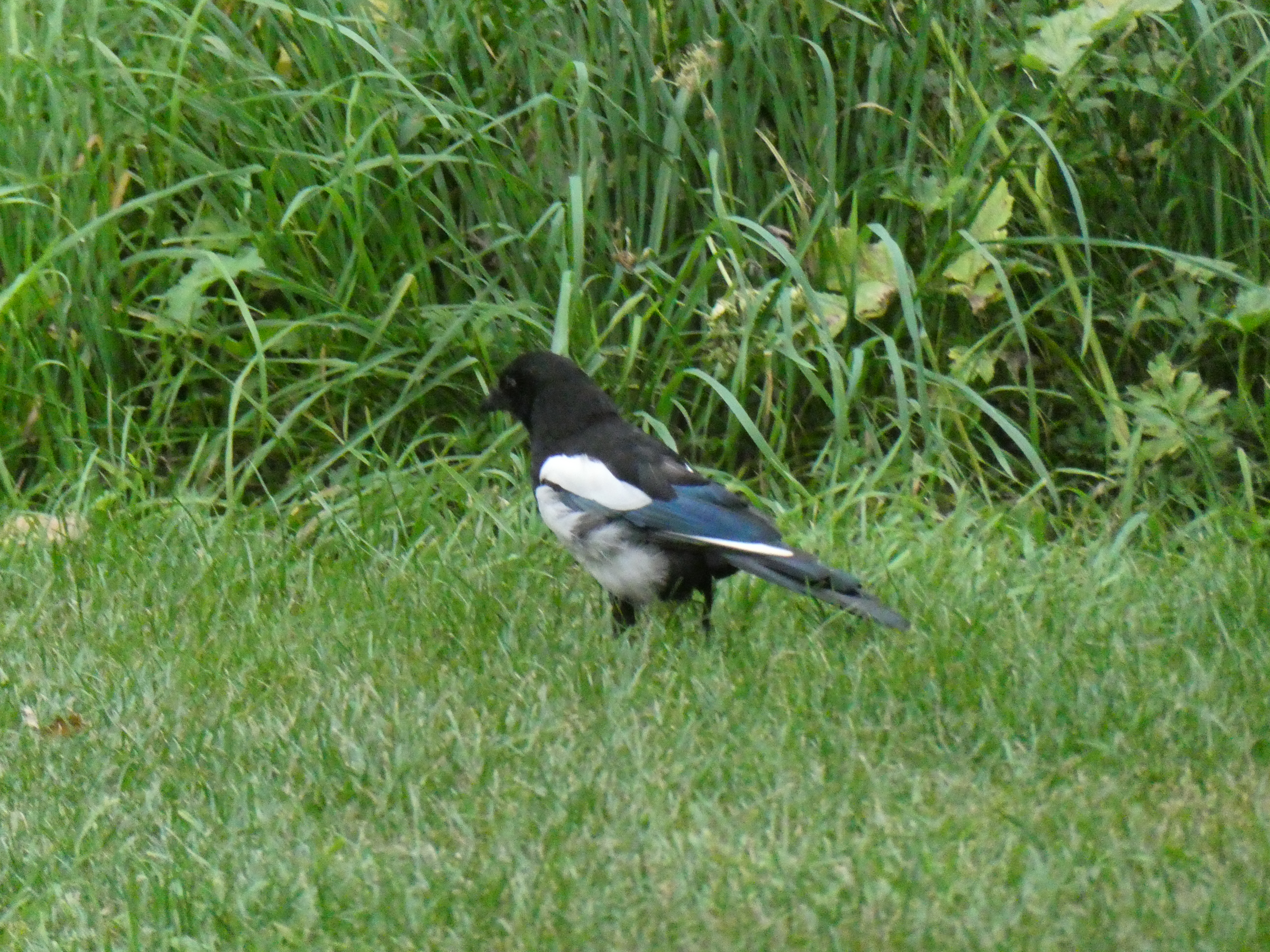
There was a bit more walking in city parks, where I encountered these birds. My lack of knowledge of bird species is rivaled only by my lack of knowledge of flowers. So name that bird in the comments!
The path follows the riverside through little meadows for a good long way before turning up toward a quiet road. In all these little shifts in the trail, there’s usually something interesting to look at and think about.
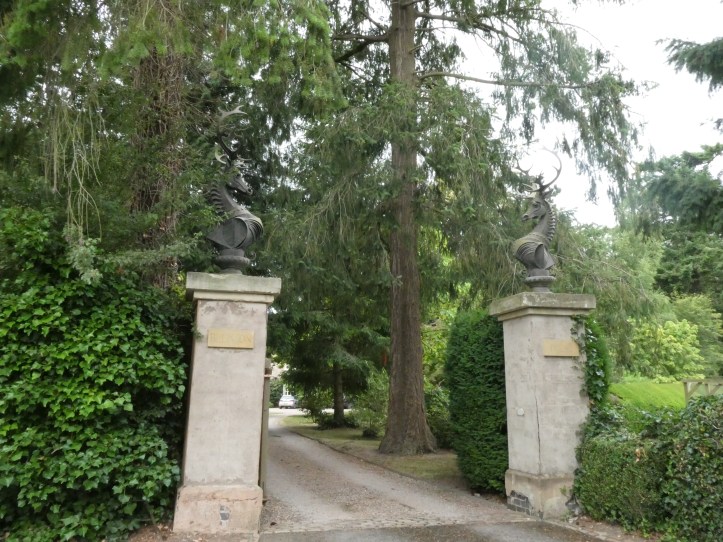
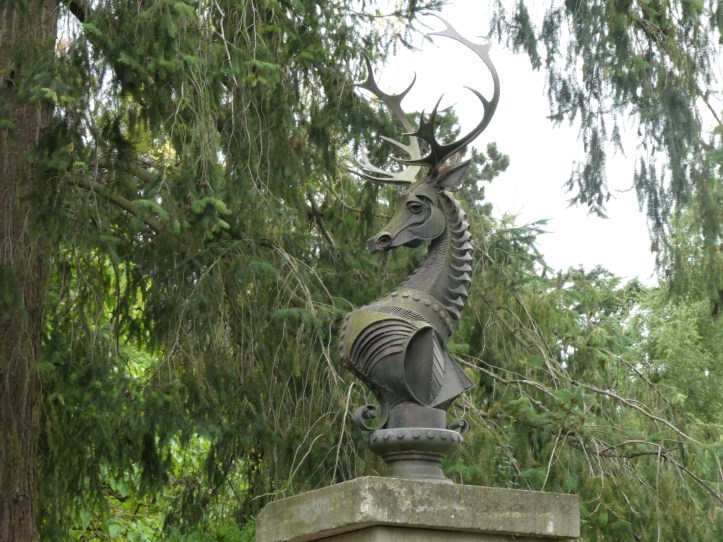
Who added this stags to their gate, and when was it? The guidebook even points them out, but merely says that I should “note the iron sculpture deer heads on the gate pillars” at Breinton House.
The path winds through someone’s back garden and a few fields, spends a few minutes on a road, and then rises into the open fields on a high hillside where I met my pal, the man out for a walk.
As I noted yesterday, I am in cider country now, and I spent a lot of the day walking past apple trees. At one point, the path simply went through the middle of an orchard. The stile on the other side, as you can see below, was rather hard to find in the overgrown hedge. And what was the farmer burning in the field next to the orchard. We will never know.


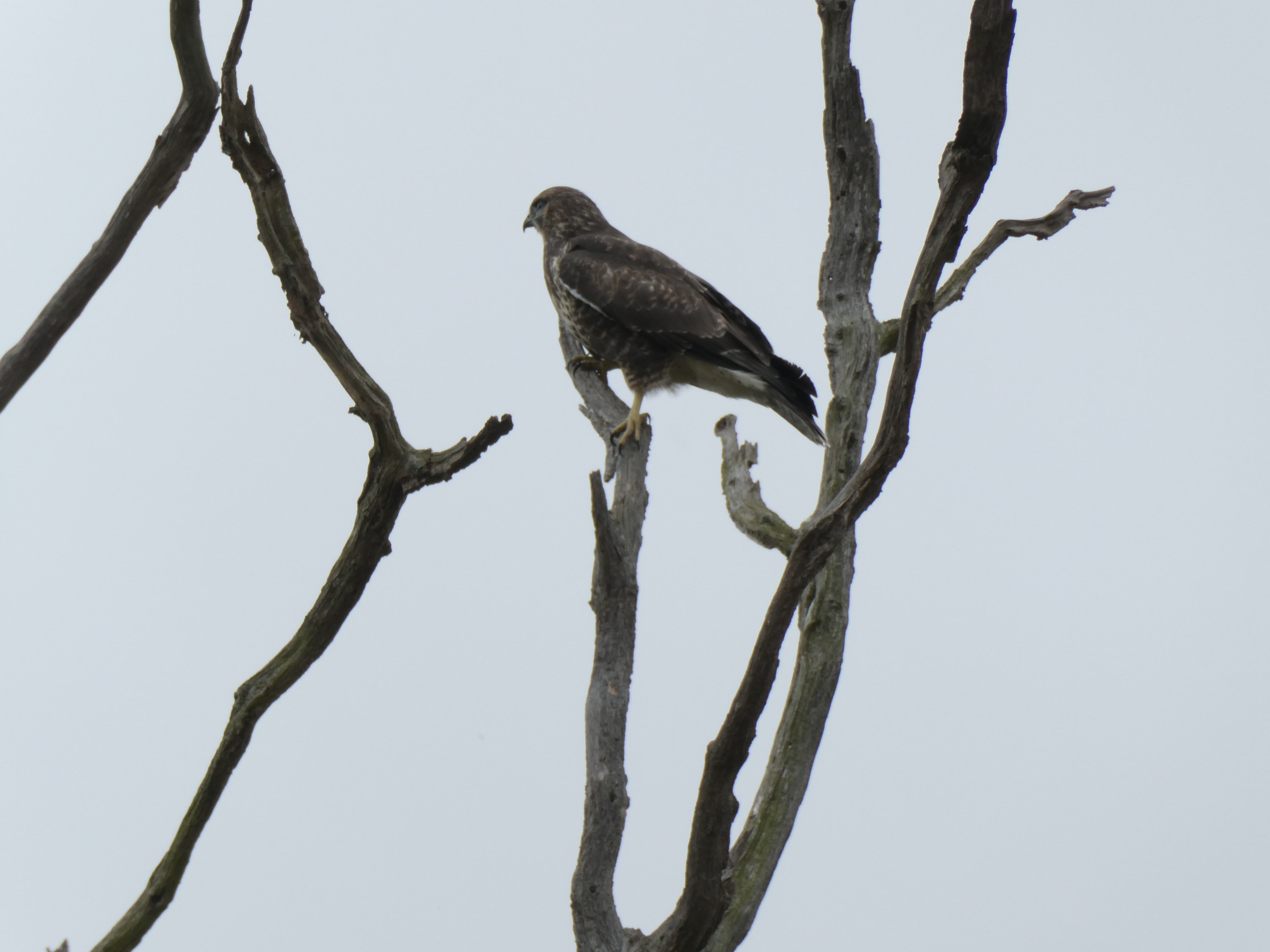
Throughout the day, when passing open fields, especially on the hills, I saw gorgeous predatory birds hovering, looking for a quick snack of field mouse or whatever. I tried to capture them in flight, but I find it very hard to coordinate the use of the zoom lens with my near-sightedness– glasses on to see the bird hovering in the sky, glasses up on my forehead to see in the camera’s screen to try to get that section of sky and zoom, bird is not in the zoomed area, glasses back down to find her again, repeat at comical length. But I did catch one sitting in a tree looking over a field and considering. I think this is a red kite.
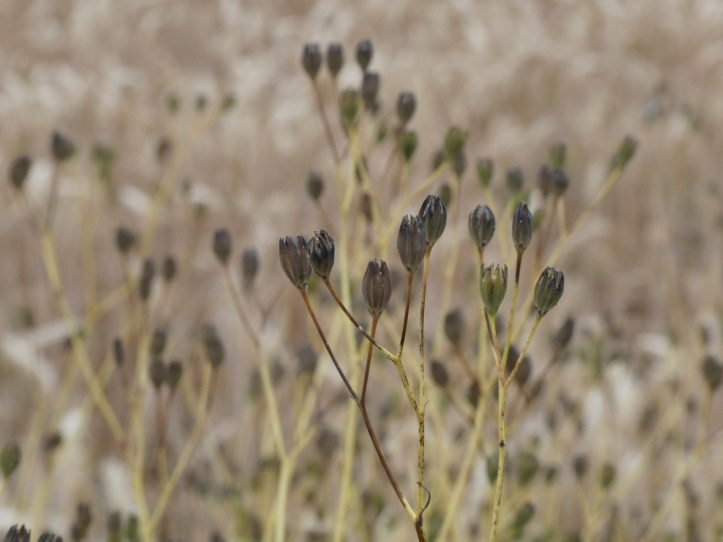
The trail is peppered with pretty wildflowers, which also bring out the failed art photographer in me.


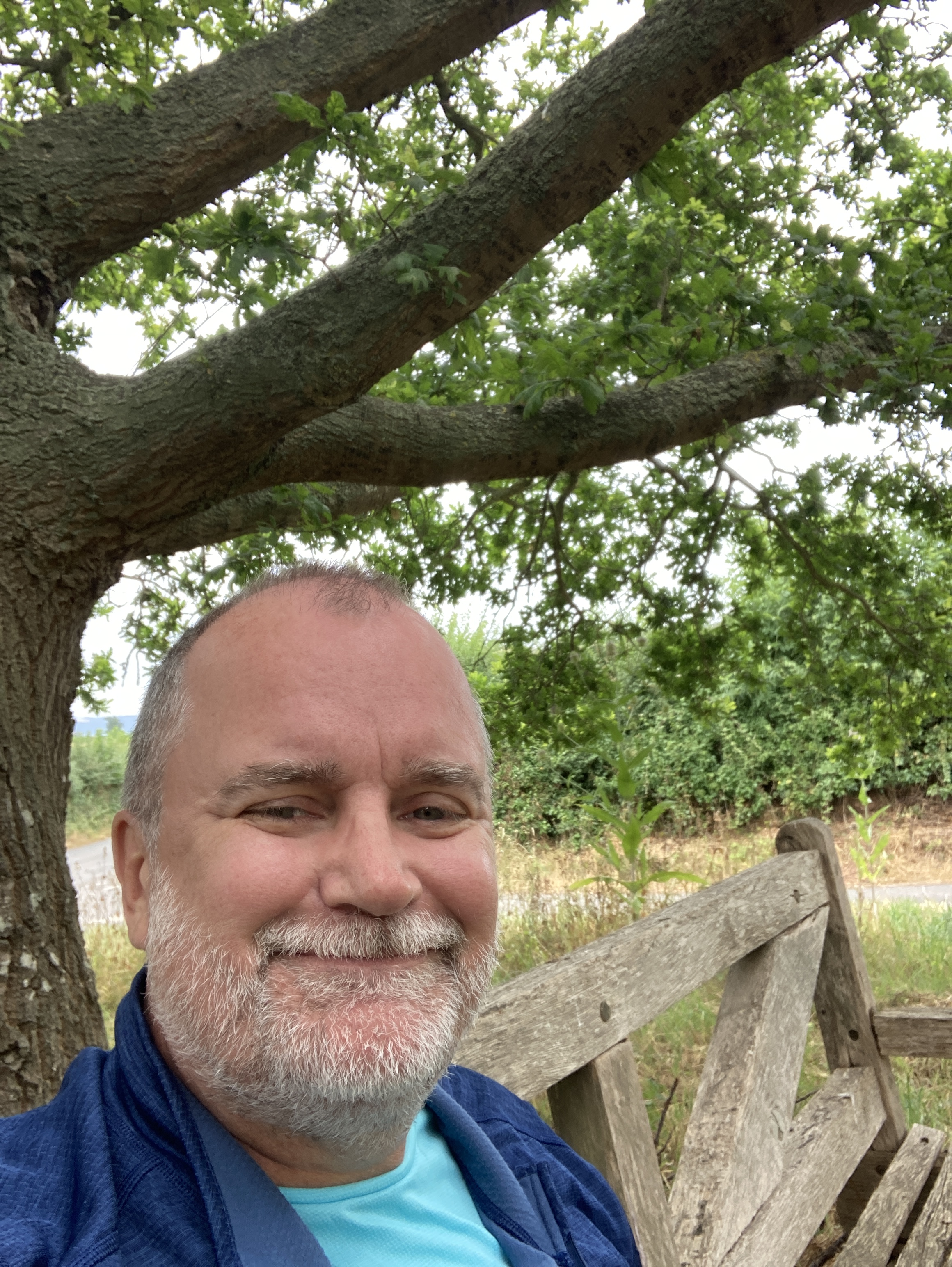
One of the tricky aspects of today’s walk is that the hosts at Dairy House Farm, my stopping point for the night, have stated that rooms are available from 17:00. With only 11.5 miles to walk (though that bit of city walking to regain the trail probably made it more like 12.25, and a few slight diversions brought it up to perhaps 12.5), there was bound to be time to kill. So in the middle of a rather long stretch of road walking along the route of an old Roman road, I stopped for a long lunchbreak at a T-junction where the locals had provided a nice bench in the shade. I also, as sharp eyes will note, made a costume change, because sitting in the shade in a shirt damp with sweat can get a bit chilly.
From here, it was only around four miles to my destination. Along the way, I passed by St. Mary’s Church, a tiny church near the river. It has no electricity, no easy car access (the road, a rutted dirt and gravel way, comes about 100 yards away), and the musty smell of damp inside, but it made a nice second stopping point since I was still running ahead of schedule.


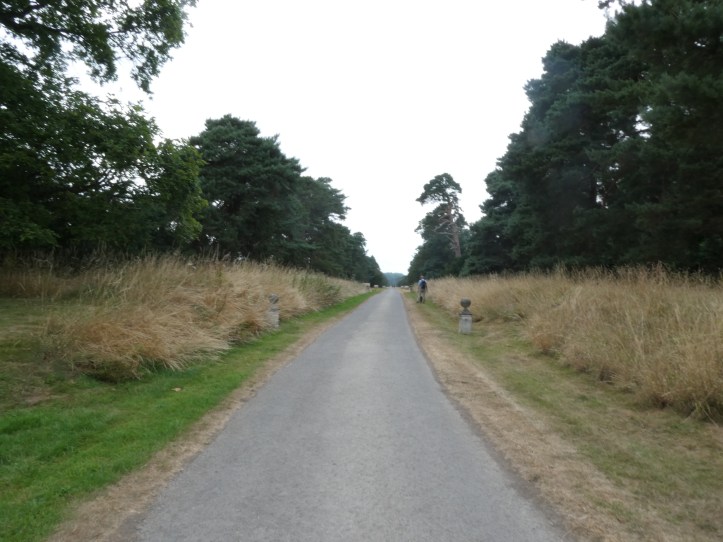
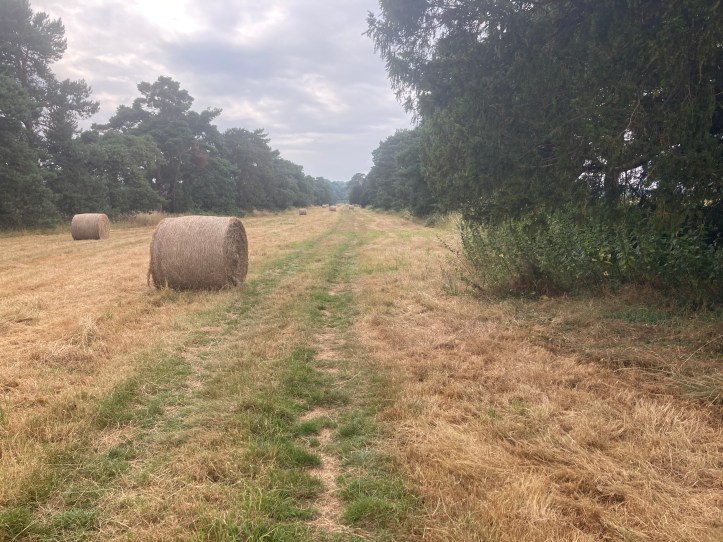
The day had one more treat before my destination. This area is Monnington-on-Wye, and almost the very last bit of my walk was on Monnington Walk, a mile-long avenue bordered with Scots pine and yew trees. The avenue was first planted by James Tomkins in 1623 to celebrate his election to Parliament. Over the centuries, the landowners have replaced the trees as they die off, so none of these are likely to be original. It’s paved for about two thirds of the mile, but then surrenders to meadow. It’s fun to walk down and imagine old James riding his horse up and down the walk, proud as a peacock.

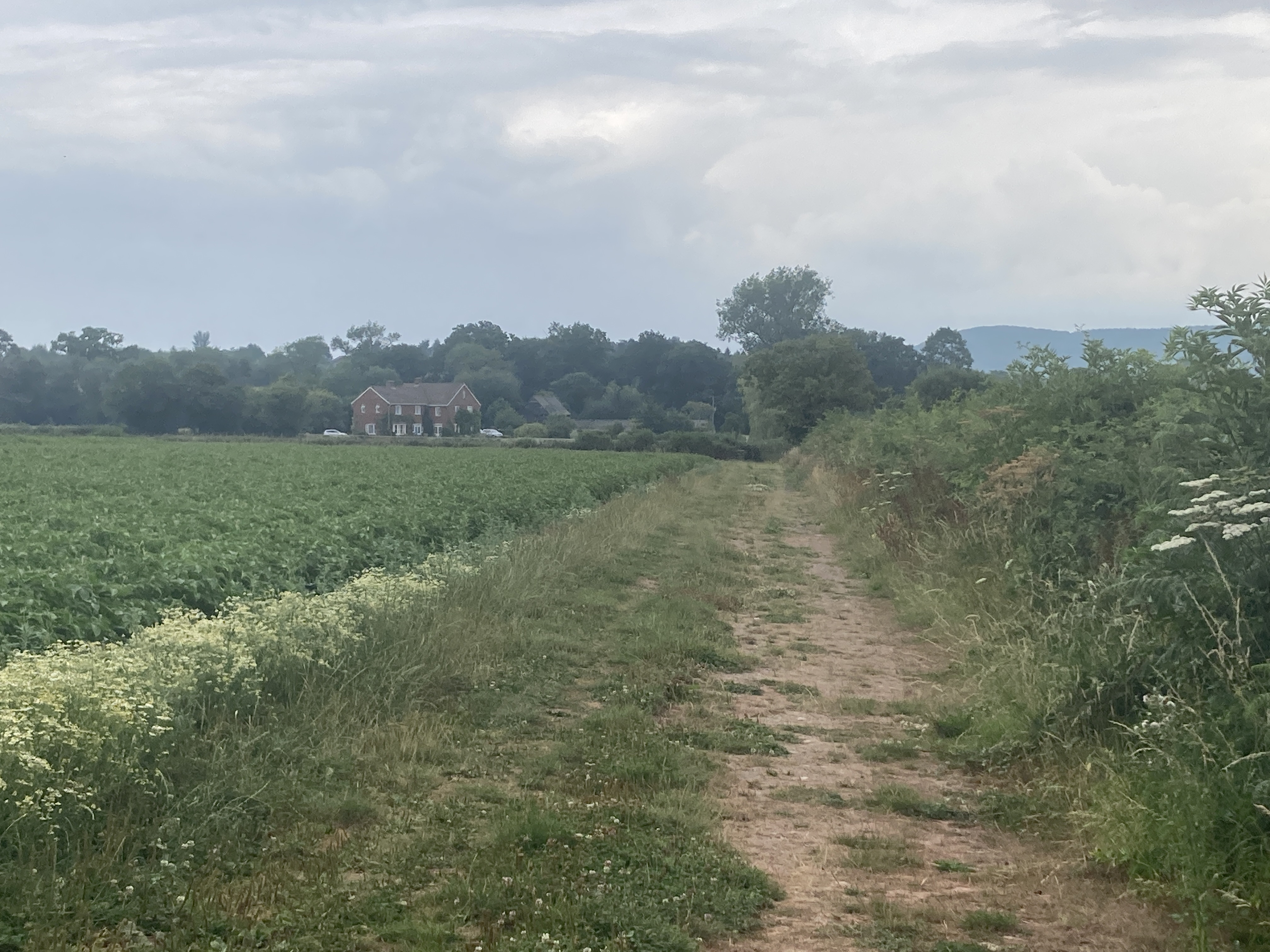
And with one last turn to the right off the avenue of trees, I was at my destination. About an hour earlier than the requested check-in time, but I got no complaints. And later in the evening, I got a ride to and from the local pub, a mile and a half away on a road too busy to walk on. Tomorrow, I am headed to Hay-on-Wye, famed for its concentration of bookshops.
 ramblinghank
Looks like a lovely day Hank and how great that it was cool enough to require a costume change. Blue is your color!💙