The day started with that sublimely silly drive back to the White Castle so that I could walk three miles and end up in the garden of the B&B where I had breakfast only an hour and a half earlier. I was glad I did it, though, since it gave me the chance to talk with my host, a voluble conversationalist who could give the Irish a run for their money in that line. The road outside the B&B is being resurfaced, which is of course good news, but the project has been hit by a budgeting problem due to the unexpectedly high number of drains they’ve encountered that need to restructured. Apparently no one has an accurate drain count, and they assumed some specific number in the 60s for a three mile stretch.
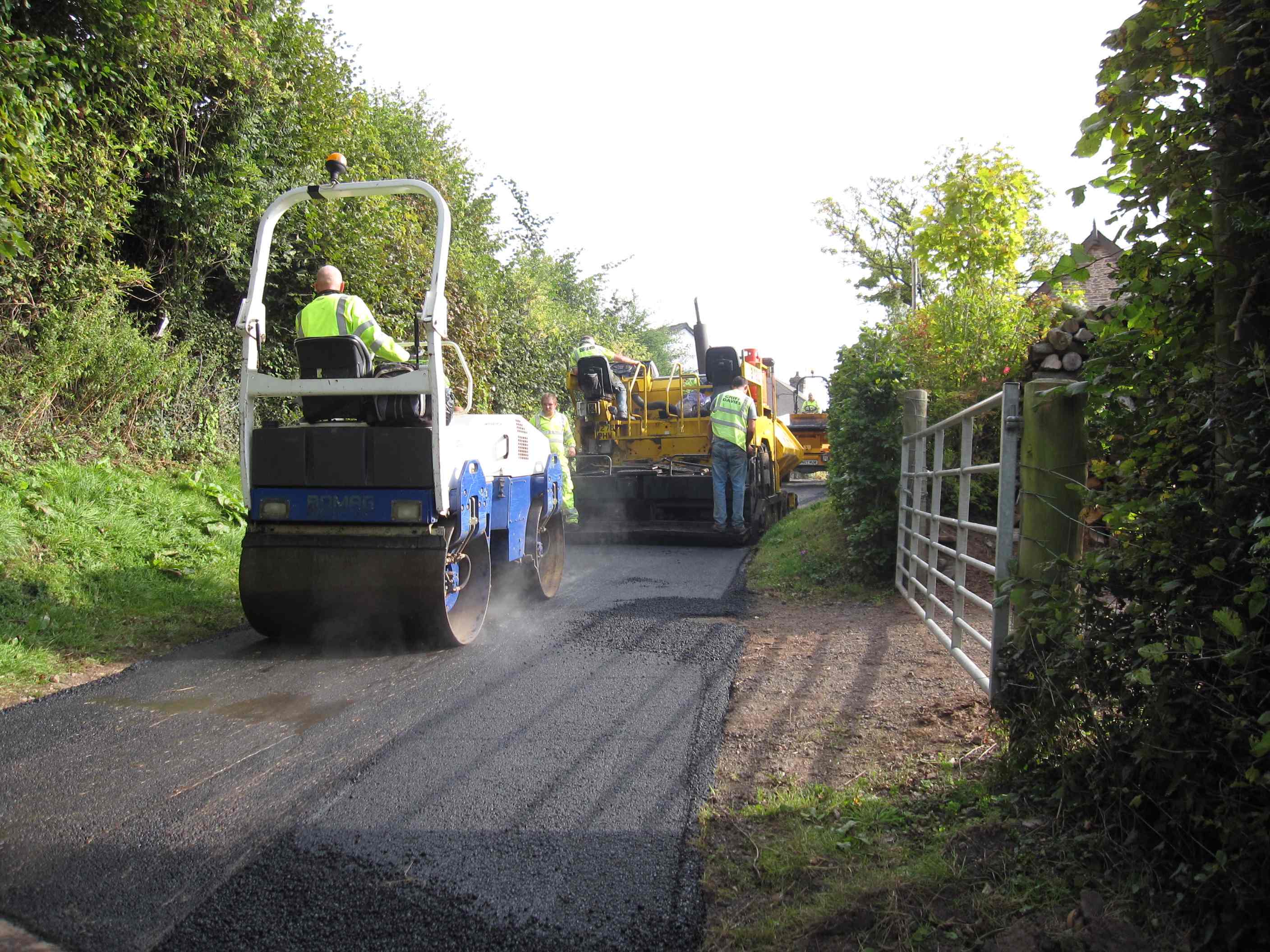
So far, in the first .75 miles of the project, they’ve hit 80-some drains. Whoops. Money’s so tight that they didn’t increase the budget; they reduced the project to only pave a mile. This got us talking about work ethic, government waste, and drains for the ten minute ride. And of course, my timing was impeccable—the pavers were right outside the Old Rectory (my B&B) when I returned there on foot, and the road is so tight I had to wait five minutes for them to hit a point where I could climb up around the edge and get on.
The day’s walk to Longtown is the first of two days in the Black Mountains, and I have to be honest: the guidebook’s sober warnings about blown-over waymarkers, emergency escape plans and all-weather gear had me feeling a bit anxious. Not handwringing anxiety, but more curious and conscious of things like checking my daypack for extra energy bars and my winter hat and walking gloves.
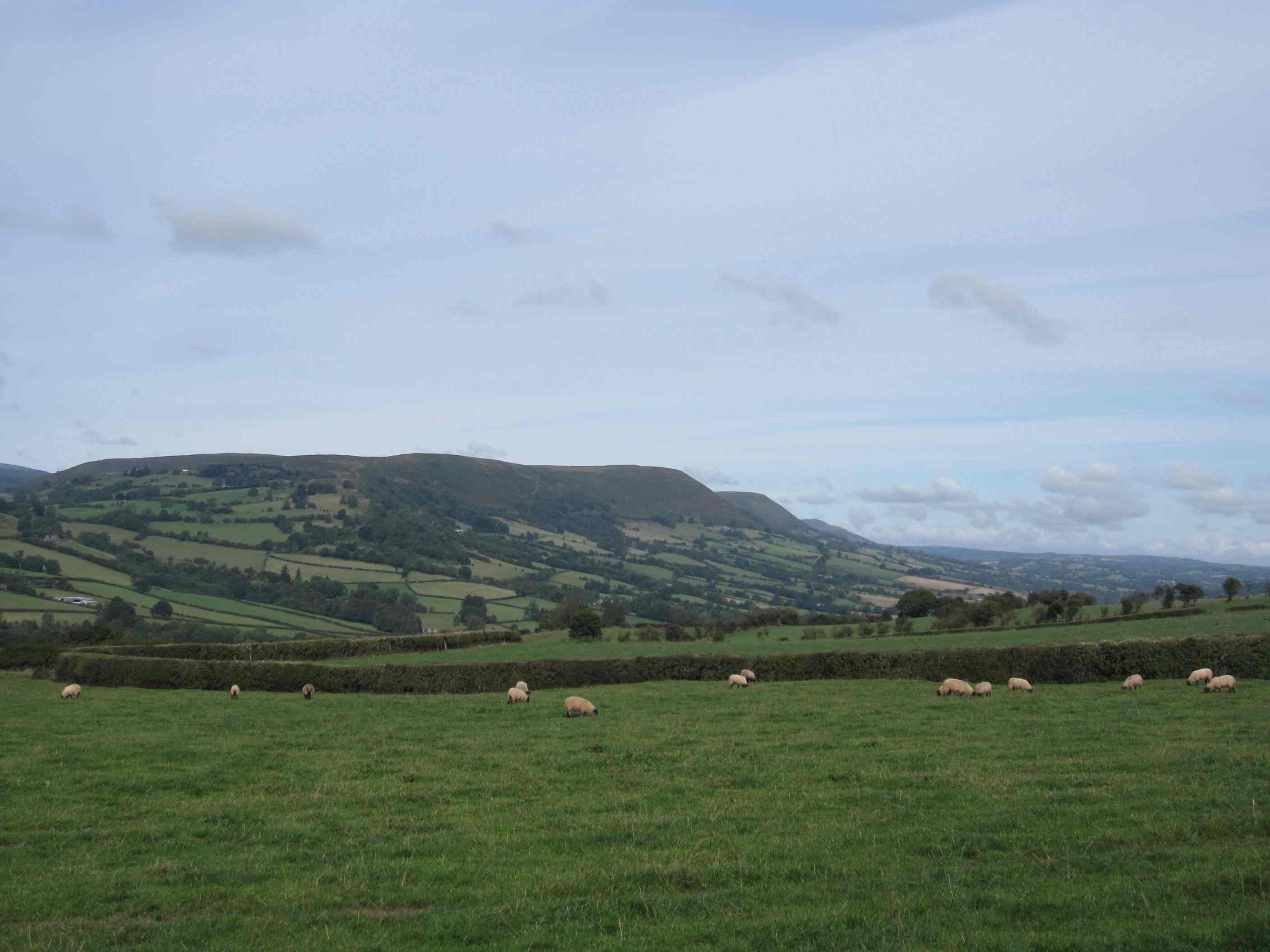
I have gotten into a good rhythm on hills, which turned out to be essential, since the path, going through fields, on little country roads and on bridle ways, rises steadily but mercilessly for several miles to get from the valley to that high bluff, called Hatterall Ridge. Even the name sounds like something that should require climbing gear. Not so, but getting there is demanding.
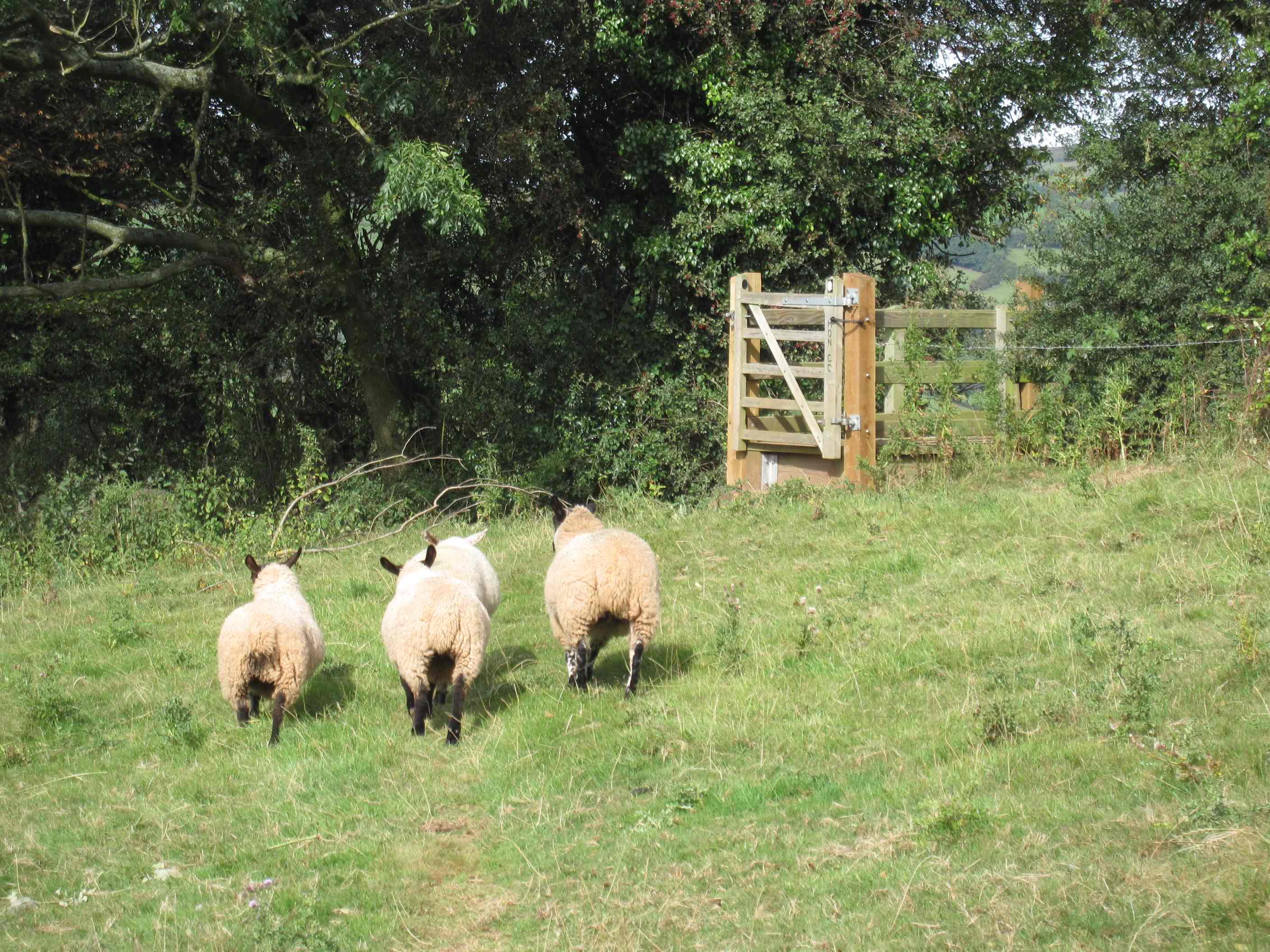
And now, a brief interlude to celebrate the endless sheep. (You’re welcome, Tracy) I haven’t mentioned them or posted many photos of them, but sheep, once the center of the economy for huge parts of England and certainly for this part of Wales (Monmouth was built on the wool trade, as were many of these towns), are everywhere. Like in front of the gate I want to go through. But unlike those scary cows, the sheep are terrified of humans and make a run for it, if not always in the wisest direction. They’ll head away from you right on the path you’re taking, but eventually they work it out and bolt left or right.
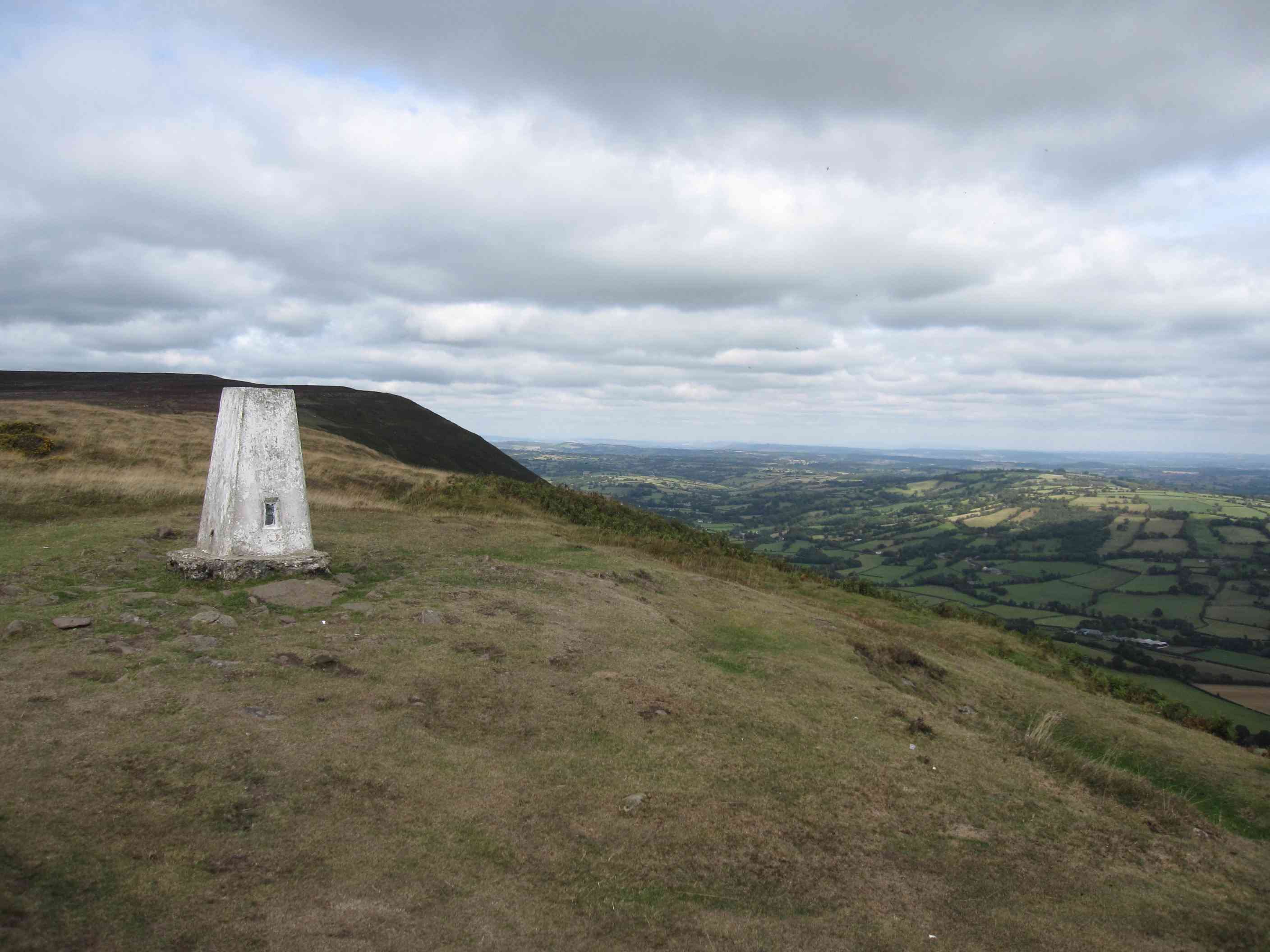
The first of three trig point markers (these are markers used for triangulation, and they are found on a lot of walking paths at high points) along the Black Mountains section of Offa’s Dyke Path, the only one I’ll hit this day before descending down one side to Longtown, is at 464 meters (1522 feet), and to get there, the path rises from the road at Pandy, which is at about 100 meters, in two miles. It was a workout, for certain, as my sweaty shirt and shorts attested, but I made it, and had to stop to record the moment.

From here the walking is really pretty level (over the next two miles I probably gained and lost only twenty or thirty meters in long pleasant downs and ups), and the path is so clearly etched into the grass (at least so far—we’ll see what tomorrow holds) that it’s easy walking. My next significant goal is the split point for the paths to Llanthony and Longtown. Go left to plunge down to Llanthony and it’s famous ruined priory (well, famous-ish) and some accommodation. Go right to plunge down to Longtown and my inn for the night. Go straight, and you’ve got the long path along the top of the ridge. A pleasant surprise: Keith and Kathy had stopped at the trail division, and were waiting for me (remember, they had opted not to go back to the White Castle and had started out directly from the Old Rectory, so they’d been ahead of me all day). So we descended together down to Longtown, trying not to think about the fact that tomorrow will start be re-ascending this path to get back to ridgetop. Tonight we indulged ourselves with a shared bottle of wine, and I ate more than usual (I had a paté starter (!) and some of the driest, but still rather tasty, butternut squash risotto—yes, many pubs seem to be trying to do something fancier than sandwiches and cheese, with varying degrees of success. I wouldn’t have called this risotto (more like sticky rice with squash) but it was better than some things I’ve seen and eaten in pubs…) It felt like an earned indulgence. Tomorrow, alas, is forecast to have “some weather,” but the word in the pub is that it won’t rain heavily until late afternoon, by which time I’ll be off the ridge and in Hay-on-Wye. Fingers crossed.
Walker’s wisdom: destroying guidebooks A good guidebook for the trail is essential, as is a map. Many people carry a clear plastic map-pack on a lanyard hanging around their neck. Then they can just flip it up and look at the map. They carry the book in hand, or in a pants pocket, I suppose. I don’t like the idea of the map pack—it looks to me too much like the chalkboard a rebellious student wears in a Victorian-era illustration, with his crime (“Disrespectful”) written on it to publicize his shame. So I carry my map in the mesh pocket of my daypack. Yes, I have to take off my pack to get at it, but I rarely need the map, using the guidebook instead. And here’s my tip, which book lovers will think sacrilege: I tear the books apart, ripping all the pages for today’s walk out so I can carry them in my shorts pocket and get them out with ease. No fussing with a big book—the rest of the book travels with my heavy gear in the luggage van. If you want a guidebook to recall your trip later, you can buy a duplicate. There’s something enormously satisfying about getting through a day’s pages and throwing them away once you’ve reached your B&B, and seeing the guidebook remains shrink as the days go on. So, there you have it: Rip apart your guidebooks. Words to live by.
Miles walked: 13.5, or 14.5. There’s some ambiguity on whether the info sheets from Contours included that last mile into Longtown in their count, and it felt like 14.5, but that might be the altitude talking.
 ramblinghank