There’s a wonderful spring I get in my step on the last day of a walk, when all the miles seem to earn a meaning in completion. To go back to my early theme of counting and not-counting, this is another example of counting lending itself to good feelings that feel like they are not simply about score-keeping. If yesterday was contemplative, today was something more like amiable moving toward joyful, but all layered over a sense of self-satisfaction. We’ve made self-satisfied mostly a dirty word, indicating smugness, but I think it is worth having the term for its literal sense; for this day, I was very satisfied with myself and what I have done.
Though it should be said that I’ve only done a bit more than a third of what I am really doing. Ahem. That puts things in perspective.
After a breakfast of cereal, some bacon and a single egg (my landlady persuaded me; the eggs are fresh from the hen next door) and some chat (I was more open with this hostess than I have been so far, talking about how a walk gives you a chance to take stock. She’s a good conversationalist, but maybe I was also feeling more like talking.), I set out.
I’ve noted the changing character of the walk, and today it’s clear that I am re-entering more populated areas. The first indicator, ironically, is the low number of gates and stiles in the morning. I’ve climbed over or gone through probably a hundred and some gates and stiles on the walk, so to got for several hours without one was striking. You might think population centers and ‘civilization’ would mean more of them, but in fact it turns out to be the reverse, at least on the outlying farm country around the more populous lowlands. In the secluded valleys, the land is often chopped up in small fields because it must be, and so you get a lot of gates and stiles. But this morning had a lot of huge agricultural properties, with fields for crops, not grazing. Hence, no gates.
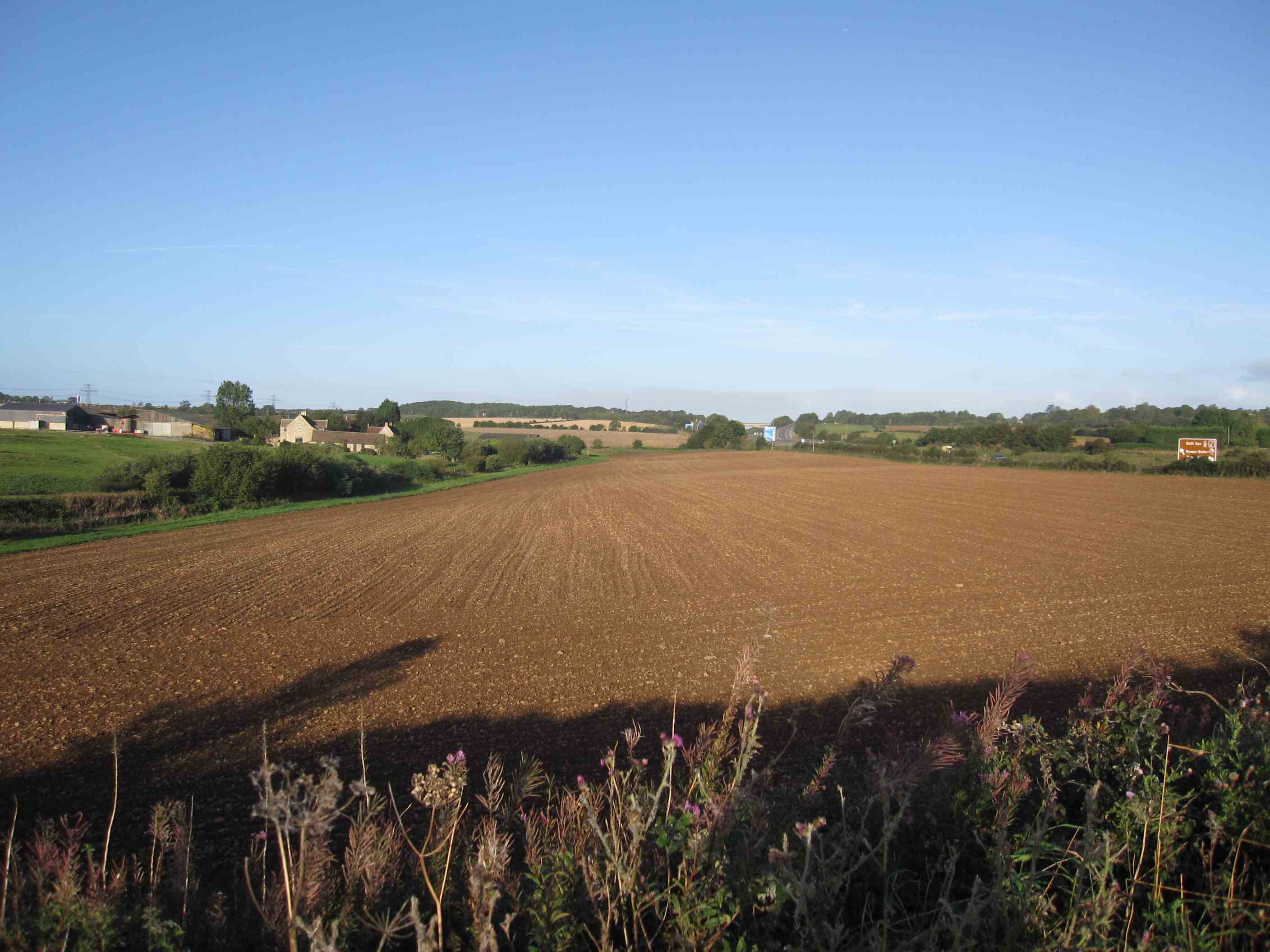
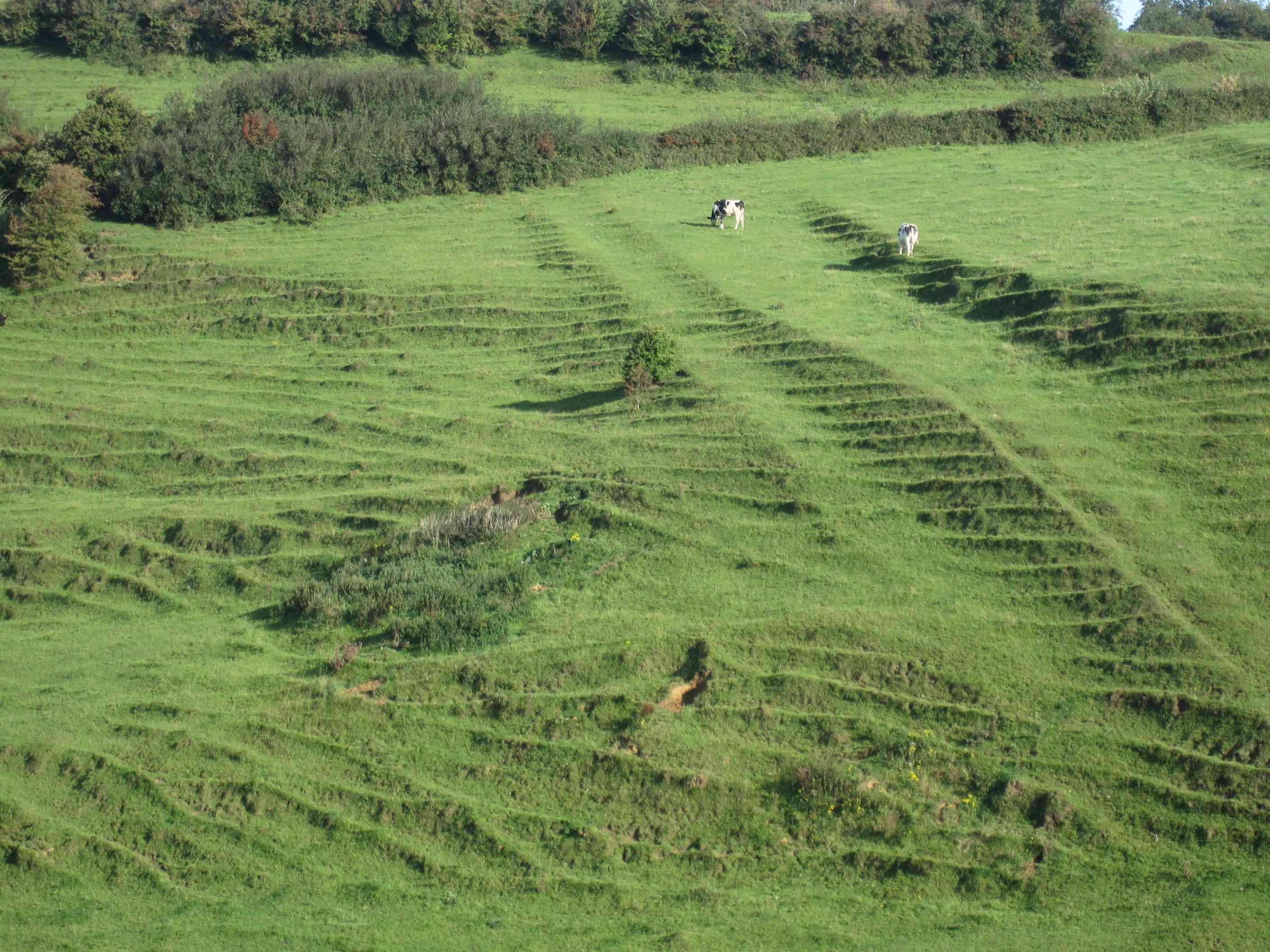
The last day is 17 miles, but I have been feeling really good on this walk so far, not popping Ibuprofin and groaning, so that didn’t seem daunting. And it’s a really nice walk, even if it does mean leaving the wilds. After a lot of solitary farm-walking, the path teases some big drama with Dyrham Park, a massive dear park enclosure now in national hands, linked to Dyrham House. It’s a tease, really, because the path skirts the tall stone fence so that you only get glimpses inside. But you do get a prime example of something that’s been present all along the trail: carved out tiers on hillsides that indicate ancient agriculture.
Eventually, the path does at least give a glimpse of Dyrham House, which looks rather grim and earnest. You can imagine the inhabitants complaining about cook’s tough mutton.

And so, on again. One interesting thing that I’ve realized only after some repetition is how the villages tell the story of a long successful rural life that got transformed by the car. Many have no shops at all, just a collection of houses. And I’ve seen at least three places with names like “Old Post Office Cottage,” which means, of course, that this town used to have a post office, but it has now been turned into a house. Today I also encountered a church that is closed. Not a ruin, just closed for lack of parishoners.

Here’s the story at Cold Ashton (named for the winds that sweep up the hills, by which standard half the places I’ve been through should be prefixed Cold) in three images. Image one: the closed church with a sign on the gate warning that it is protected by some kind of security that will catch people stealing artifacts or metal. Image two: a series of rather lovely cottages strung out along a road with amazing views down into a big valley, all of them looking like they started as quaint but have been spiffed up. Image three: as I walk down this road, a man comes out and gets into a super-expensive looking Audi sports car, revs it up rather obnoxiously, and moves it from one spot in his driveway to another. Cold Ashton has become a posh address for rich people whose careers are in Bath, only six or seven miles away by road (though I will walk another 11 miles to get there).
From here, the descent starts to take on that spring-in-the-step feeling of anticipation. And my sense that something is coming is confirmed when I hit a battlefield (a skirmish July 5, 1643 between Royalists and Parliamentarians, of course) where people are out for a Sunday stroll.
After that, I begin hitting something even more exciting: a real concentration of other hikers. First it’s a group of about fifteen women hiking together.
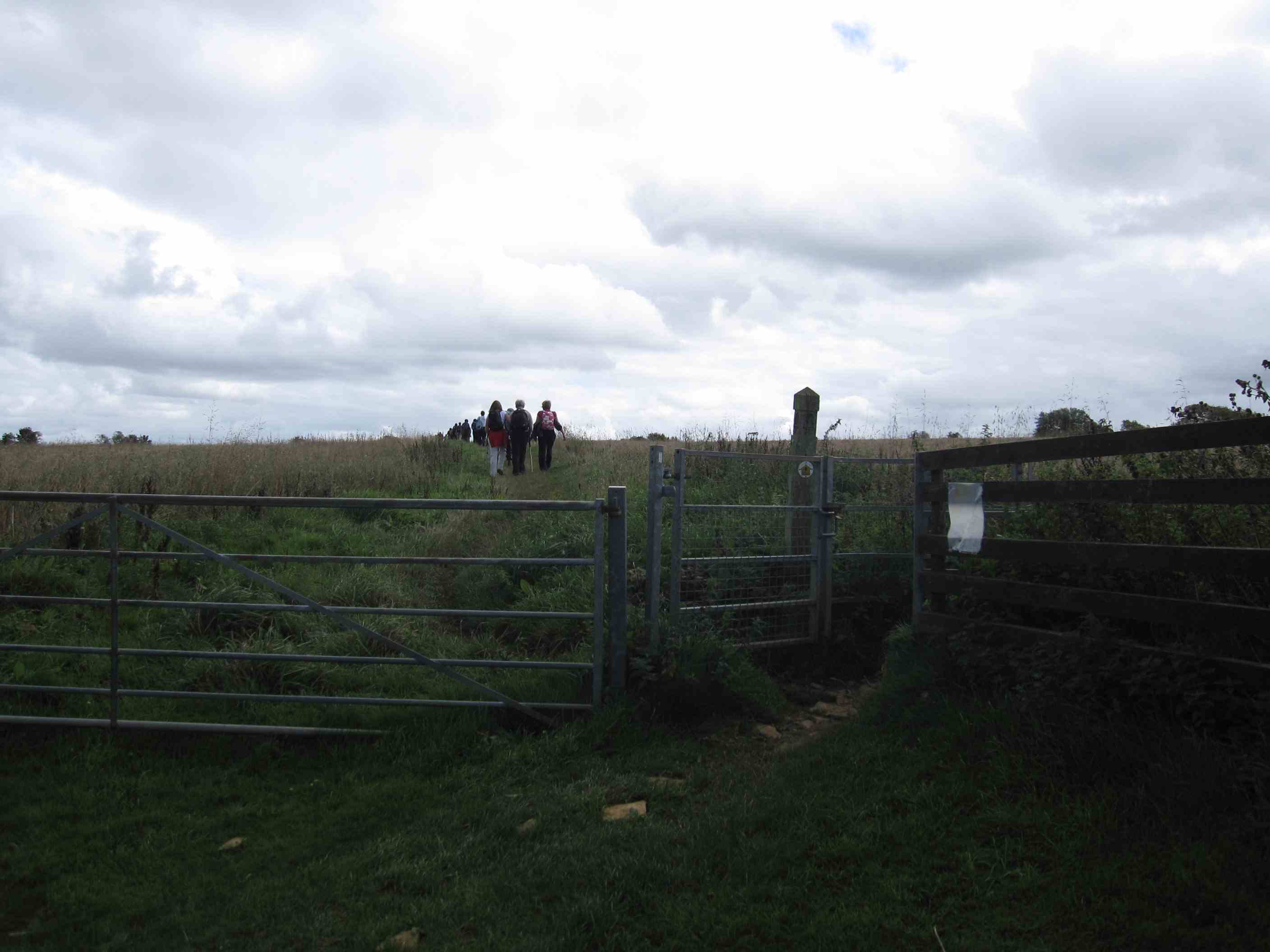
Soon I overtake them (I’m keeping a pretty good pace at this point) and then I spy a group, all in white T-shirts, up ahead. I think I might know who they are. Early in the trip, I met a woman at a point where the trail crosses a road, a natural drop-off point for hikers doing sections. She was looking for her camera, which she thought she had left there the day before when she stopped to adjust her pack. She was wearing a white T-shirt indicating that she is part of a large group doing a charity walk on the Cotswold Way for heart health (Later revision: The Heartful Dodgers is the group—find out more here). Only a few people are doing the whole way, but a lot of people are doing stages of the walk in teams spread out over something like ten days (Later revision: 9, I learn from their website). Spotting these T-shirt, I guessed correctly that I’d found another part of that walk.
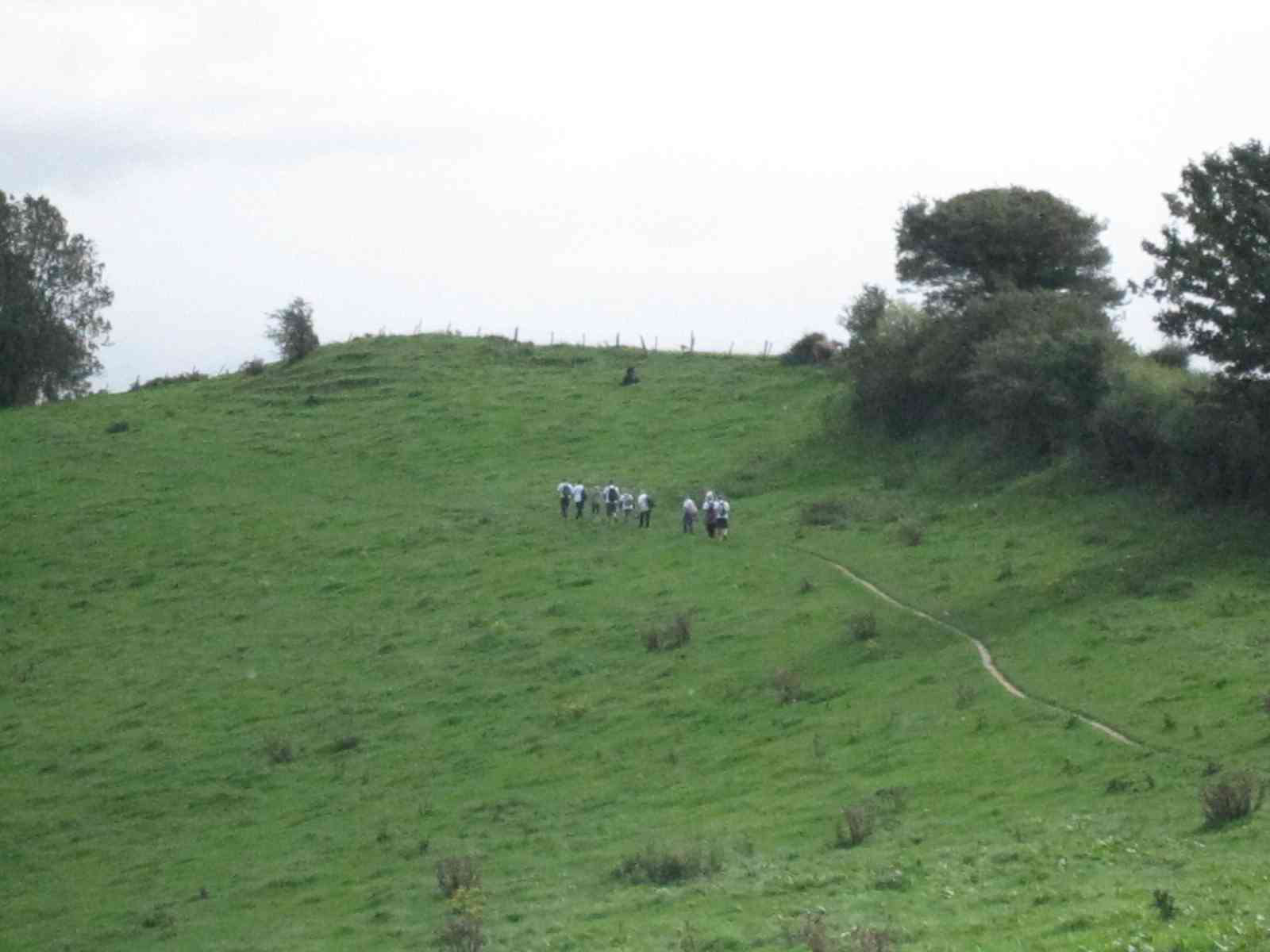
Over that next hill, I catch up with them, and for a while I walk with them and chat with a very nice man of about 55 who explains that he survived a heart attack and that this is part of his recovery. “Twenty years ago, when you had a heart attack, tehy told you to go home and rest. Now they tell you to go home and exercise. This is my way of moving around. And it’s good to get out of the cars, stop burning petrol for a while and walk. Gives you time to think. And those nurse, when I was recovering, they were my angels. So this is a way I give back.” Just wow.
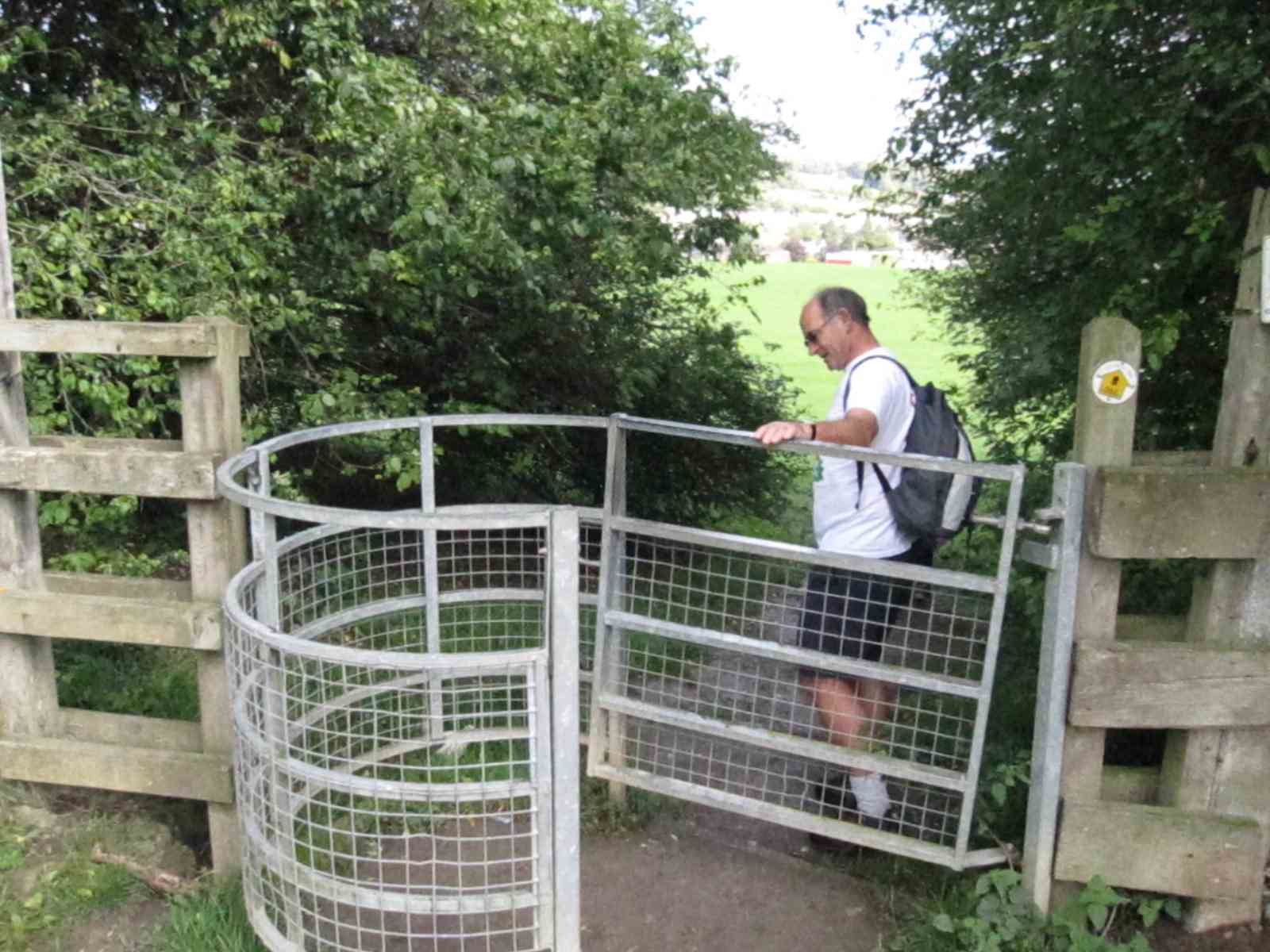
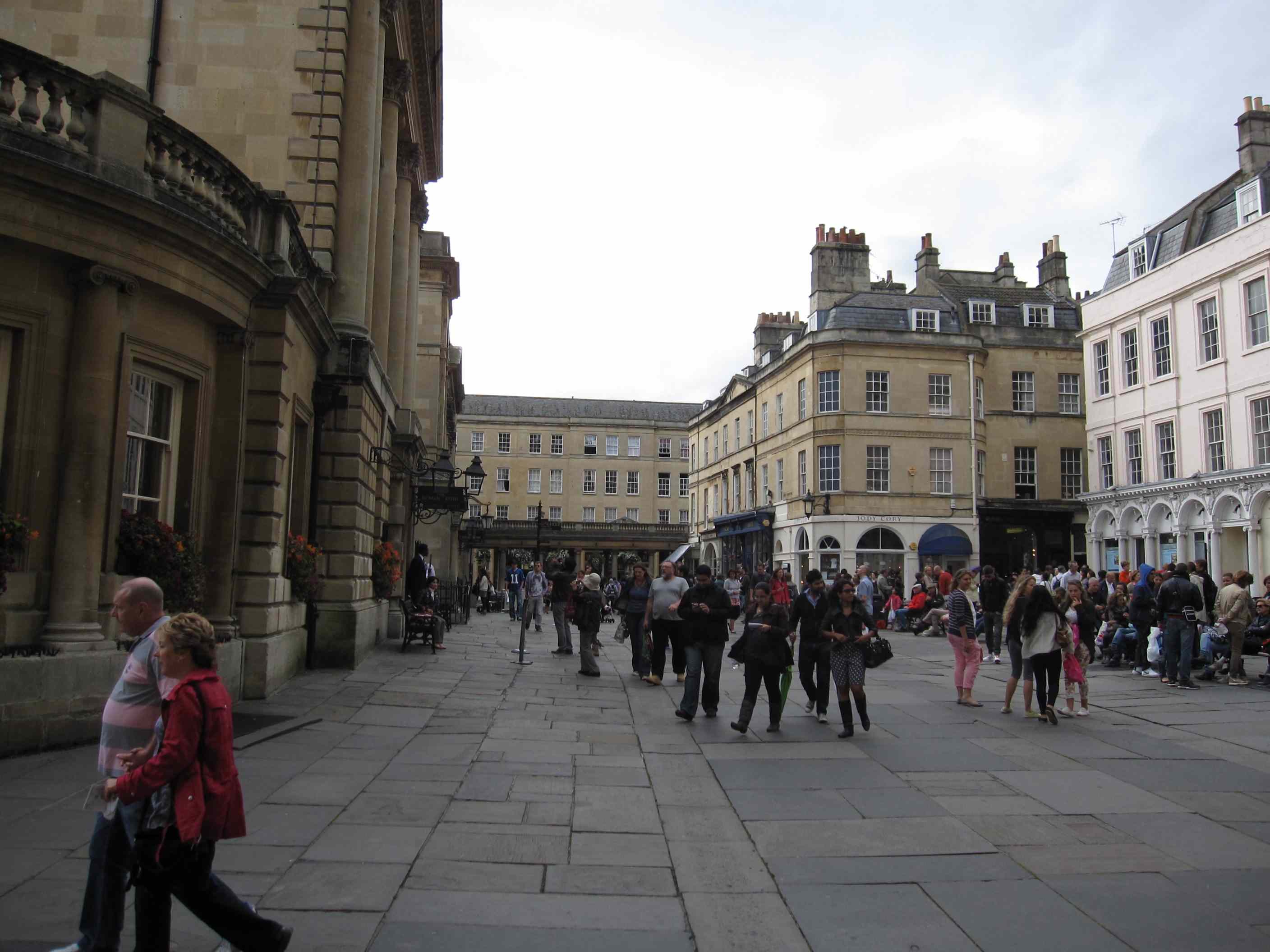
Eventually, I moved on (some of the team were getting pretty tired on the hills of the suburbs we were entering, and whole group wanted to come into Bath together, so they shooed me on ahead), and walked through the winding alleys and streets of Kelson (a suburb) and into Bath. Which looked like this:
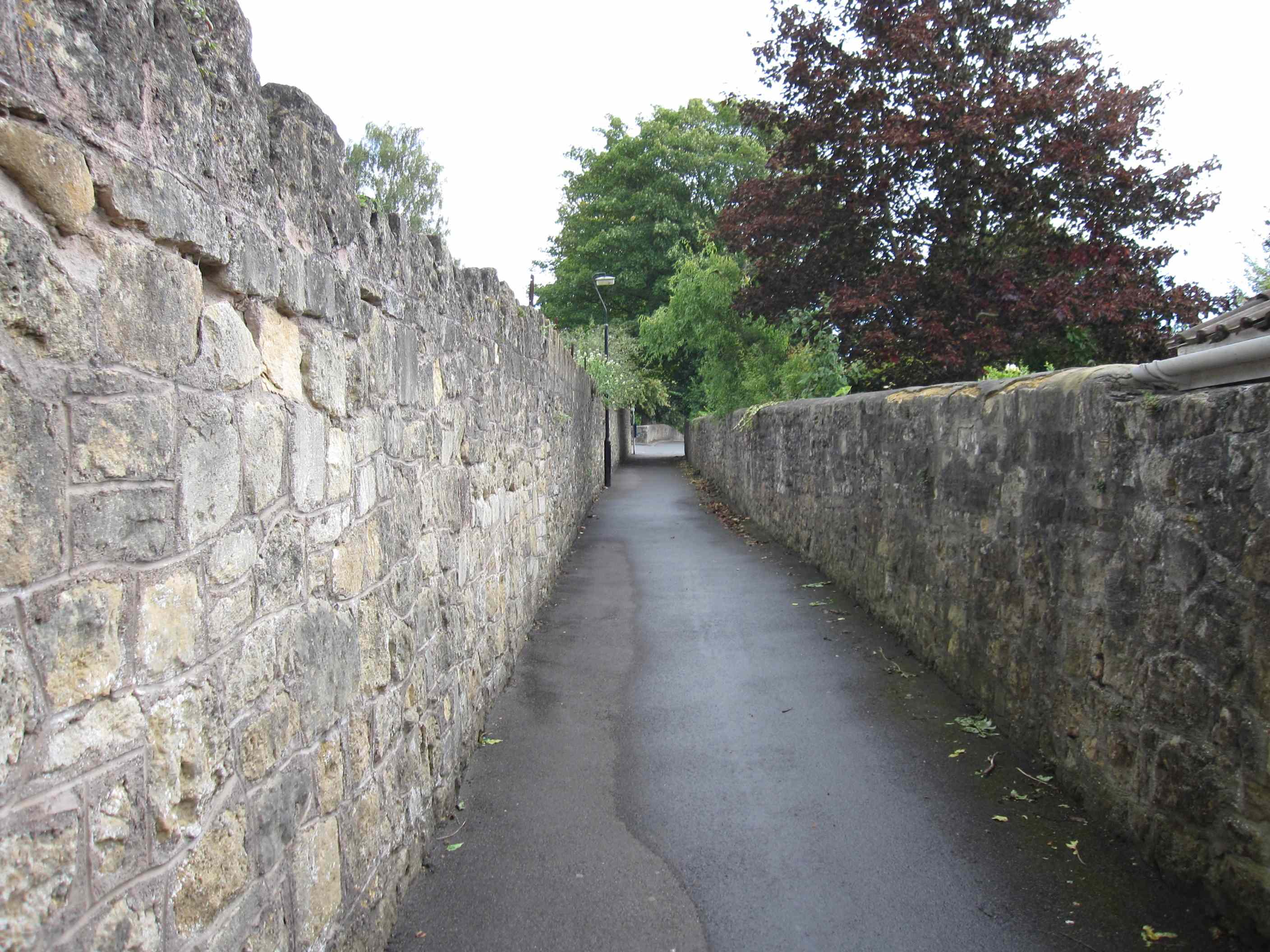
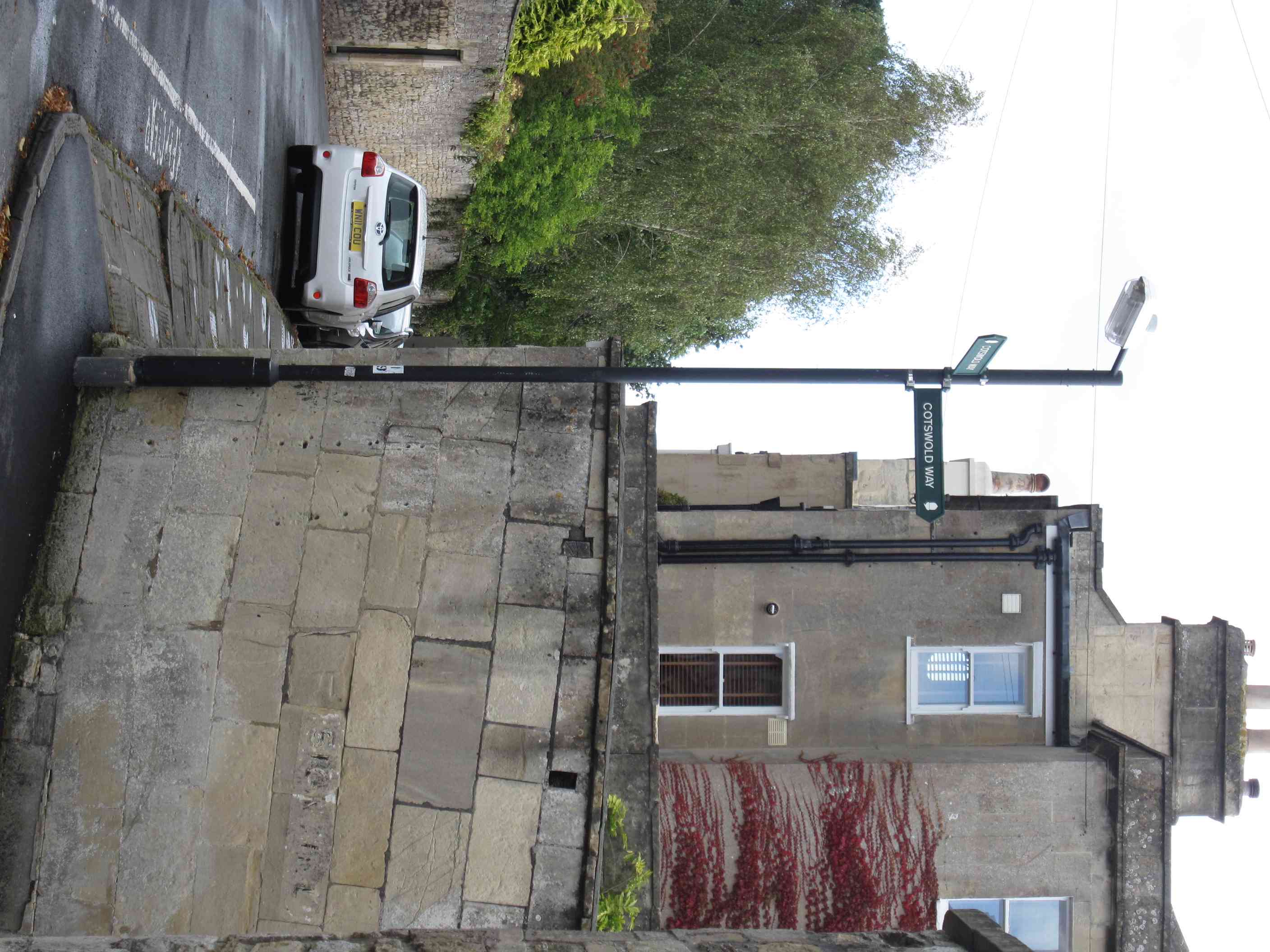
And finally, there’s the shock of hitting Bath’s public spaces, the tourist destinations and the crowds. Oh the crowds. It’s Sunday, of course, and this is a tourist destination, so things are pretty hectic, with street musicians and people stopping to look in shop windows and not buy and people taking photographs of each other in front of things I can’t understand (Do you really want a photo of yourself in front of the Pret a Manger sandwich shop in Bath? Why?) I’m not much of a crowd guy anyway, but after a week of pleasant solitude, it seems a bit surreal.
And so, at last, to the endpoint (or, for northward walkers, the beginning point…), Bath Abbey.
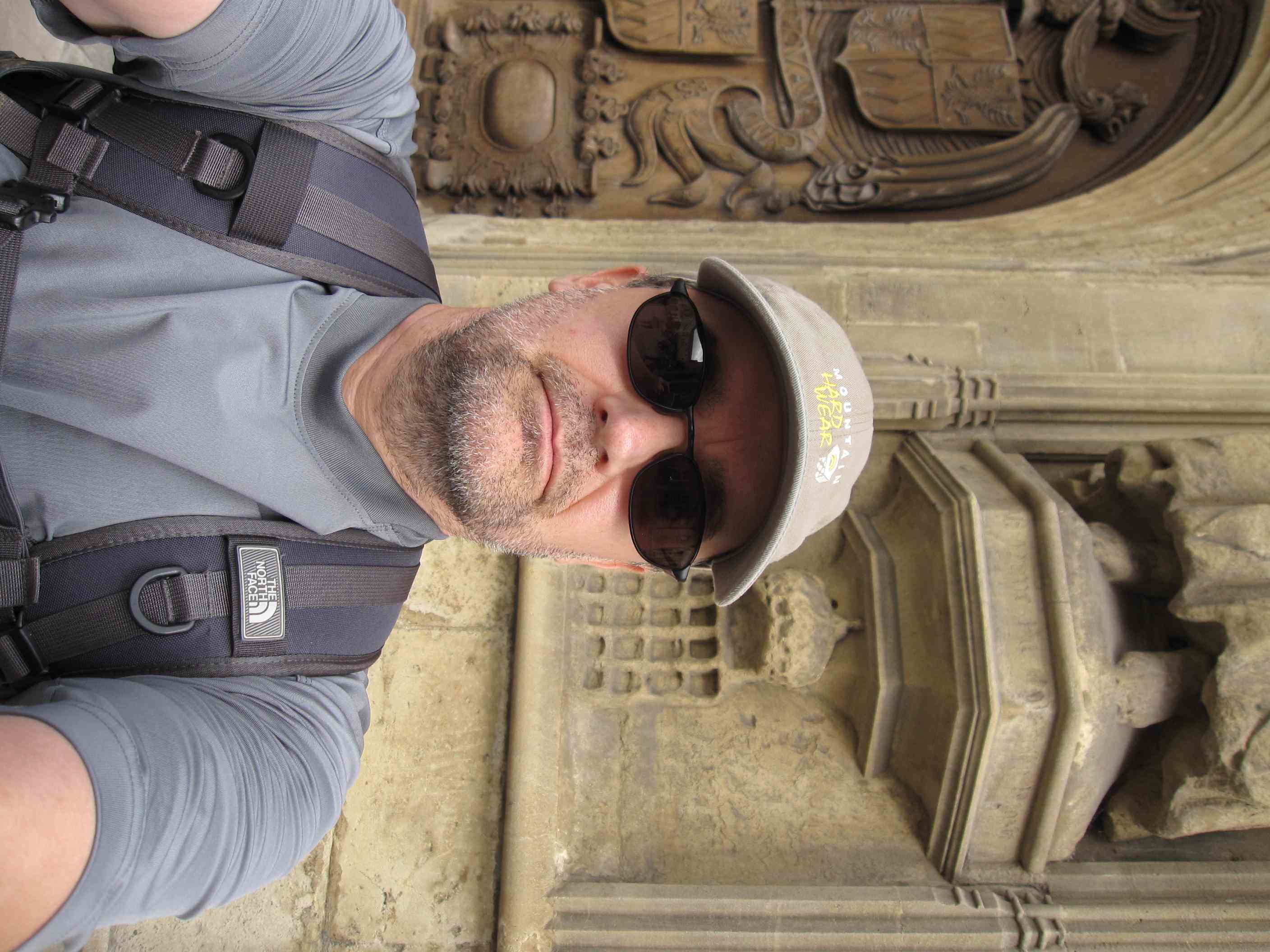
Miles walked: 17.
 ramblinghank
Ha, I think these are my favorite captions so far. I was honestly laughing at how “crowded” this town was.